Before you spend real money on reclaimed St. Louis brick, the risk worth avoiding is a pallet of mislabeled stock from another region, or a modern reproduction with an iron-oxide stain. It happens more than buyers expect.
Some sellers put the St. Louis label on anything reddish and old, and without knowing what to look for, you can end up with softer clay, off dimensions, or a mix of origins you only notice after the mortar dries.
This guide breaks down the actual fingerprints of genuine St. Louis brick: dimensions, firing marks, manufacturer stamps, density tests, and the red flags that trip up even seasoned buyers. A comparison table and a set of supplier questions are included so you can verify a lot before you sign off.
Start With the Fastest Authenticity Checks
The quickest way to rule out a fake is a tape measure. Authentic St. Louis bricks follow dimensional ranges that set them apart from Chicago, Cleveland, and most modern copies.
Measure the Brick Before You Trust the Label
A typical hydraulic-pressed St. Louis brick runs about 8 1/2 inches long, 3 5/8 inches wide, and 2 1/4 inches tall. You will see some drift, maybe an eighth of an inch, depending on the kiln and era, but the sizes should stay tight across a pallet.
If you pull ten bricks and see lengths bouncing from 7 3/4 to 8 3/4 inches, you are likely looking at a mixed batch, not a genuine St. Louis lot.
Bricks from the St. Louis area tend to be slightly narrower and taller than Chicago commons. That quarter-inch of extra height is a reliable way to sort the two quickly.
Check Overall Shape, Edge Wear, and Face Texture
Run your thumb across the brick's face. Real reclaimed bricks show rounded edges from decades of weather and mortar removal.
You may spot shallow pitting, kiln marks, or a slight surface ripple from the original pressing. Machine-made bricks from the late 1800s and early 1900s have sharper arris lines than handmade ones, but even those soften after a century of use.
Bricks with edges that look too crisp, as if they just left the factory, are probably modern or barely used. Reclaimed bricks with perfect corners are a red flag.
Sort Full-Thickness Units From Thin Cuts and Pavers
Full-thickness St. Louis bricks should be close to that 2 1/4-inch height. If you see bricks under an inch thick, those are saw-cut reclaimed thin bricks.
Thin cuts have their place, but they are a different product and should be labeled and priced as such. You will also find paver-type units in some St. Louis lots, which are denser, flatter, and belong in their own category.
Figure out what you are looking at before you judge color or markings.
Read the Visual Signatures in the Clay and Firing
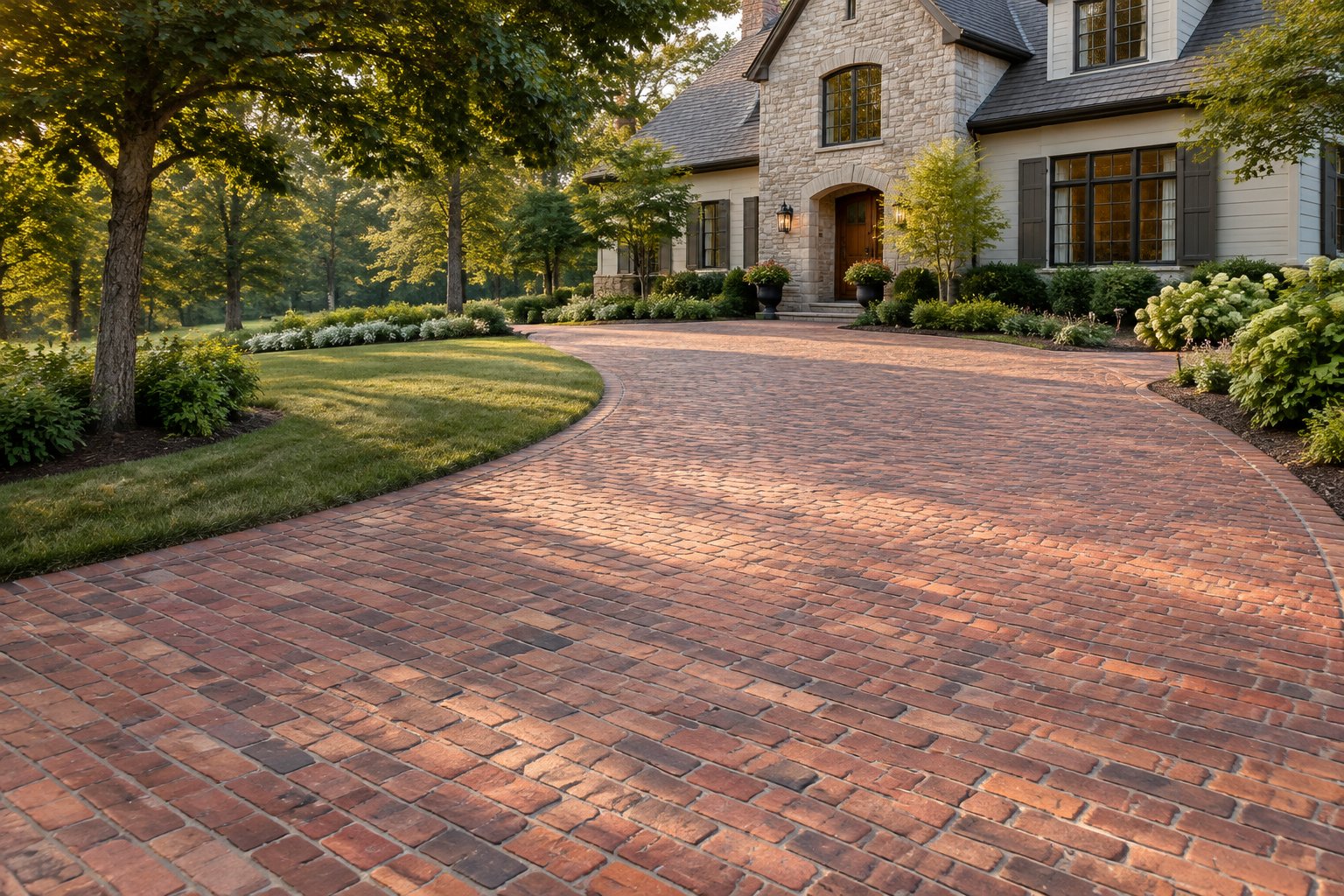
Color draws the eye first, and that is exactly what gets faked. Real St. Louis brick has a red-to-reddish-orange body, thanks to iron-rich Missouri River clays fired hot in the late 1800s and early 1900s.
What the Red-to-Reddish-Orange Color Range Should Look Like
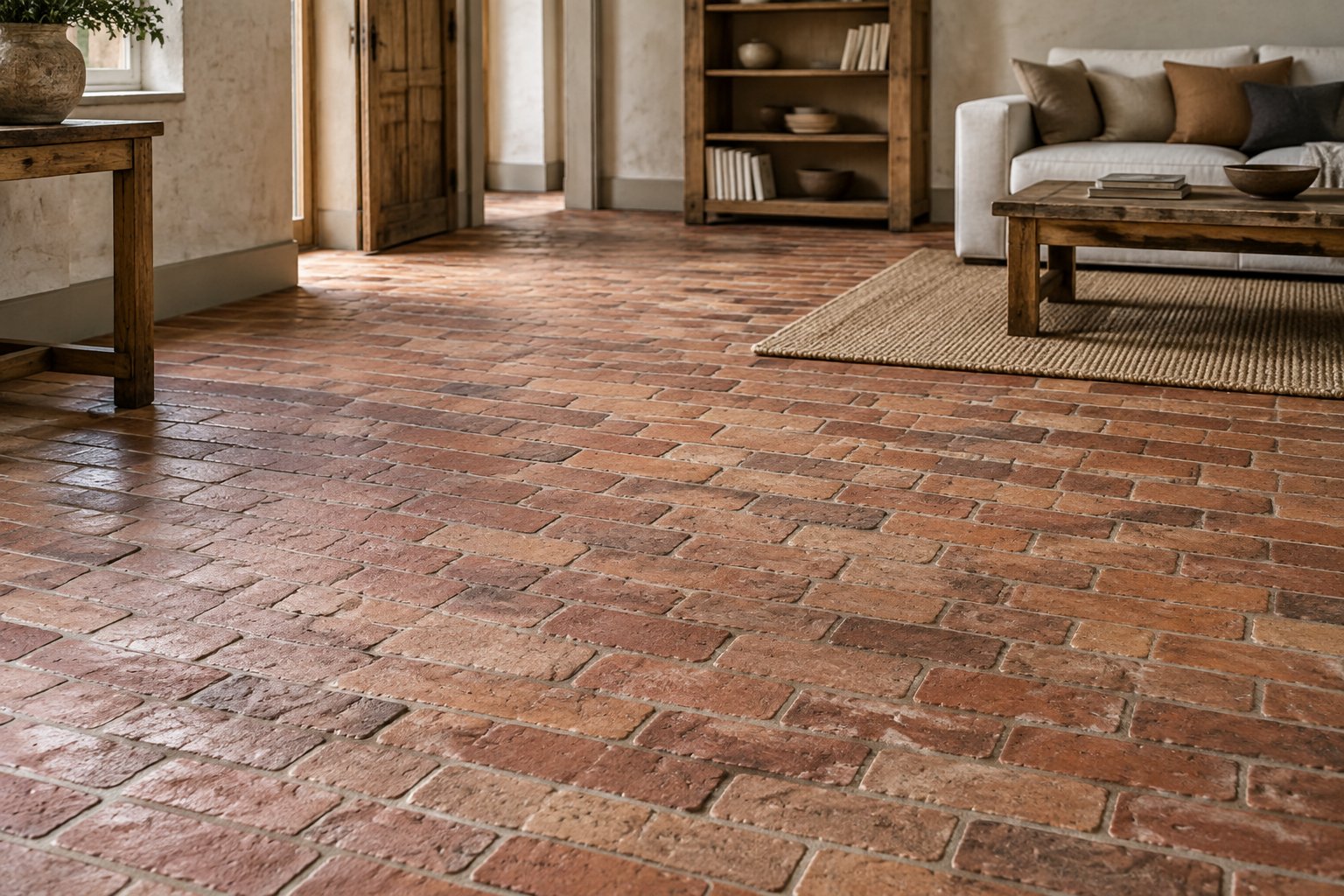
Expect a warm, earthy red with orange undertones. Across a pallet, you will see variation from deeper brick red to lighter salmon-orange, sometimes on the same brick where the kiln fired unevenly.
That color drift is a sign of the real thing, not a problem. The color should run all the way through, so a chipped corner matches the face. Some pressed bricks from major St. Louis kilns show a denser, slightly burgundy face where the press compacted the clay. That is normal.
How Black Flecking, Sooting, and White Mortar Staining Show on Genuine Lots
Look for dark spots, carbon flecks, and kiln soot baked into the surface. Those come from wood-fired and early coal-fired kilns and are hard to fake cheaply.
White mortar ghosts, the chalky residue left after cleaning old lime mortar, should show on at least a few faces. If every brick is spotless, the lot was likely acid-washed or sandblasted, which strips surface character.
How to Spot Artificial Coloring, Overcleaning, and Cosmetic Cover-Ups
Dyed or iron-oxide-stained bricks show color that sits on the surface, almost like paint. Wipe the face with a damp rag, and if pigment comes off, it has been tinted.
Overcleaned bricks feel glassy-smooth where the original fired skin was stripped. That surface soaks up water quickly and lacks the subtle texture you want in historic brick.
- Surface pigment on a damp rag points to dye, not natural aging
- Uniform color across every face of every brick in a large lot is suspicious
- Glassy-smooth faces usually mean aggressive acid cleaning or tumbling
- All six faces missing mortar ghosts may mean the brick was never laid
If the color checks out, move on to manufacturer stamps and press marks.
Look for Marks, Frogs, and Manufacturing Clues
Many authentic St. Louis bricks carry marks that tie them to specific brickmakers and production methods. Knowing what to look for turns a guess into a confirmation.
Marks Associated With Hydraulic-Pressed Production
Hydraulic-pressed bricks usually have a shallow rectangular frog, an indented panel, on one or both bed faces. The frog helps mortar grip and was a hallmark of St. Louis production from the 1870s on. The frog edges are clean and regular, not rough and lumpy like hand-molded bricks from elsewhere.
What to Know About Hydraulic Press Brick Company Stamps and Branding
The Hydraulic Press Brick Company, founded in St. Louis in 1865, became a major producer. Its bricks sometimes show an "HP" or "HPBC" stamp in the frog. You may also see numbers like "F2," which were internal product grades.
Not every HPBC brick is stamped, and a century of mortar can make marks faint, so tilt the brick in strong light to find them.
Other St. Louis makers used their own initials or names in the frogs. A mark alone does not guarantee St. Louis origin, but a known maker's stamp plus the right size and color is strong evidence.
How Unmarked Authentic Pieces Still Reveal Old Brick-Making Methods
Plenty of genuine St. Louis bricks have no stamps. On unmarked pieces, look for machine pressing: flat, smooth bed faces with sharp frog edges, consistent thickness across samples, and a hard, dense surface.
Pressed bricks often show a faint skin where the steel die compressed the clay. If you see no marks or pressing evidence, a physical test will separate them from softer regional stock.
Test Density, Weight, and Hardness Before You Buy
Authentic hydraulic-pressed St. Louis brick is among the densest reclaimed brick in the U.S., a result of the pressing and high-temperature firing used in the region.
Use the Ring Test Without Overstating What It Proves
Hold the brick and tap it sharply with a mason's hammer or another brick. A well-fired, dense St. Louis brick gives a clear, metallic ring. A dull thud means lower density, more porosity, or a hidden fracture. The ring test is not lab science, but it is a quick way to compare bricks in a lot and flag outliers.
Pull five bricks at random and weigh them. If the numbers vary widely, you may be dealing with a mix of machine-made bricks from different regions or firing profiles.
When Chips, Spalls, and Soft Faces Suggest a Different Regional Stock
Soft-fired bricks from outside St. Louis show rounded chip edges, chalky dust when scratched, and surface spalling in thin flakes. Authentic St. Louis pressed brick chips with a clean, angular fracture, almost like breaking tile.
If you see powdery spalls or crumbling edges across most of the pallet, it is likely a different clay body or a lower-temperature kiln. With the physical profile in hand, you can line St. Louis brick up against its usual lookalikes.
Separate Authentic Lots From Common Lookalikes
St. Louis brick gets confused most often with Old Chicago brick, Old Cleveland brick, and modern tumbled reproductions. Lying them side by side usually settles it fast.
Why Mixed-Source Pallets Create Misidentification Problems
Some yards stack bricks from different demolition jobs on one pallet. When St. Louis Reds sit next to Chicago creams, the contrast is obvious. But when a yard mixes St. Louis bricks with darker Cleveland stock or another red machine-made brick, it gets harder to tell.
On a mixed pallet, pull random samples from different rows, not just the top layer, then measure and weigh them.
How Regional Variation Can Be Real Without Making a Lot of Single-Origin
St. Louis had dozens of brickmakers over seven decades, so color, density, and frog style shifted from maker to maker. Even a true all-St. Louis's palette shows some variation, but it stays within the expected ranges.
If you spot bricks that fall well outside the size, weight, or color profiles, they likely came from somewhere else. The broader reclaimed St. Louis brick guide covers grades and pricing if you want to confirm the premium matches the material.
Verify Provenance and Avoid Costly Mistakes
A brick can pass every physical test and still be misrepresented if the supplier cannot say where it came from. Provenance is your last line of defense against a costly mistake.
Questions to Ask a Supplier About Source, Grading, and Samples
Before you commit to a pallet, ask these questions up front:
- Which building or site did these bricks come from?
- Can you show demolition photos or give a site address?
- How do you grade the bricks, and what does each grade include?
- Can I get a sample pallet or a small box before a large order?
- Are these full-thickness, thin-cut, or a mix?
A supplier that truly works with authentic reclaimed brick will answer all five easily. If they dodge or stay vague, walk away. Projects listed on the National Register of Historic Places usually require documented material provenance, so verified sourcing is not optional for restoration work.
Red Flags Such as Suspicious Uniformity, Missing Provenance, and Hidden Faces
Be wary if every brick on a pallet looks identical in color, size, and wear, since real reclaimed lots show natural variety.
If a seller stacks bricks with only one face showing and avoids flipping them, they may be hiding damage, mixed stock, or missing stamps on the hidden sides. Pressure-washed or sandblasted bricks that feel unusually smooth have probably lost their fire skin, stamps, and mortar ghosts.
Make the Final Call Using Photos, Sample Pallets, and Project Requirements
Ask for sharp photos of all six faces on several sample bricks. Compare them to the size, color, density, and marking details in this guide.
For large orders, have a sample pallet shipped to your site so your mason or architect can check it in person. The cost of a sample pallet is small compared to tearing out the wrong brick after installation. Your project spec sheet should set the grade and quantity you need.
Frequently Asked Questions
What Visual Tells Separate Real St. Louis Brick From New Lookalikes?
Real St. Louis brick shows a red-to-reddish-orange through-body color with natural variation, black carbon flecks from firing, and white mortar ghosts on at least one face. The edges round off softly after a century of use, not from a machine. New lookalikes are usually too uniform, with sharp edges and no mortar residue.
Which Maker's Marks and Size Profiles Should I Look For?
Check for "HP," "HPBC," or numbered grade stamps like "F2" pressed into shallow rectangular frogs. The standard size lands around 8 1/2 by 3 5/8 by 2 1/4 inches. Not every brick is stamped, but a known mark plus the right size and color is strong evidence.
Are Reclaimed St. Louis Bricks Worth More, and What Drives the Price?
St. Louis pressed brick costs more for its density, durability, and historic look. Price depends on grade, quantity, availability, and freight. Full-thickness, clean, stamped bricks cost more than chipped or unmarked ones. The guide to what reclaimed brick costs breaks down the variables.
What Does an "F2" Stamp Mean, and Does It Affect Exterior Use?
"F2" was a product grade from the Hydraulic Press Brick Company, usually marking a face brick suited to exterior use. An F2-stamped brick in good shape works for exterior walls, patios, and other weather-exposed spots, in line with historic property standards.
Confirm the Brick Before You Commit to the Budget
Identifying real St. Louis brick comes down to five checks: measure the size, read the color and firing marks, look for stamps, test density and weight, and compare against known lookalikes. If any of those do not add up, the lot is not what it claims.
Your project deserves materials that match the spec, timeline, and budget. Getting the right brick on the first try saves weeks of rework on a restoration or facade.
Call New Orleans Brick Co to confirm what is in stock and get a truck moving within 48 hours of a paid invoice. With a spec or a timeline in hand, one conversation tells you what is available and when it ships.