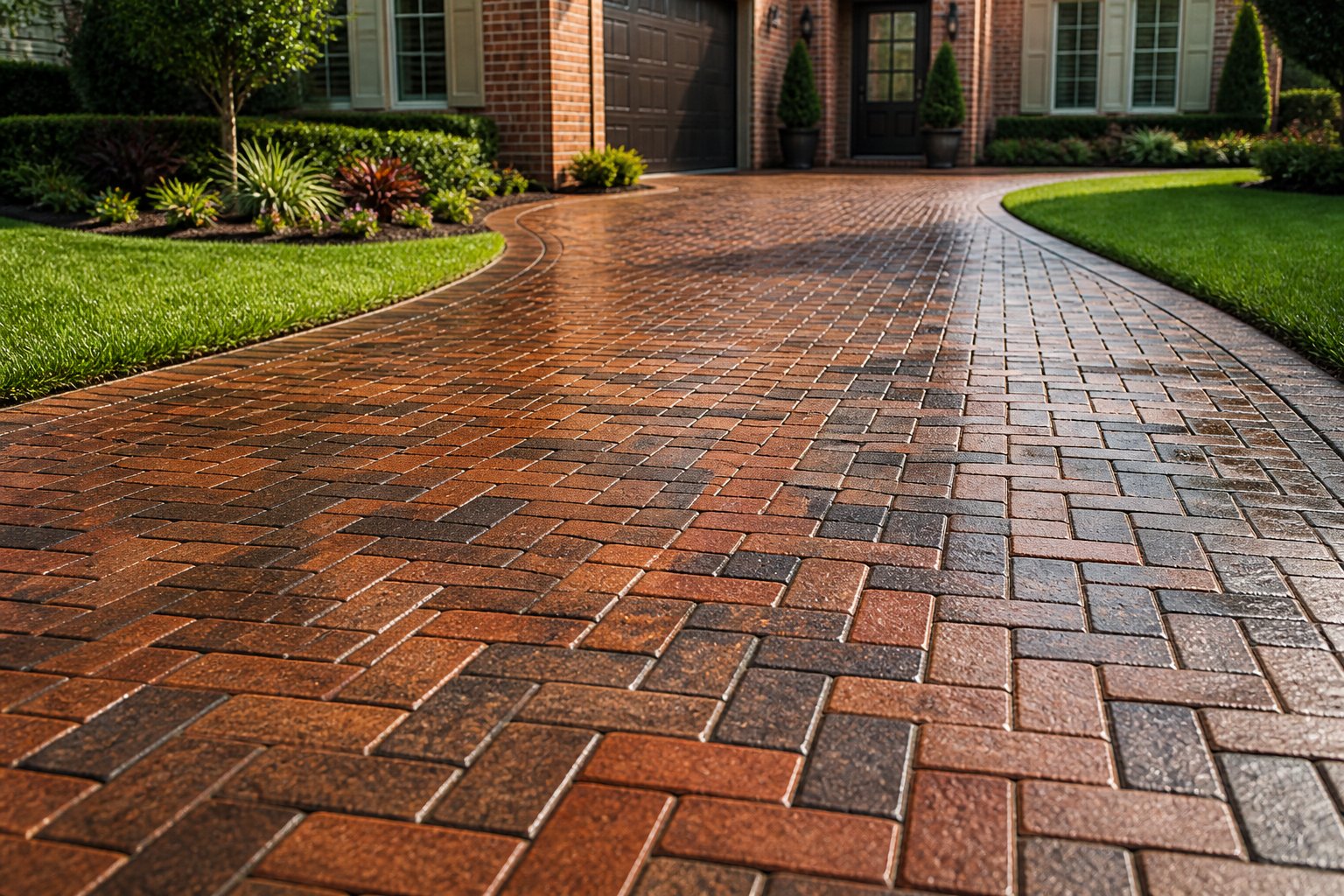
Your driveway takes more abuse than any other paved surface on your property. It carries the weight of daily traffic, absorbs seasonal temperature swings, and sets the visual tone for every visitor who pulls up to your front door. If you have been comparing paving materials, you already know the options range from plain concrete slabs to stamped reproductions to gravel.
But a brick driveway built with reclaimed pavers offers something none of those alternatives can match: proven load performance combined with the kind of visual depth that only comes from clay fired over a century ago.
Keep reading to learn how reclaimed pavers outperform manufactured options under vehicle traffic, which laying patterns work best for driveways, and what to confirm before you order. Every recommendation here is grounded in real material specs and sourcing details, not generic advice.
Why Reclaimed Pavers Outperform New Materials
Century-old clay brick pavers have already survived decades of structural load, weather cycles, and settling. That track record is not something a new paver fresh off a production line can claim on day one.
What New Manufactured Pavers Often Lack
Most new concrete pavers and mass-produced clay brick pavers are engineered for uniformity. They come off the line in consistent colors, sharp edges, and precise dimensions. That sounds like an advantage until you realize uniformity also means predictable fading, surface spalling under freeze-thaw, and a flat visual appearance that never develops real character.
New pavers lack the earthy patina of reclaimed brick because patina is earned, not applied. The subtle color variation, rounded edges, and kiln marks on a handmade reclaimed brick come from original firing methods that predate modern standardization. No surface treatment or tumbling process replicates that honestly.
Concrete pavers are especially prone to surface erosion within 10 to 15 years. The aggregate beneath the colored top layer shows through, leaving a blotchy, washed-out look that is expensive to replace and impossible to repair in place.
How Century-Old Brick Earns Its Durability
A reclaimed brick that has survived 100-plus years in a load-bearing wall has already proven its compressive strength. The clay was fired at high temperatures in early American kilns, producing a density that resists moisture penetration and surface wear.
Many of these bricks test above 3,000 PSI in compressive strength, which exceeds the minimum ASTM requirements for severe-weather paving.
The hardness of a reclaimed paver depends on where it sat in the original kiln. Bricks fired closest to the heat source, often called "hard tans" or "clinkers," are the densest and most resistant to abrasion.
Softer bricks from the cooler areas of the kiln carry richer red tones and more texture but are better suited for lighter-traffic applications or patio and walkway projects.
Long-Term Value for Homes and Builds
A brick driveway built with reclaimed pavers holds or increases curb appeal over time rather than degrading. The material does not fade under UV exposure the way concrete dyes do. Individual pavers can be lifted and reset if settling occurs.
This makes repairs simple and affordable compared to tearing out an entire concrete or asphalt slab.
- Reclaimed brick requires no sealing or coating to maintain its appearance
- Individual units can be replaced without disturbing the surrounding field
- Color deepens naturally with weathering instead of washing out
- Hardscaping with reclaimed clay brick qualifies for many green building credits
The real question, once you have decided on reclaimed brick, is whether the material you choose can handle daily vehicle traffic without cracking or shifting.
What Matters Most Under Vehicle Traffic
A brick paver driveway needs to handle repeated loads of 4,000 pounds or more without cracking, shifting, or sinking. Material thickness, base prep, and drainage design all determine whether your surface stays flat for decades.
Thickness, Surface Hardness, and Load-Bearing Strength
Standard paver thickness for driveways is a minimum of 2-3/8 inches. Many reclaimed bricks fall in the 2-1/4 to 2-1/2 inch range, which works well for residential traffic when paired with a properly compacted base. For heavier loads, such as delivery trucks or RVs, look for full-depth reclaimed bricks closer to 3-1/2 inches thick.
Surface hardness matters as much as thickness. Hard tan reclaimed bricks, fired at the highest kiln temperatures, resist tire abrasion and point loads better than softer reds. If you are paving a high-traffic turnaround area, spec hard tans for the field and save the softer reds for accent borders or lower-traffic zones where their richer color can shine.
The base beneath your pavers carries most of the load. A compacted aggregate base of 6 to 8 inches is standard for residential driveways. Commercial or heavy-use drives may need 10 to 12 inches. Without proper base depth, even the strongest brick will eventually settle.
Freeze-Thaw Performance and Drainage Basics
Reclaimed brick that has already survived 100 or more winters in a northern climate has demonstrated real freeze-thaw resistance. That field-tested performance is more reliable than a lab rating on a new paver that has never been installed.
Proper drainage prevents water from pooling beneath the pavers and freezing. A 1% to 2% cross-slope moves surface water to the edges. Polymeric sand between joints locks pavers in place while still allowing minimal moisture migration. Avoid standard paver sand in cold climates because it washes out faster and leaves joints vulnerable to frost heave.
When a Permeable Driveway Makes Sense
Permeable pavers use wider joints filled with open-graded aggregate to let water pass through the surface and into the subgrade. This approach works well in areas with stormwater regulations or clay-heavy soils where drainage-friendly driveways are required by code.
Reclaimed brick can be installed in a permeable configuration by increasing joint spacing to 1/2 inch and using a washed gravel bedding layer instead of compacted limestone screenings. The dimensional variation in handmade reclaimed bricks actually helps here because slightly irregular edges create natural gaps for water infiltration.
Permeable designs need a deeper aggregate reservoir beneath the surface, typically 12 inches or more. Factor that excavation cost into your budget before committing to this approach. Once you know your base and drainage plan, the next decision is layout pattern.
Best Brick Driveway Patterns and Layout Choices
Your laying pattern directly affects how well the driveway resists lateral shifting under braking and turning forces. Pattern choice is structural, not just visual.
Why Herringbone Is Usually Best for Driveways
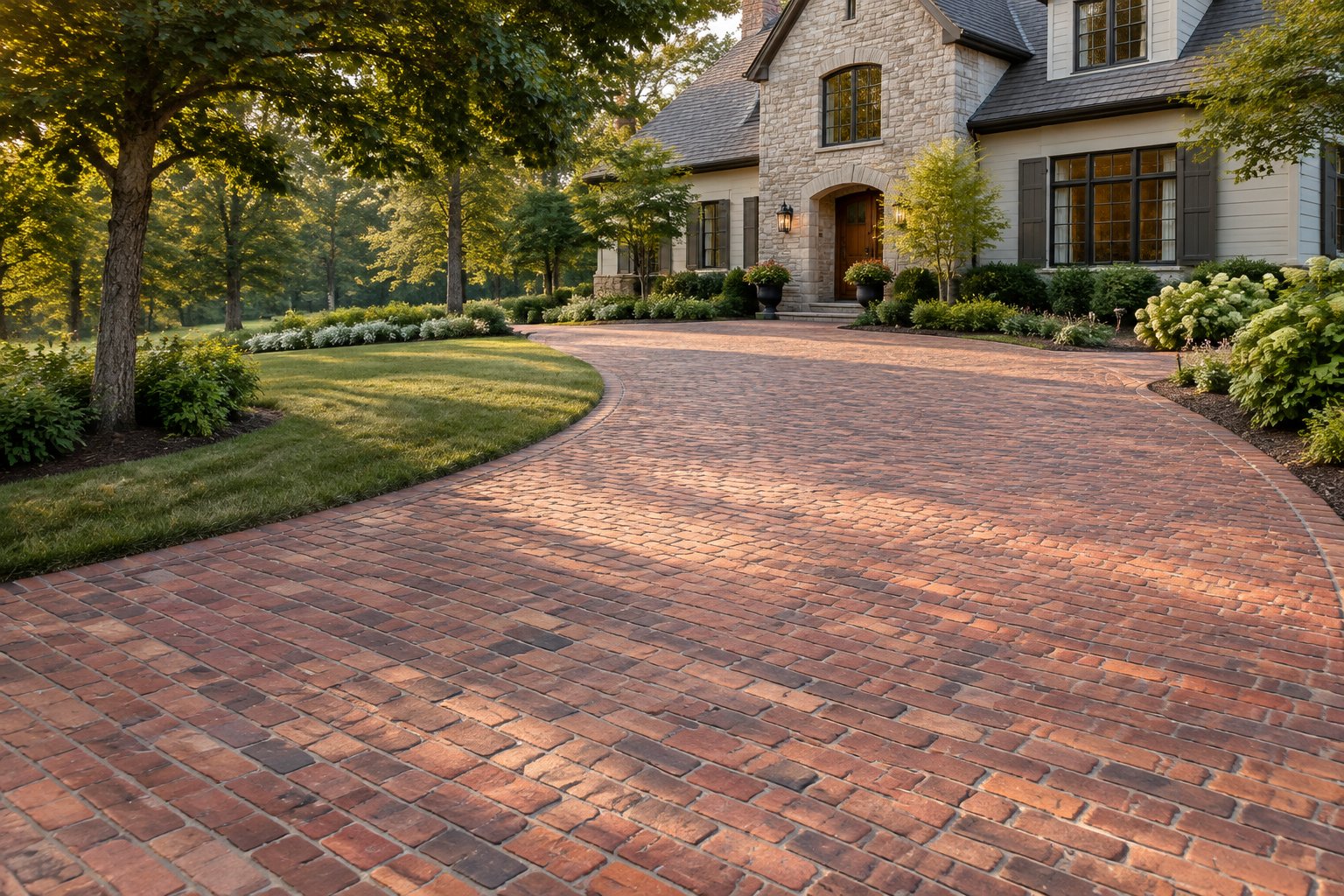
Herringbone, whether 45-degree or 90-degree, creates an interlocking geometry that distributes load across multiple units in every direction. No single brick carries the full force of a tire. This makes herringbone the top-performing pattern for vehicle traffic according to virtually every paving industry standard.
A herringbone reclaimed brick driveway also highlights the color variation in reclaimed material beautifully. The angled layout draws your eye across the surface and makes subtle differences in tone and texture more visible than a straight-line pattern would.
Where Running Bond and Basketweave Fit
Running bond, where each row is offset by half a brick, is the simplest pattern to lay and the most forgiving when you are working with the slight dimensional differences found in handmade reclaimed bricks. It works well for straight driveways with light to moderate traffic, such as a secondary parking pad or a garden path that connects to the main drive.
Basketweave alternates pairs of bricks in horizontal and vertical orientation. It looks elegant but offers less interlock than herringbone. Reserve basketweave for decorative borders, courtyard paving areas, or driveway aprons where vehicles are moving slowly.
Planning Curves, Turning Space, and Edge Restraint
A curved driveway requires careful layout planning because angled cuts at the perimeter add labor and material waste. With reclaimed brick, slight size variation can actually reduce the number of cuts needed on gentle curves. Tighter radii still require a wet saw and an experienced mason.
- Minimum inside radius for a comfortable single-car turn is about 15 feet
- Use soldier-course brick edging set in a concrete haunch for firm edge restraint
- Plastic or aluminum edge restraints work for straight runs but flex on curves
- Plan for 5% to 10% extra material to account for cuts, breakage, and sorting
Driveway edging is not optional. Without rigid edge restraint, pavers at the perimeter will creep outward over time and the entire field will loosen. Now that you have your pattern and edging plan, think about how the driveway connects to the rest of your front yard.
Style, Borders, and Front Yard Integration
The best brick driveways do not stop at the garage. They tie into the landscape, the entryway, and the overall architecture of the property.
Mixing Brick with Stone and Cobble Accents
Blending reclaimed brick with natural stone borders or cobblestone accents creates visual contrast that elevates a standard driveway into a design feature. A header course of bluestone or reclaimed cobble along the driveway edge separates the paved surface from the lawn with a material shift that reads as intentional and custom.
Stone driveways and brick fields work together when you match the warmth of the brick tones to the coolness of the stone.
Earthy red reclaimed bricks pair well with gray or charcoal bluestone. Tan and buff tones complement warm sandstone or limestone borders. This is where the natural patina of reclaimed material gives you a palette that manufactured products cannot offer.
Designing a Strong Driveway Entrance
Your driveway entrance sets the first impression. A flared apron, where the driveway widens as it meets the street, improves sight lines for backing out and gives you space for a decorative feature like a brick-bordered garden path that leads to the front door.
Pillar-mounted gates or low flanking walls built from matching reclaimed brick create a sense of arrival without blocking the view. Keep gate openings at least 12 feet wide for single-car entry and 18 to 20 feet for double.
According to guidelines for rehabilitating historic properties, entrance features on historic homes should use materials consistent with the building's original character. This makes reclaimed brick an ideal choice.
Lighting, Gates, and Focal Features
Low-voltage landscape lighting along the driveway edges improves safety and highlights the texture of your reclaimed brick after dark. Flush-mounted fixtures or bollard lights every 8 to 10 feet illuminate the surface without creating glare.
A circular driveway with a center island gives you space for a fountain, mature tree, or planting bed that serves as a front yard focal point.
Use matching reclaimed brick edging around the island to unify the hardscaping. These details are what separate a functional driveway from a landscape design that adds real value to the property. The next question is how reclaimed brick stacks up against the other materials you may be considering.
Comparing Reclaimed Brick to Other Paving Options
Reclaimed brick is not the cheapest material per square foot, but it consistently delivers the best balance of character, durability, and repairability.
Brick Versus Gravel for Character and Maintenance
Gravel driveways cost less upfront, typically $2 to $5 per square foot installed. But gravel migrates, needs annual replenishment, and creates dust. It never develops the finished look of a brick driveway, and it offers no structural interlock.
Reclaimed brick costs more initially, generally $12 to $30 per square foot installed depending on material, base work, and region. That cost pays for a surface that requires almost no annual maintenance and gains character over time rather than scattering across your yard.
Brick Versus Concrete for Repairability and Appearance
A poured concrete driveway cracks. When it does, you face a choice between patching, which always looks like patching, and full replacement. Brick paver driveways allow individual unit replacement.
A settled section can be lifted, re-leveled, and reset in an afternoon without disturbing the rest of the surface.
Concrete pavers mimic the unit format of brick but lack the depth of color and texture found in authentic reclaimed brick pavers. Traditional brick provides a warmth and authenticity that molded concrete cannot reproduce.
Brick Versus Asphalt for Heat, Texture, and Curb Appeal
Asphalt absorbs and radiates heat, softens in extreme summer temperatures, and requires sealing every 2 to 3 years. A reclaimed brick surface stays stable across temperature extremes because fired clay does not soften under heat or become brittle in cold.
- Asphalt: $7 to $13 per square foot installed, 15 to 20 year lifespan
- Reclaimed brick: $12 to $30 per square foot installed, 50-plus year lifespan
- Concrete slab: $8 to $18 per square foot installed, 25 to 30 year lifespan
- Gravel: $2 to $5 per square foot installed, annual replenishment needed
The cost-per-year math favors brick over every other option on this list. Now you need to know exactly what to confirm before placing your order.
What to Confirm Before You Order
The right questions upfront prevent delays, shortages, and material mismatches once your crew is on site.
Questions to Ask About Brick Type, Quantity, and Condition
Start by calculating your square footage and adding 10% for cuts, breakage, and future repairs. Confirm the brick dimensions you need: standard pavers run roughly 4 by 8 inches. Reclaimed handmade bricks can vary by 1/4 inch or more in any direction.
That variation is part of the character, not a defect. Your installer needs to know to plan for it.
Ask about structural integrity. Reputable reclaimed brick suppliers inspect each brick for cracks, soft spots, and excessive spalling before it ships. You should also ask whether the bricks have been cleaned of old mortar, because heavily mortared bricks add labor and waste to your project.
How Soft Red and Hard Tan Compare for Paving
Soft reds carry the deep, warm color that most people picture when they think of antique brick, and they start at $1.85 per brick. They are slightly more porous and better suited for patios, walkways, and low-traffic driveway borders.
Hard tans are denser, lighter in color, and more resistant to abrasion, starting at $2.00 per brick. They are the better choice for primary drive lanes and turnaround areas.
St. Louis reds, which start at $1.70 per brick, offer a middle ground with rich red tones and solid density. If you want a uniform red field that can handle regular vehicle traffic, these are worth asking about. Understanding the reclaimed brick prices for each variety helps you balance appearance and budget.
Shipping Timing, Freight Delivery, and Site Readiness
Reclaimed brick ships on pallets via freight carrier. Delivery is curbside unless you arrange equipment for placement. Make sure your base prep and excavation are done before the truck arrives. This prevents material from sitting on site exposed to weather or in the way of other trades.
- Confirm the exact pallet count and weight for your order
- Verify your driveway or staging area can support a loaded freight truck
- Inspect each pallet on arrival and note any visible damage before signing
- Report any issues within five business days with photos
A clear guide to installing reclaimed bricks covers the base prep and laying process in detail, so your crew knows what to expect.
Frequently Asked Questions
What's the installed price range per square foot, including base work and edge restraint?
Expect to pay between $12 and $30 per square foot fully installed, depending on material type, base depth, and your region's labor rates. Base preparation and edge restraint typically account for 30% to 40% of the total cost.
How does it hold up to heavy rain, clay soil, and freeze-thaw compared to poured concrete?
Reclaimed brick that has survived 100-plus years of weather has already proven its freeze-thaw resistance. Unlike poured concrete, a paver system flexes slightly with ground movement instead of cracking. Proper base depth and drainage slope prevent problems on clay soils.
What kind of base and drainage prep keeps the surface from settling or getting wavy over time?
A compacted aggregate base of 6 to 8 inches is standard for residential driveways. Add a 1-inch sand setting bed on top. Cross-slope the surface at 1% to 2% to move water to the edges. Install rigid edge restraint to prevent lateral creep.
How long does it typically last, and what maintenance should I plan for year to year?
A well-installed reclaimed brick driveway can last 50 years or more. Annual maintenance is minimal: sweep joints, pull weeds, and re-apply polymeric sand every 3 to 5 years. Individual bricks can be replaced without disturbing the rest of the surface.
Are reclaimed pavers a good fit for drive traffic, and how do you verify they're sound?
Yes, when you choose dense, hard-fired varieties like hard tans. Reputable suppliers inspect each brick for cracks, spalling, and soft spots before shipping. Ask for confirmation that the material has been sorted and cleaned.
What's the usual lead time for material and delivery, and how fast can you get a full pallet on site?
Lead time depends on your supplier. A supplier that keeps meaningful inventory on hand can have a truck on the road within 48 hours of payment, shipped via freight carrier to your site anywhere in the U.S.
Ready to Start Your Brick Driveway Project
A reclaimed brick driveway gives you a surface that handles daily traffic, resists weathering, and looks better with every passing year. The material has already proven itself across a century of use. The visual depth of aged clay is something no new paver can replicate.
When you are ready to move forward, call New Orleans Brick Co at the number on the site and ask which varieties are available for your driveway.
The Bourgeois family can tell you exactly what varieties are available, confirm pricing, and get material on a truck within 48 hours of payment. No long waits, no runaround. You get a direct conversation with someone who knows these bricks by hand.