About 6.75 modular bricks to the square foot of wall, laid with standard 3/8 inch mortar joints. That one figure covers most American brick walls and it is where most masons start. It changes the moment your brick gets bigger, your joint gets wider, or your wall goes more than one brick deep.
Getting it right protects the schedule as much as the budget. Order short and the crew stops while you wait, and the replacement batch may not match. Order long and you have paid for pallets standing in the yard.
Coverage by size
Bigger bricks cover more wall, so you need fewer of them. All figures below assume a 3/8 inch joint in running bond.
A typical 100 square foot wall in running bond therefore takes somewhere around 675 to 700 modular bricks before waste.
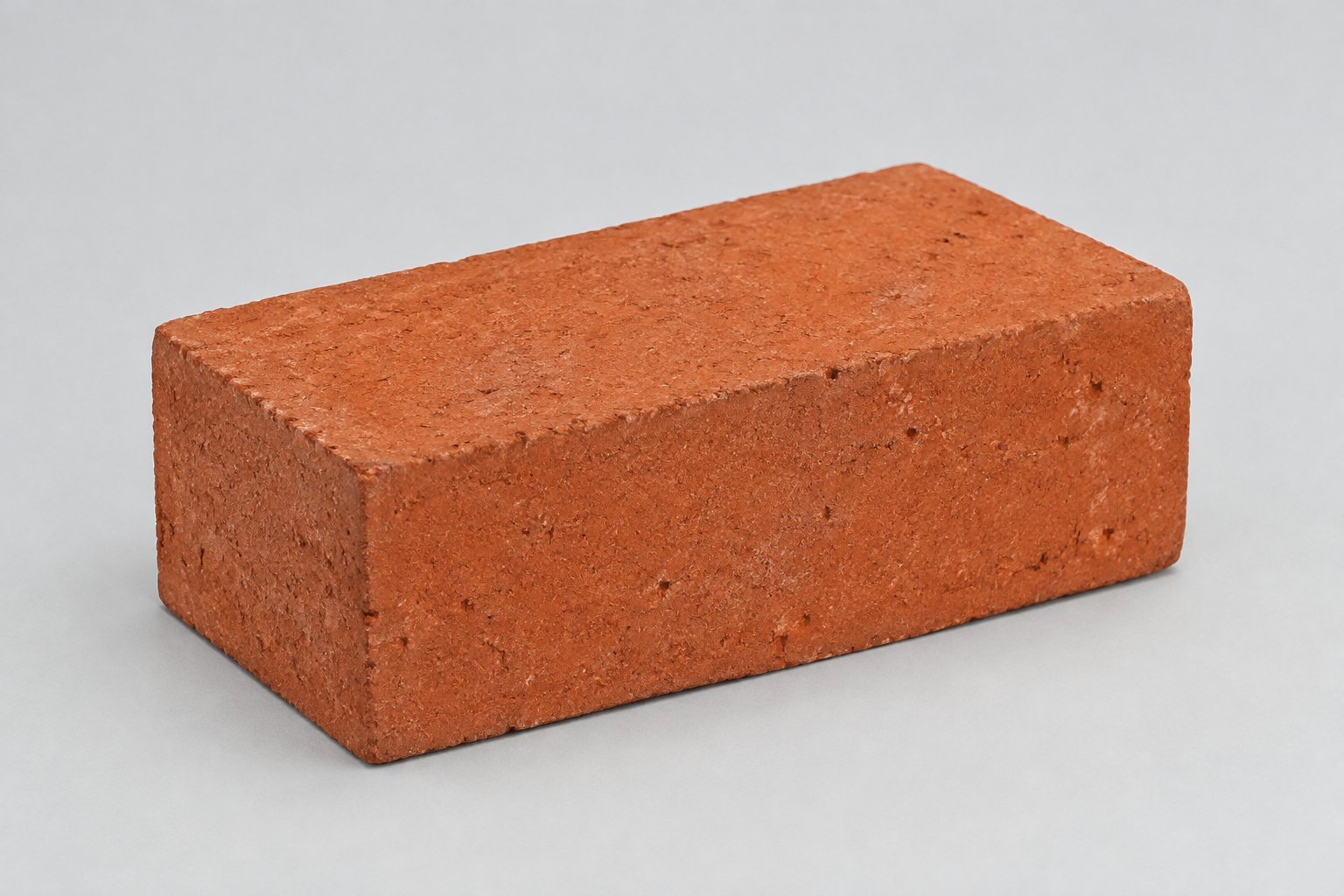
One thing that catches people out. A nominal size is the brick plus one mortar joint, so a modular brick is called 8 by 2 2/3 by 4 inches but measures 7 5/8 by 2 1/4 by 3 5/8. The missing 3/8 inch is the joint, and three courses of modular rise exactly 8 inches, which is why designers like it. Always calculate with the actual size plus your joint. Use the nominal size and then add a joint on top and you have counted the mortar twice and will order short.
Thin brick covers the same area as full brick, because only the depth changes: a modular-face thin brick still needs 6.75 pieces per square foot. If you are using reclaimed thin brick sliced from old full units, measure the faces rather than assuming, because antique faces vary. Corners need L-shaped pieces counted by the linear foot of corner rather than by area.
Calculating your own quantity
Net wall area divided by the area one brick covers, plus waste.
Start with gross area, wall by wall, length times height. Subtract every door, window and vent. A gable end is a triangle, so use half the base times the height. That gives you net area.
Then work out the coverage of one brick. Add the joint to the brick length, add the joint to the brick height, multiply the two, and divide 144 by the result. For modular: 7.625 plus 0.375 is 8, and 2.25 plus 0.375 is 2.625, so 8 times 2.625 is 21 square inches. Round the height to 2 2/3 as many do and you get 21.33, and 144 divided by 21.33 gives 6.75.
Joint width moves the number more than people expect. Going from 3/8 inch to 1/2 inch joints cuts the brick count by roughly 5 to 8 percent while using considerably more mortar. Use the joint your drawings actually specify rather than the one you are used to.
A worked example. A wall 30 feet long and 9 feet tall is 270 square feet gross. Take out a 3 by 7 foot door at 21 square feet and two 3 by 4 foot windows at 24 square feet, leaving 225 square feet net. Multiply by 6.75 for 1,519 modular bricks, add 10 percent for cuts and breakage, and order about 1,671.
Some yards simply use 7 bricks per square foot as a rule of thumb that already carries the waste. That is fine for a rough budget and not fine for a final order.
Mortar is a separate line. A common rule is around 7 bags per 1,000 brick plus roughly a ton of sand, and wider joints, deeply raked profiles and rough antique faces all push that up. On older brick the mortar type matters far more than the quantity: pre-1900 brick is soft and was laid in lime, and a hard cement-rich mix traps moisture and spalls the face. Ask your mason to match the mortar to the brick rather than the other way round.
Wall thickness and bond
The per-square-foot figure only holds for a single wythe in running bond.
A wythe is one layer of brick, one unit thick. A single-wythe wall needs 6.75 modular bricks per square foot no matter how many sides of it you can see, and a double-wythe wall needs about 13.5. Measure the wall once and multiply by the number of wythes. Do not measure the front and back faces and add them together, which double-counts a single-wythe wall and is a surprisingly common way to over-order by half.
Most modern American houses are brick veneer: one wythe tied to frame or block with an air gap behind. Count the brick wythe only. If the backup is concrete block that is a separate takeoff, with standard 8 by 16 inch block running about 1.25 per square foot. A load-bearing solid brick wall is a different structure and the wythe count comes from an engineer.
Ignore the "4.5 inch wall" and "9 inch wall" rules you will find online. Those come from markets using a brick around 9 by 4.5 by 3 inches, where a 9 inch wall is one full brick length thick. American modular is 3 5/8 inches deep and the arithmetic does not carry across.
Bond changes the count too. Running bond shows only the long face and uses the fewest bricks. English bond alternates courses of stretchers and headers, and Flemish bond alternates them within the same course. Both need at least two wythes, because the headers are what tie the layers together, so the count rises with the depth rather than with the pattern. Decorative bonds also mean more cuts, so allow 8 to 10 percent waste for something like Flemish. Corners, sills and arches each want counting separately, and which bond holds up on a reclaimed brick spec affects both the look and the order.
Paving is a different calculation
Pavers lie flat, so you are counting the large top face, which means fewer units per square foot than a wall. Joints are thinner or absent and patterns add cuts at every edge.
A 4 by 8 inch paver laid tight with sand-swept joints covers 32 square inches, so 4.5 pavers per square foot. Set a full-size wall brick flat on its bed face and you see the 3 5/8 by 7 5/8 side, which with a 3/8 inch mortar joint comes to about 3.9 per square foot. Some suppliers use a flat 5 per square foot for paving and hearths, which builds in a margin. Use whichever joint your installer actually plans, tight-laid, sand or mortar.
A 12 by 16 foot patio is 192 square feet, so 864 pavers at 4.5, and with 10 percent for a simple running bond or basketweave on a rectangle you order about 950. A 4 foot walkway running 40 feet is 160 square feet, or 720 before waste. Projects on patios and walkways all run on the same arithmetic, though anything carrying vehicles needs pavers rated for the load.
Herringbone sets every paver at an angle, which means every edge piece gets cut, so plan 15 percent waste and that same 192 square foot patio becomes about 994 pavers. A soldier border is counted separately by measuring the edge in linear feet and dividing by the paver width. Curves cut more again, and a herringbone reclaimed brick patio with a curved edge can reach 20 percent.
Why reclaimed brick needs its own count
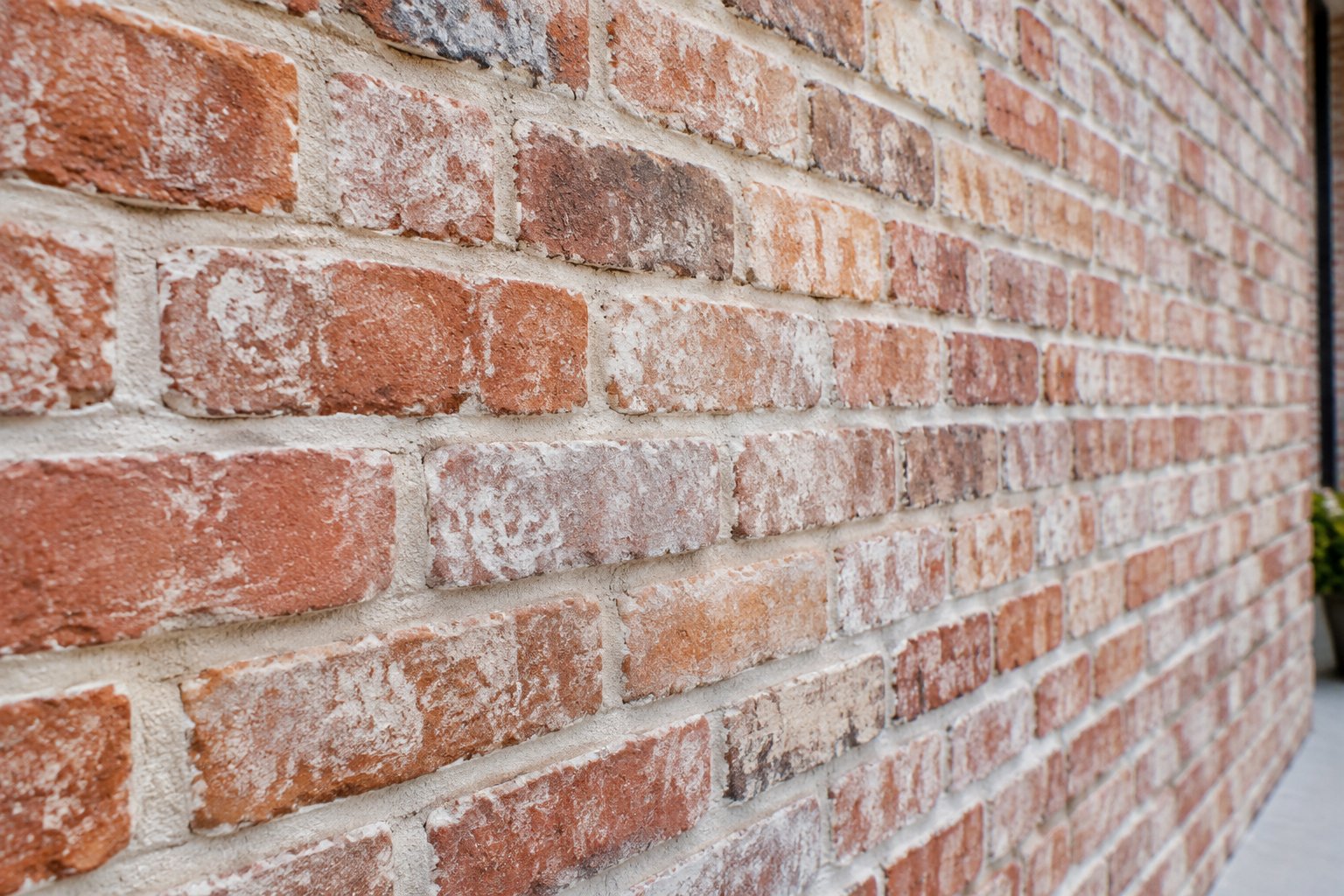
Antique brick was made before modular sizes existed, so the generic figures run short. Most of it comes out of buildings put up between about 1870 and 1940, fired in local kilns, and the sizes vary from yard to yard and sometimes within a single pallet.
So measure rather than assume. Pull ten bricks from different parts of the pallet, measure the length and height of each, and take the average. Then dry-lay a square foot or two with spacers at your planned joint and count what it actually takes. That count is your real coverage. A batch can run 8 1/4 inches long in one pallet and 7 3/4 in the next, and across a large wall that shift moves your total by hundreds of bricks.
Waste needs rethinking too. Five to ten percent is far too low for reclaimed. Some units have chipped faces you will turn to the back or set aside entirely. Some break when cut, because older brick is softer. Your mason will also be sorting for color as the wall goes up, which means handling more brick than goes into it. Start at 15 to 20 percent for reclaimed walls and go higher for herringbone paving or a decorative bond. Knowing how to choose reclaimed bricks helps you judge the grade before you set that figure.
And order the whole quantity at once. A second pallet from a later reclamation comes out of a different building, fired in a different kiln in a different decade, and the color, size and texture will not match. The seam shows.
We hold stock on pallets and dispatch within 48 hours of a paid invoice, where much of the trade quotes six to twelve months, so ordering the full count up front is actually practical. Ask us to reserve it from one lot. House blends start from about $1.70 a brick for St Louis Red, $1.85 for Soft Red or Old Chicago, and $2.00 for New Orleans Hard Tan, and reclaimed brick prices covers how to budget for the extra waste.
Finally, hand your mason a short written sheet rather than a verbal number: the average brick size you measured, the joint width and mortar type, the net area of each wall, the bond, and your waste allowance. If you are matching an existing wall, size matters as much as color, and brick matching starts with a tape measure rather than a photograph.
Order from measurement, not from an average
Use 6.75 per square foot for modular wall brick and 4.5 for tight-laid 4 by 8 pavers, adjust for queen, king or utility, multiply by wythes, then add 5 to 10 percent waste on simple new work and 15 to 20 percent for reclaimed or complex patterns. For antique stock, measure several units, dry-lay a sample, and buy the whole quantity from one lot.
If you are matching an existing wall, send a photograph taken in daylight with a coin or a tape in the frame, or post us a loose brick. Call the New Orleans office on 225-284-7529 or email hays@bourgeoismaterials.com, and standard samples are free to the trade.
Frequently asked questions
How many bricks for 200 square feet?
About 1,350 modular bricks for a single wythe. Add 10 percent for new brick and order around 1,485. For reclaimed, plan closer to 1,550 to 1,620.
How many for 500 square feet?
About 3,375 before waste, so order around 3,713 with 10 percent added. Subtract your windows and doors first, which often takes a surprising amount off.
How many 4 by 8 pavers cover a square foot?
4.5 laid tight with sand joints. A 3/8 inch mortar joint drops it to about 3.9. Add 10 to 15 percent for cuts depending on pattern.
How much area will 1,000 bricks cover?
About 148 square feet of single-wythe wall before waste, or about 222 square feet laid flat as 4 by 8 pavers. King and utility sizes cover more.
How many bricks are on a pallet?
It varies by size, weight and how the yard stacks them, and reclaimed brick is often stacked by hand so counts differ lot to lot. Ask for the exact count per pallet before working out how many pallets you need.