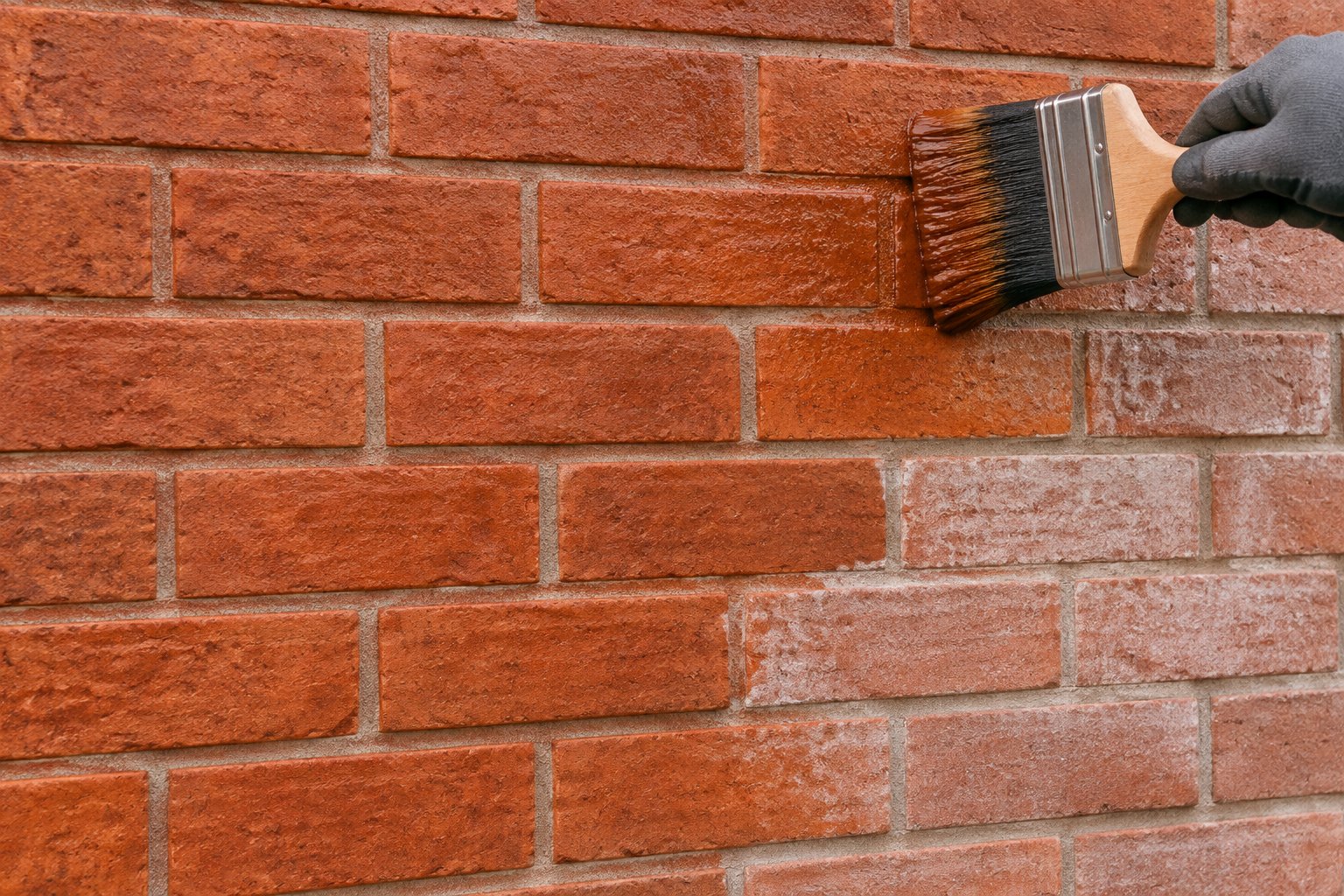
If you want a new color on brick you already own, a breathable penetrating stain is the right finish and paint is the wrong one. Stain soaks in and leaves the pores open so moisture can still escape. Paint forms a film on the face, holds water behind it, and fails later in ways that are expensive to undo.
There is a third option that gets less attention. If color is the only reason you are reaching for stain, buying brick that already has the color you want frequently costs less over the life of the wall. That is most true on new work and on repairs, where nothing has been laid yet and you still have a free choice.
Stain, paint, or different brick
The deciding factor is moisture. Brick takes on and releases water all year round, and your finish either allows that or blocks it.
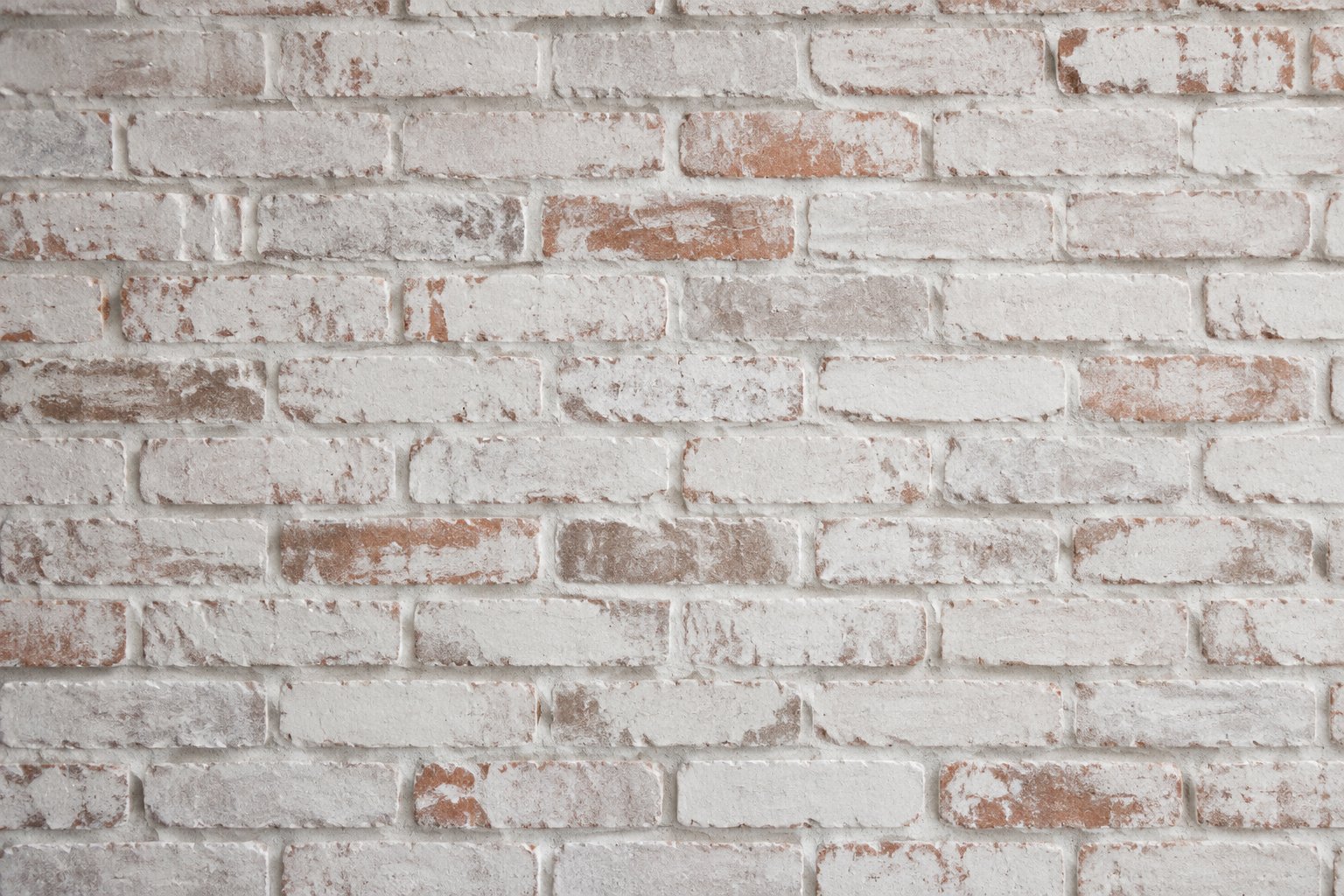
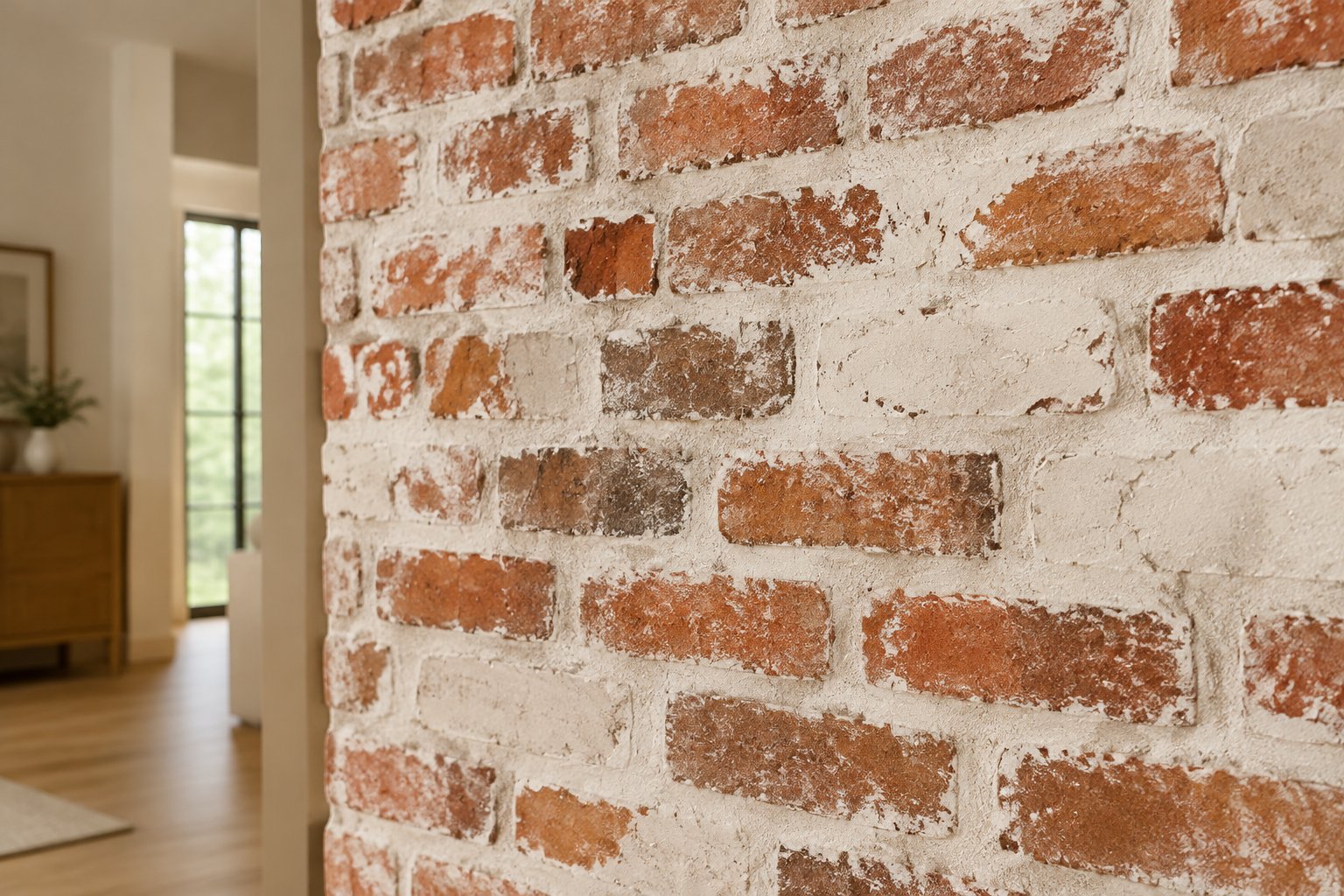
A penetrating stain soaks into the porous face and tints it from within. The surface keeps its sand, its fire marks and its edges. A semi-transparent stain works with the colors already in the wall, so light bricks stay lighter and dark bricks stay darker and the variation survives. That is the whole reason stain reads as brick while paint reads as a coating.
Latex and acrylic paint dry into a plastic skin. Brick takes on water from rain, from the ground and from indoor humidity, and that water needs a route out. A painted film slows vapor movement to a fraction of what a mineral stain allows, and when the water is trapped behind it, freeze cycles push the film off the wall. You get peeling and blistering first, and later the face of the brick itself can spall. Once paint is on, getting it off soft brick without damage is slow, costly work.
Stain makes sense when the wall is already built, structurally sound and unpainted. It is a good fix for a dated brick color on a house you otherwise love, or for a patch of newer brick that sits awkwardly against older work. It is a poor fix for damaged brick, because stain will not rebuild a face and it will not disguise patching. If the brick is crumbling you need a mason and replacement units before you need a color.
Choosing a formula and a color
Water-based stains are easy to apply, low in fumes and safer indoors. Solvent-based stains give stronger color and longer life, with longer drying times and more caution required.
Transparency is a separate decision from chemistry. A semi-transparent stain shifts the color while the texture shows through. A solid or opaque stain hides more and starts to behave visually like paint. If brick appeals to you for its depth, lean semi-transparent.
The best-performing products for masonry use potassium silicate as a mineral binder. It soaks in, reacts with carbon dioxide in the air and crystallizes inside the pores, so the color becomes part of the masonry with no surface film to peel. These cure on their own schedule: initial drying inside about 12 hours, curing beginning after 72, and full cure sometimes taking as long as 60 days.
On color, remember stain only adds. Going darker or shifting tone is straightforward, and a gray semi-transparent over mixed red, orange and brown brick produces paler, mid and darker versions of what was already there, which is what stops the wall going flat. Whites and very light tones need far more pigment to cover a dark base, which pushes you toward opaque coverage and away from the texture you were trying to keep.
Before buying anything, read the technical data sheet for the exact product. Manufacturers list surface types, coverage, temperature range, dilution rules and cure times, and some products must never be thinned while others require a primer. Ask for the vapor permeability figure from the ASTM E96 test, where anything above 10 perms counts as vapor open. Write the product name and the data sheet date into your specification so your contractor buys the same thing you tested.
Check the surface too. Brick, stone and stucco are mineral and take silicate stains well. Synthetic systems such as EIFS behave completely differently, and some concrete stains are acid-based and react with lime. Make sure the label names your actual surface, and test each surface separately.
How stain behaves on reclaimed brick
Unevenly, and that is worth knowing before you start rather than after.
Old brick was fired in kilns with hot and cool zones. Units near the fire came out hard and dark; units further away came out softer, lighter and thirstier. Pre-1900 brick is smaller, softer and more irregular than modern modular, and decades of weather open the surface further. Put the same stain on two neighboring old bricks and one may drink it while the other barely shifts. Very porous units can absorb so fast they leave a chalky residue, at which point you need a primer.
So test on several bricks rather than one. Pick a hard dark unit, a soft pale one, and a few in between, and include the mortar joints, because mortar absorbs more than brick does. Let every test dry completely before judging, since stain looks quite different wet. If you are working with loose reclaimed brick, stain a few spares on a bench first. Treat the result as permanent: you can always go darker, but you cannot get back to the original.
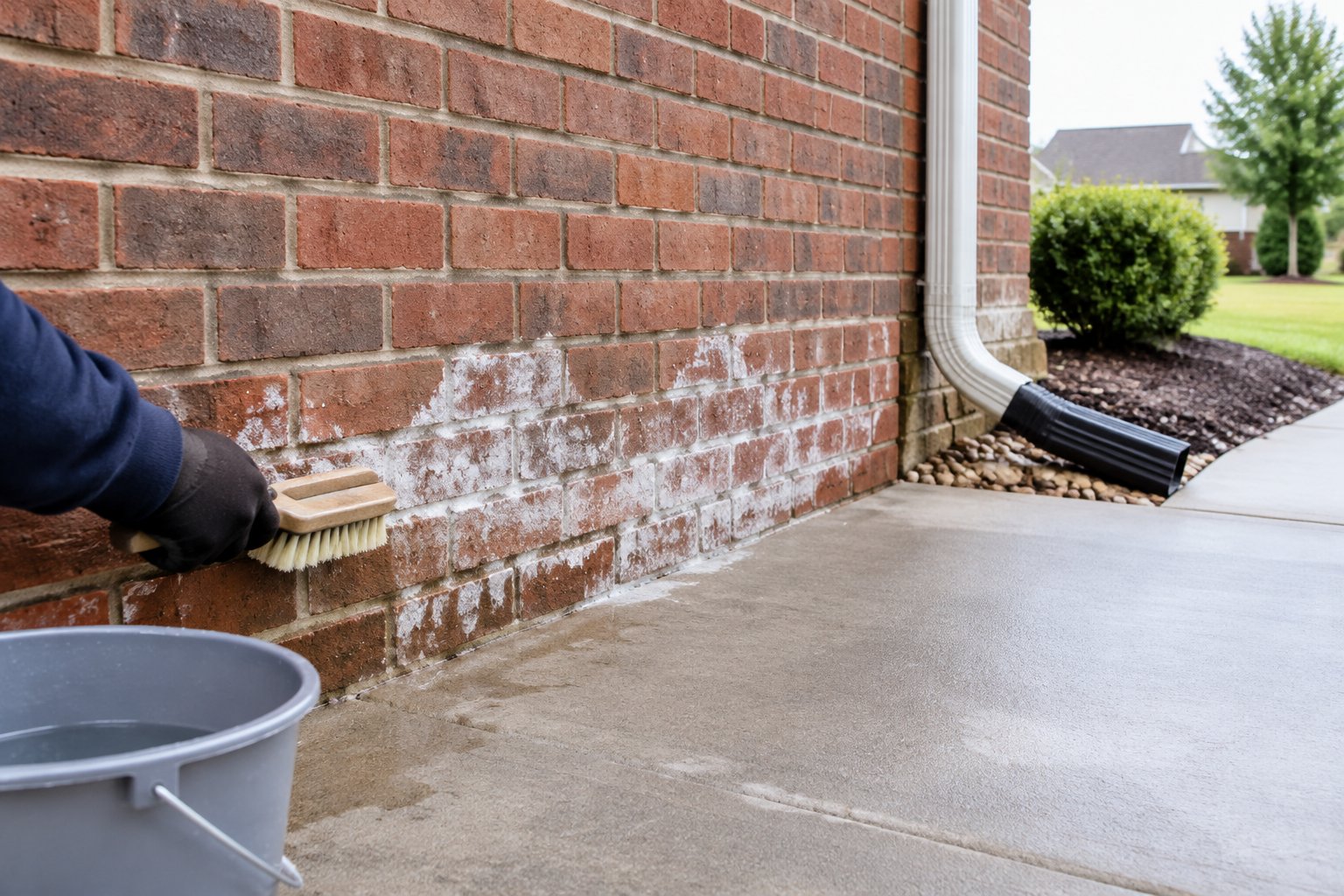
Stain also needs a dry, clean, open surface. Mineral stain manufacturers typically want moisture readings below 10 percent before work starts. White efflorescence means salts are moving through the wall, so find the water and fix it rather than coloring over the evidence. Flick water at the brick as well: if it beads, a sealer is present and has to come off first, and the trade-offs in sealing reclaimed brick apply here too. Spalled faces cannot be stained back to health and those units need replacing.
One judgment call worth making deliberately. On a historic wall the patina is part of the value: soot shadows, lime ghosts and kiln flashing are a record of the building's life, and staining them toward one even color erases that permanently. If you are restoring a period building, clean and repair before you color anything, because the texture and patina in reclaimed materials is exactly what review boards and buyers are looking for.
Doing the work properly
Clean with a soft-bristle brush, mild detergent and water. If a pressure washer comes out at all, keep it near 1,000 PSI with a wide tip, because high pressure and acid both damage soft brick and old mortar. Let the wall dry a full day or more, then follow the product's own preparation steps, which may include a primer or a specific cleaner.
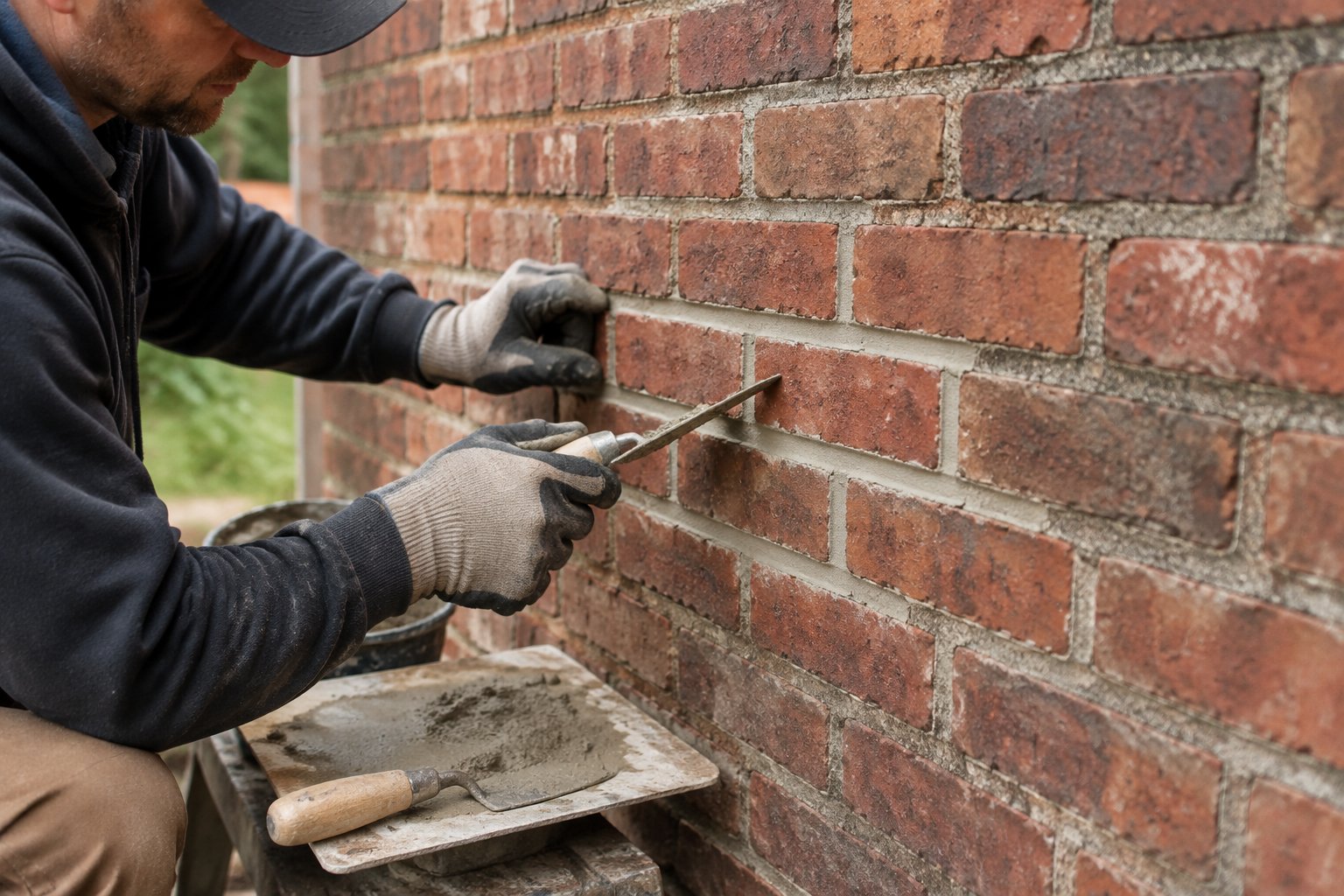
Mortar absorbs faster than brick and will go darker than you intended. Some crews stain each brick by hand with a small brush to keep the joints clean; others stain everything and accept a deeper joint. Decide which before they start rather than after.
Stir often, because pigment settles. Never stop in the middle of a wall: work to a natural break at a corner or a vertical line of joints so you avoid lap marks.
Weather limits are stricter than people expect. A typical mineral stain wants application between about 42F and 87F, and brick in direct sun can easily exceed 120F. Skip any day with rain forecast. Allow at least 12 hours between coats, and wait a week or more before any sealer goes on so the stain can cure with air.
A small interior fireplace is reasonable DIY. A two-story exterior needs proper access and steady hands and belongs with a professional. When you call a staining contractor, ask which product they use and its perm rating, how they will test, how they handle mortar, and how they clean. Anyone planning to sandblast or acid-wash soft brick is the wrong contractor.
When the right brick costs less than the right color
Staining adds a separate trade to the job. Tinting and labor typically run a few dollars per square foot, with scaffolding or lifts adding more on tall walls. Color also fades under UV, so a future touch-up crew returns with the same access costs attached.
Brick that arrives in the right color carries none of that. Our house blends run from about $1.70 a brick for St Louis Red to about $2.00 for New Orleans Hard Tan, with Soft Red and Old Chicago at about $1.85, and the full picture is set out in reclaimed brick cost explained.
There is a limit to what stain can do, too. A match has four parts: size, color range, texture and mortar. Stain only shifts color. It cannot shrink a modern modular brick to fit an 1880s wall and it cannot add the soft edges of a hand-molded unit, and getting the color right at the wrong size still reads wrong from the street. Mortar matters just as much, since old brick was laid in lime and hard Portland-rich mortar forces moisture out through the brick face. Brick matching covers all four at once.
Send a photograph taken in daylight with a coin or a tape in the frame, or post us a loose brick, and we will find the closest match in stock, usually inside the week. Standard samples are free to the trade and ship in about two business days, so you can compare a real brick against a stain sample before deciding.
For new builds, pick a blend whose fired color already suits the design, because Soft Red, Old Chicago, New Orleans Hard Tan and St Louis Red all carry their color through the body of the unit, so a chip shows the same color underneath rather than a pale core. For repairs and additions, source salvaged brick from the same era as the wall, which in this market means structures built roughly 1870 to 1940. How to choose reclaimed bricks covers judging color range and hardness before you buy.
Test before you commit
Stain is the right tool for changing existing unpainted brick, because it keeps the wall breathing and the texture visible, where paint traps moisture and causes problems you will pay for later. Reclaimed brick needs more testing than new, since every unit absorbs differently, and moisture, salts and damaged faces all have to be dealt with first.
If the wall is not laid yet, or you are repairing a section, run the comparison honestly: the cost of staining against the cost of brick that already has your color, with size, texture and mortar in the same conversation.
Call the New Orleans office on 225-284-7529 or email hays@bourgeoismaterials.com and we will help you put that comparison together, including when the answer is to stain what you already have.
Frequently asked questions
What stain is best for reclaimed brick?
A breathable mineral stain based on potassium silicate, because it bonds into the pores and leaves the brick able to release moisture. Use a semi-transparent strength and test on several units, since old brick absorbs unevenly.
Is brick stain the same as masonry stain?
In practice yes. Masonry stain is the broader label covering brick, stone, concrete and stucco. Always check the label names your exact surface.
Can stain make dark brick lighter?
Only an opaque stain can, and it hides much of the texture doing it. Semi-transparent stains darken or shift tone. If you want a lighter wall with natural depth, lighter brick is the cleaner answer.
Can you stain painted or sealed brick?
Standard stain cannot soak into either. Sealers have to be removed first, and paint needs either full removal or a specialist silicate product made for painted surfaces. A water bead test will tell you whether a sealer is present.
How long does exterior brick stain last?
A well-applied mineral stain on sound brick lasts decades, because it becomes part of the surface rather than sitting on it. UV fades the color slowly and the stain wears at the same rate as the brick face. Splash zones and areas hit by road salt go first.