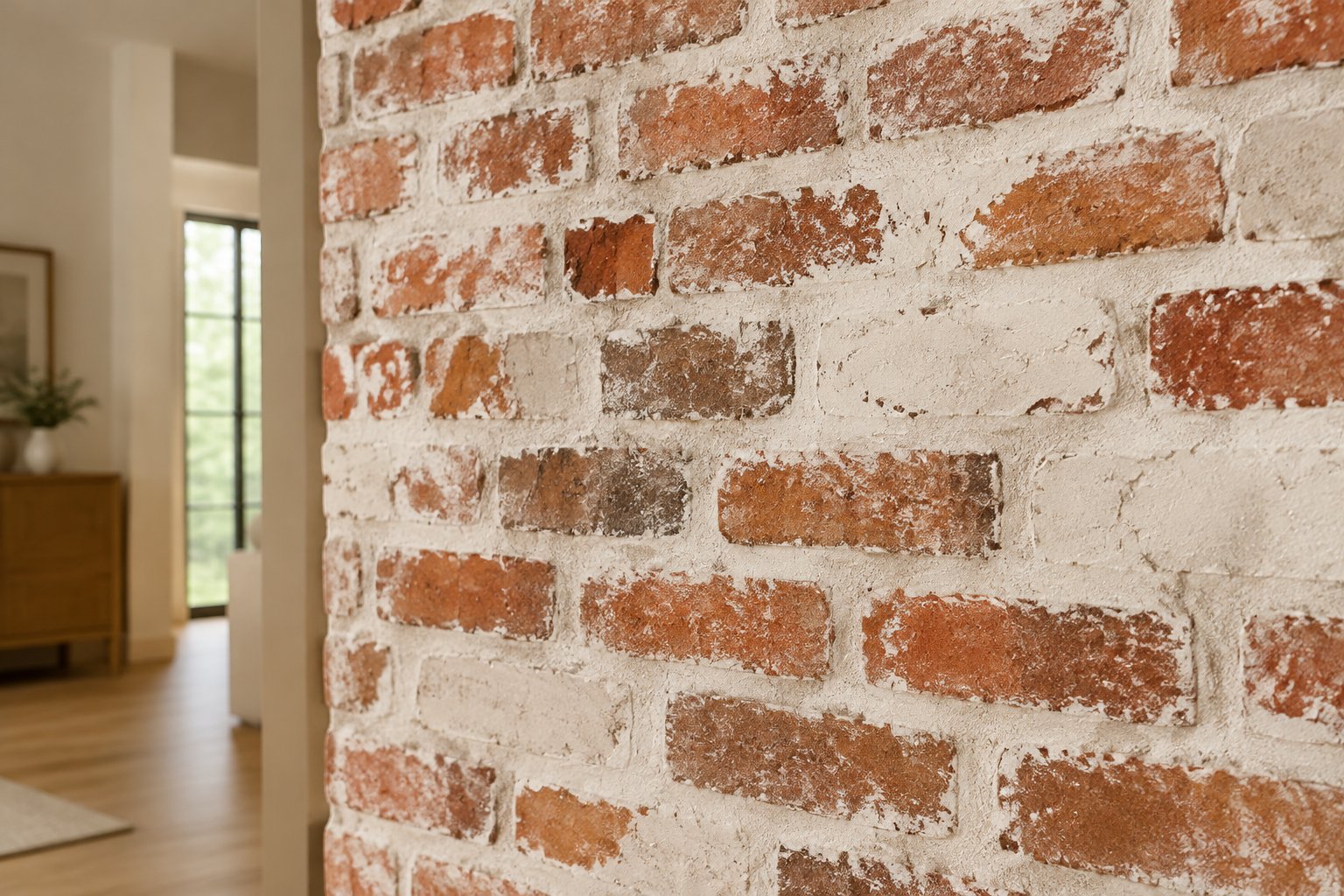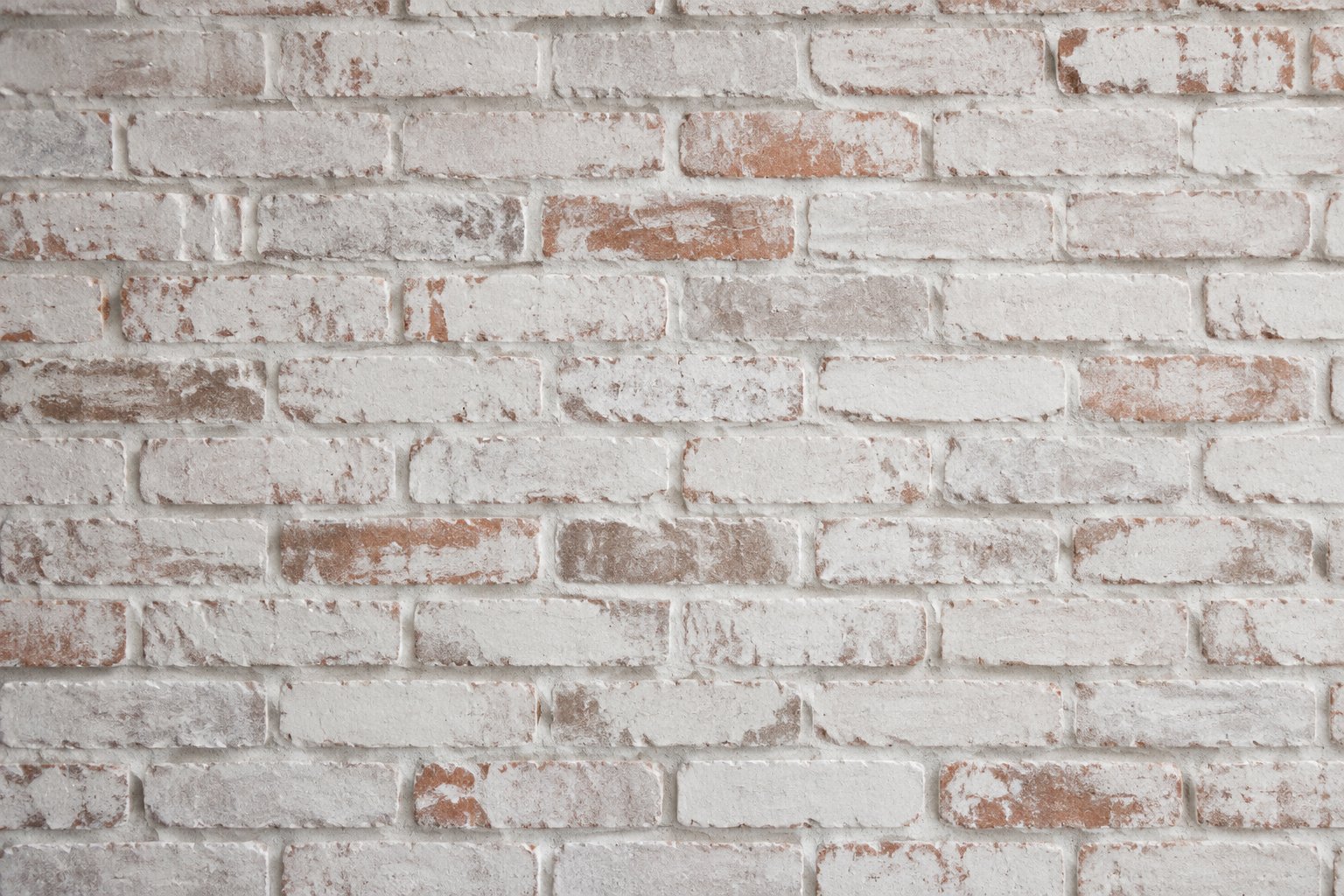
Almost everyone searching for whitewashed brick wants the same thing: lighter brick that still looks like brick. Which finish gets you there depends on what the wall is made of and how long you intend to live with the answer.
The short version. On unpainted, porous brick, limewash is the one to choose, because it lets the wall breathe, wears down gently, and leaves the brick's color showing through. A diluted latex whitewash is easier to control on a small interior feature wall. If you want solid color, use paint. If you want heavy texture, use German schmear. And if the wall is not built yet, the best finish may well be no finish at all.
The five finishes, and the one distinction that matters
They split into two families. Paint and diluted paint are film-forming coatings that sit on the brick. Limewash, mortar wash and German schmear are mineral or mortar finishes that bond into it. The film-formers give you more control on day one. The mineral finishes handle moisture better and age more like masonry.
Before anything else, settle what "whitewash" means in your conversation, because it has two meanings and that is where most of the confusion starts. Historically it was lime and water brushed onto masonry. Today most store-bought whitewash and most DIY projects are white latex paint thinned with water, often around one to one. Both get called whitewash.
They behave nothing alike. Diluted latex is still paint, leaving a thin plastic film in the pores. Limewash cures by pulling carbon dioxide out of the air and converting back into a form of limestone inside the brick face. When you talk to a painter or a mason, say which you mean, because a quote saying "whitewash" could be either.
Read it by your top priority. Breathability and graceful aging point to limewash. Coverage and color choice point to paint. Diluted whitewash sits in the middle, which is exactly why it is so common indoors.
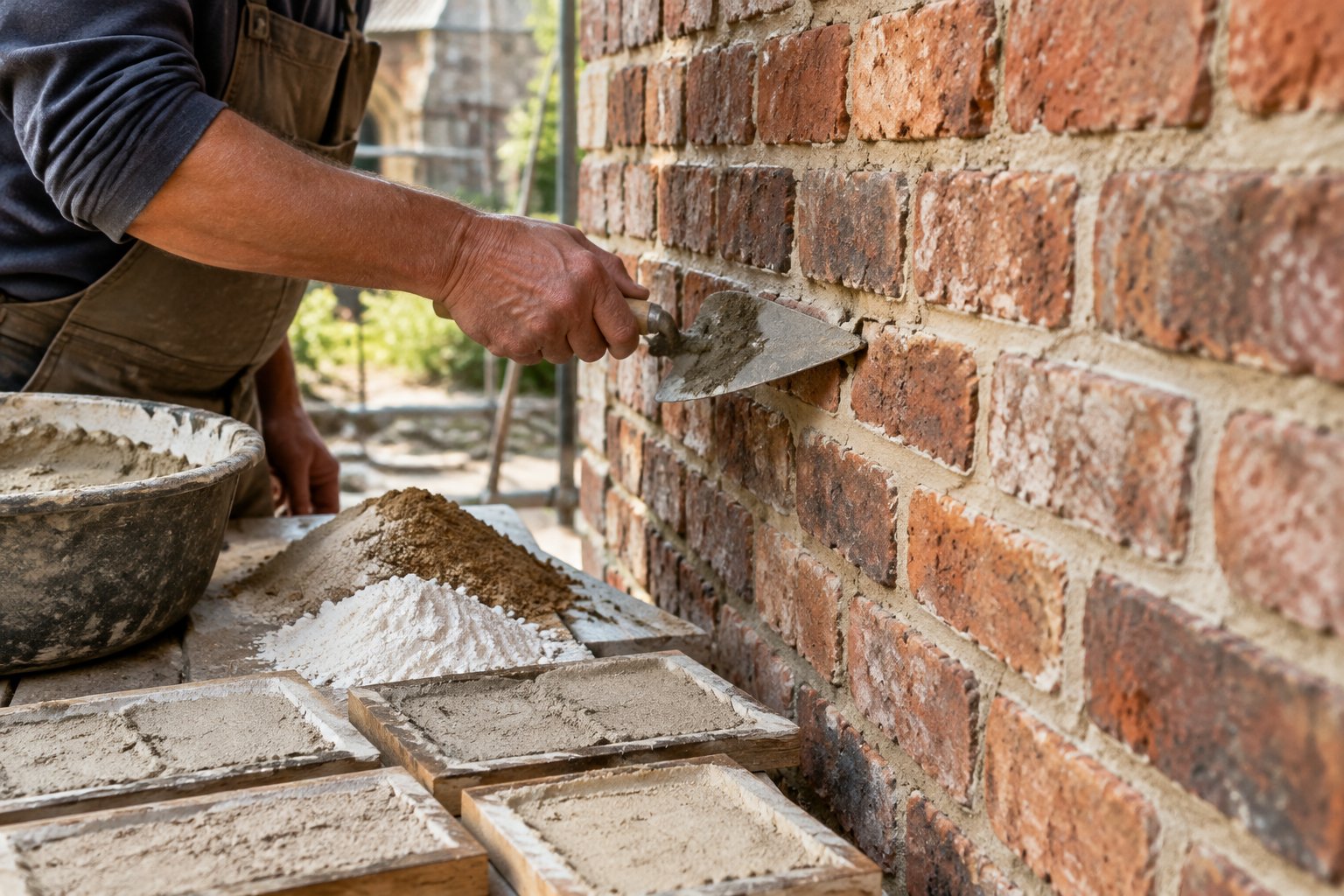
One overlap worth understanding: German schmear and mortar wash are the same material, wet mortar spread across the face. The difference is how much stays on. Schmear goes on thick and is only partly knocked back, so large areas of brick disappear. A mortar wash is thinner, settling mostly into the joints and low spots with more brick face showing. Mortar wash has a long history on Southern houses, where a soft gray-white haze over red brick is part of the regional vocabulary. Both are close to permanent and both change texture as well as color.
Matching the finish to the wall
Start from the result you want. Brick color still visible means a translucent wash. A complete change of color or texture means an opaque finish.
For translucent coverage, limewash is the strongest choice on exterior walls and on any unpainted brick that needs to shed moisture. It needs raw, porous brick and will not bond to a sealer or old paint. Diluted paint suits a small interior wall or a mantel where you want even coverage in a specific shade. Be careful with cool whites over red brick, which can read pink or peach; test warm and neutral side by side before committing.
For an opaque change, use paint, and choose a mineral or masonry paint outdoors because standard latex traps moisture behind its film. If you want texture along with color, German schmear delivers it. Both earn their place on specific walls: an existing house with patchy mismatched repairs, or a plain modern brick with no character to protect. In those cases a heavy coating solves something you cannot solve any other way.
For a new build, be honest about what is happening. Every finish on this list is an attempt to add age to brick that has none. Reclaimed brick already has it, in color shifts, worn arrises and lime residue that no wash reproduces, and our piece on texture and patina in reclaimed materials shows what that looks like close up. If you want a soft washed look from day one, start with a lighter blend: New Orleans Hard Tan at about $2.00 a brick reads pale and soft on an elevation, Soft Red at about $1.85 gives warmth with plenty of variation, and neither needs a coating maintained. Weigh it up in reclaimed brick vs new brick, or look at the full range of reclaimed brick and stone we hold on pallets.
What to check before you choose
Where the brick is, what condition it is in, and what is already on it.
An interior wall stays dry and stable, so diluted paint performs well. A fireplace surround is a good candidate too, provided you clean the soot off first and keep any wash out of the firebox. If you are choosing brick for a new surround, which rustic reclaimed bricks fit a fireplace covers the options.
An exterior wall faces rain, sun and freeze cycles, with moisture moving through it in both directions. A film blocks that movement and the water eventually pushes the coating off, which is why limewash or a lime-rich mortar finish outlasts diluted latex outdoors. On whole-house work, think about how the finish will read across a full facade from the street, because a sample board and an elevation are very different things.
Stop if you see any of this
Pre-1900 brick is smaller and softer than modern modular and was laid in lime mortar, with the joint deliberately the weak point so moisture escapes through it. Hard Portland-rich mortar or a film-forming coat traps that moisture, which then leaves through the brick face and blows it off. That is spalling and it does not reverse.
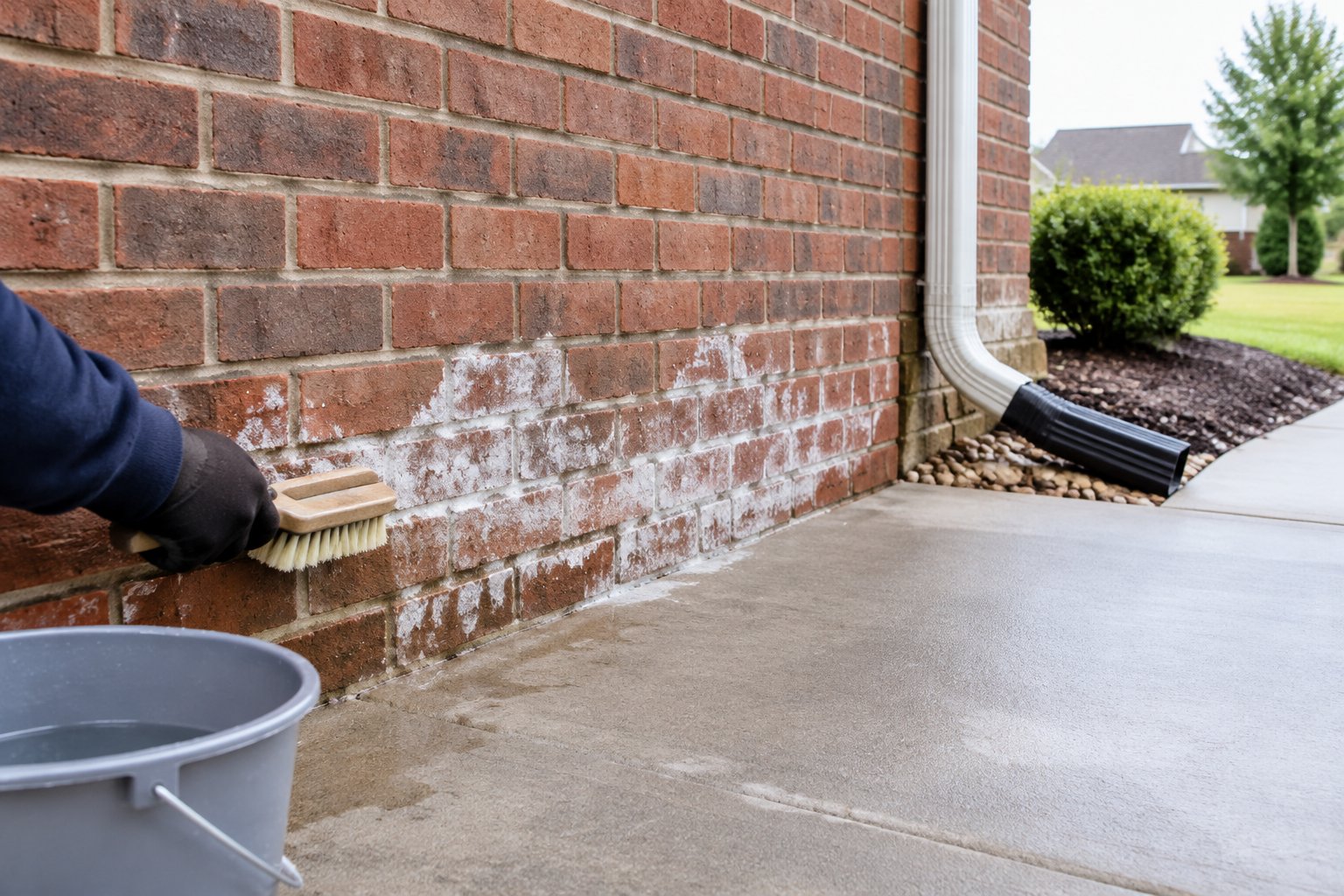
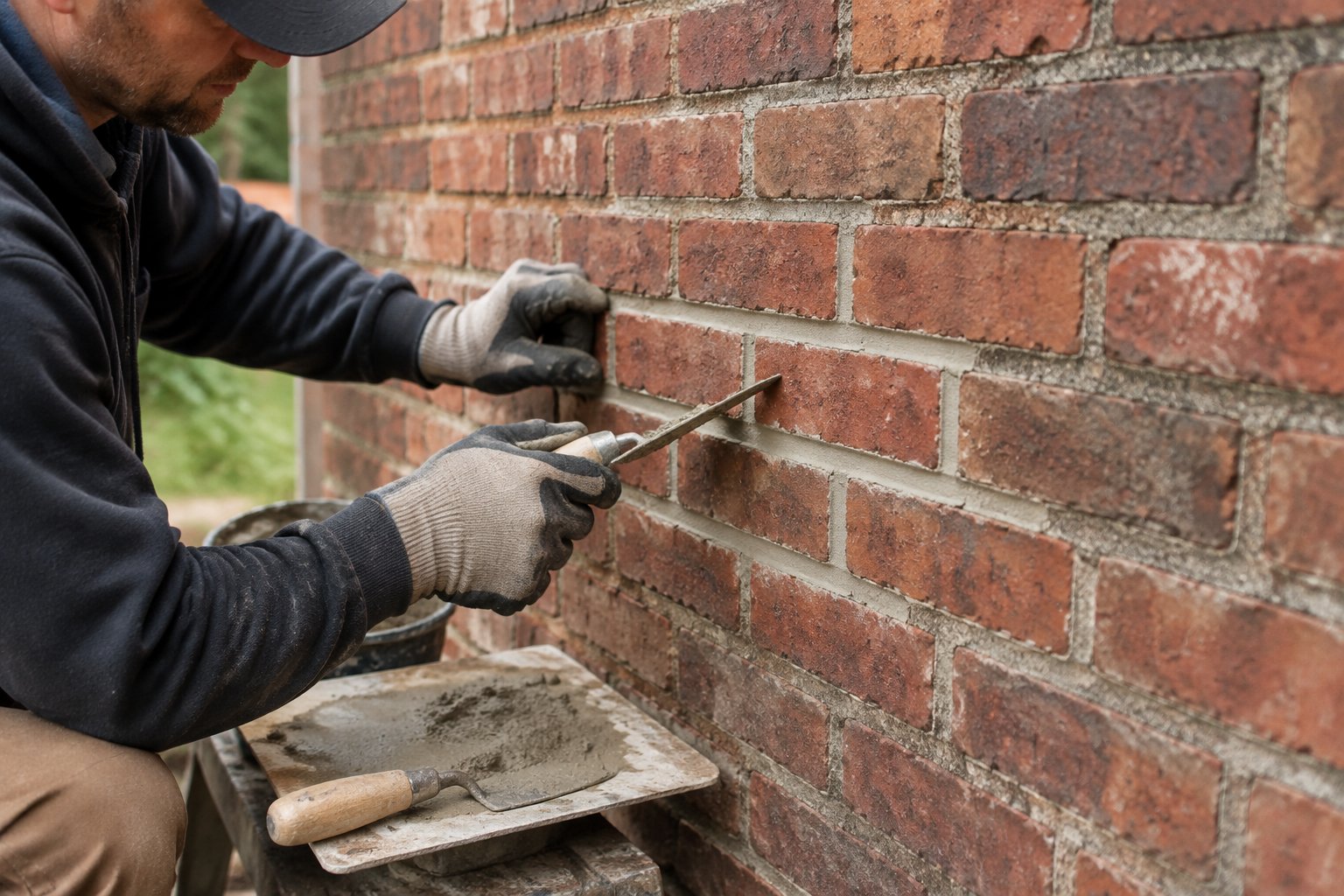
So before any finish goes on, stop for flaking or crumbling brick faces, white salt bloom that keeps returning, damp patches or water staining, and cracked or missing mortar. Get a mason in. If units need replacing, antique brick of the right size and hardness keeps the wall working as one system rather than as two.
Then do the spray test. Splash water on the brick: if it darkens and soaks in, the brick is open and will take limewash. If it beads, a sealer or coating is in the way, and our post on sealing reclaimed brick explains why those cause trouble on old masonry. Whitewash over painted brick works only with a paint-based wash, since limewash needs open pores.
Whatever you choose, make a test panel several bricks wide including mortar joints, let it dry completely, and look at it in both morning and evening light. Every brick blend takes a finish differently and a panel is the only honest preview of your own wall.
Cost, now and later
Materials are cheap and labor is not. Professional whitewashing generally lands somewhere between about $2.50 and $15 per square foot depending on the finish, the prep and the access, with exterior work at the top of that range.
labor dominates most quotes. Porous brick drinks more material and wants more coats. Deep or uneven joints take longer to brush. Prep adds time for cleaning, dealing with salt bloom and repairing joints. Height adds ladders or scaffolding, and exterior work depends on dry weather, which can stretch a schedule considerably. Ask any contractor to itemise prep, coat count and access separately so you can compare like with like.
Then think about lifetime cost, which is where the cheap option often stops being cheap. Paint on exterior brick needs repainting when it peels. Limewash wants a refresh coat every few years outdoors, but recoating is quick and needs no stripping at all. Interior finishes last considerably longer.
Removal is the cost nobody budgets for. Cured paint and German schmear are both hard to take off without harming the brick, and abrasive removal destroys the fired outer skin of soft brick permanently. Budget for the day you might want the finish gone, not just the day it goes on.
If you are weighing a finish against simply starting with better brick, send a photograph of the wall taken in daylight with a coin or a tape in the frame to hays@bourgeoismaterials.com. We will tell you what the equivalent in reclaimed brick would cost, and standard samples are free to the trade.
Choosing well
Match the finish to the brick rather than to a photograph. Porous unpainted brick outdoors wants limewash. A small interior wall where you need a precise shade can take diluted paint. A tired modern elevation with mismatched patching is a fair case for German schmear. Damaged or damp masonry wants a mason before it wants a brush. And a new build wants a conversation about whether you are paying to imitate something you could simply buy.
All five finishes can look superb on the right wall. The difference is what happens in year ten, and whether you will still have the option to change your mind.
Call the New Orleans office on 225-284-7529 or email hays@bourgeoismaterials.com and we will tell you honestly which route suits your project, including when that answer is a finish rather than our brick.
Frequently asked questions
Is whitewashing brick a good idea?
On sound, clean brick with no moisture problems, yes. It brightens dark brick while keeping the texture visible. Leave it alone on cracked, spalling or historically significant masonry until a mason has looked at the wall.
What are the disadvantages?
Paint-based whitewash is hard to remove once cured, and outdoors it can trap moisture and chip. Rushed application gives an uneven result. The color range is limited to whites and soft off-whites.
How do I do it, and when should I hire someone?
Clean the brick, mix roughly one part paint to one part water, test a small area, then brush on and wipe back in small sections. A beginner can manage a small interior wall. Hire out tall exteriors, soft historic brick, and anything needing mortar repair first.
Can you whitewash painted brick?
With a paint-based wash, yes, because paint bonds to paint. Limewash and mortar finishes will not, because they need open pores. Check the existing paint is firmly attached before adding anything over it.
Can whitewash be removed without damaging the brick?
Fresh limewash comes off with water and a stiff brush reasonably easily. Cured latex needs chemical strippers or poultices and rarely comes off completely. Avoid sandblasting and high-pressure washing, which strip the fired face and cause lasting spalling.