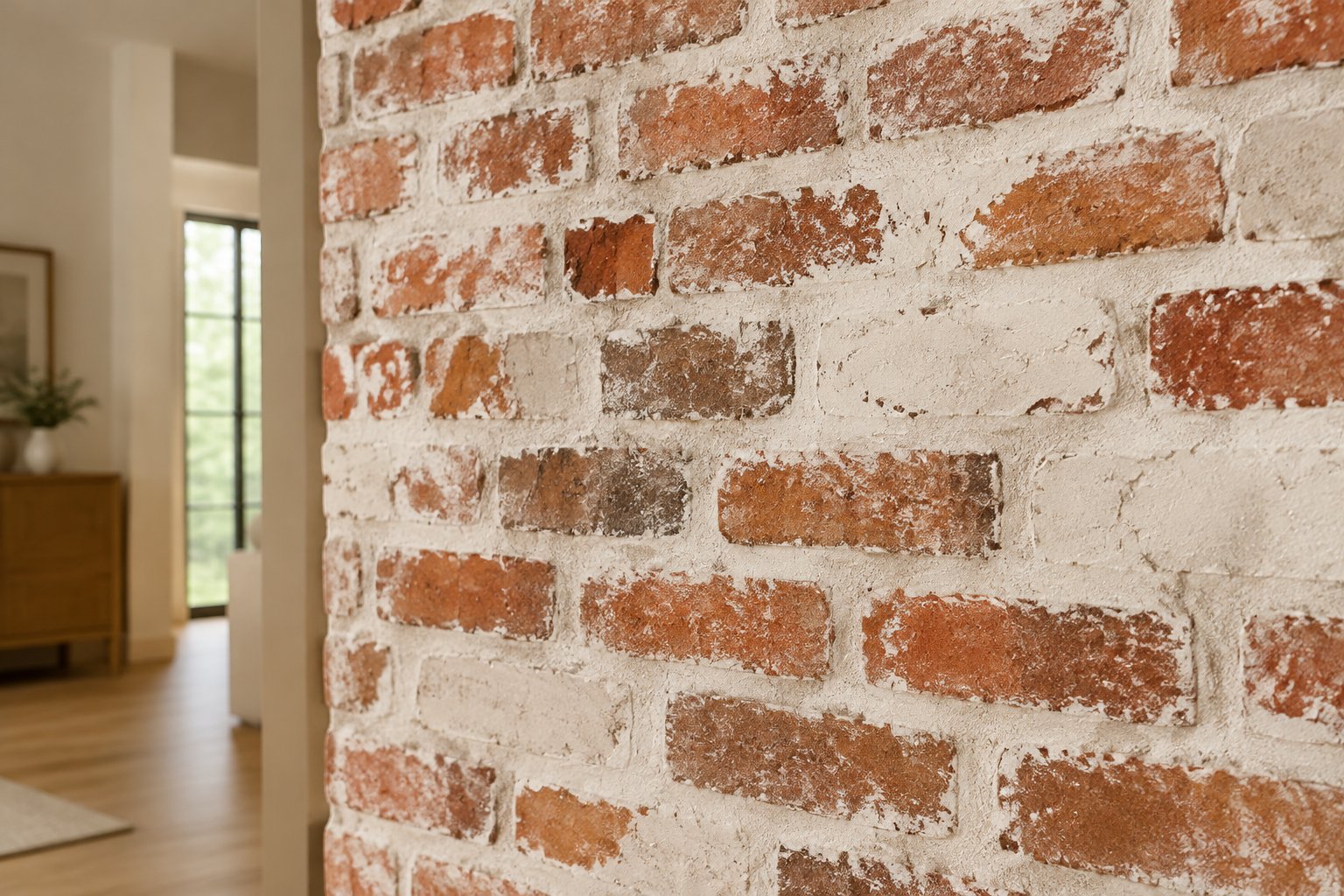
German schmear is a mortar wash spread over brick and partly wiped back before it sets. Done well it makes a tired wall look older, softer and vaguely European. Done on the wrong wall it is an expensive, permanent mistake.
The short version: schmear earns its place when you are fixing the look of an existing wall, a house with mismatched repairs or a flat modern brick nobody likes. On a new build it is a way of paying for the appearance of age, and brick that is actually old already has it. Professional work runs around $5,000 on an average house. The materials for a fireplace surround cost less than dinner.
The thing to understand before you commit is permanence. Mortar bonds to brick because that is what mortar is for. It weathers on its own schedule and it takes acid, grinding or sandblasting to get off, all of which damage the brick underneath.
What the finish actually changes
Three things at once: the color you see, the texture you feel, and how sharply each brick reads against its joints.
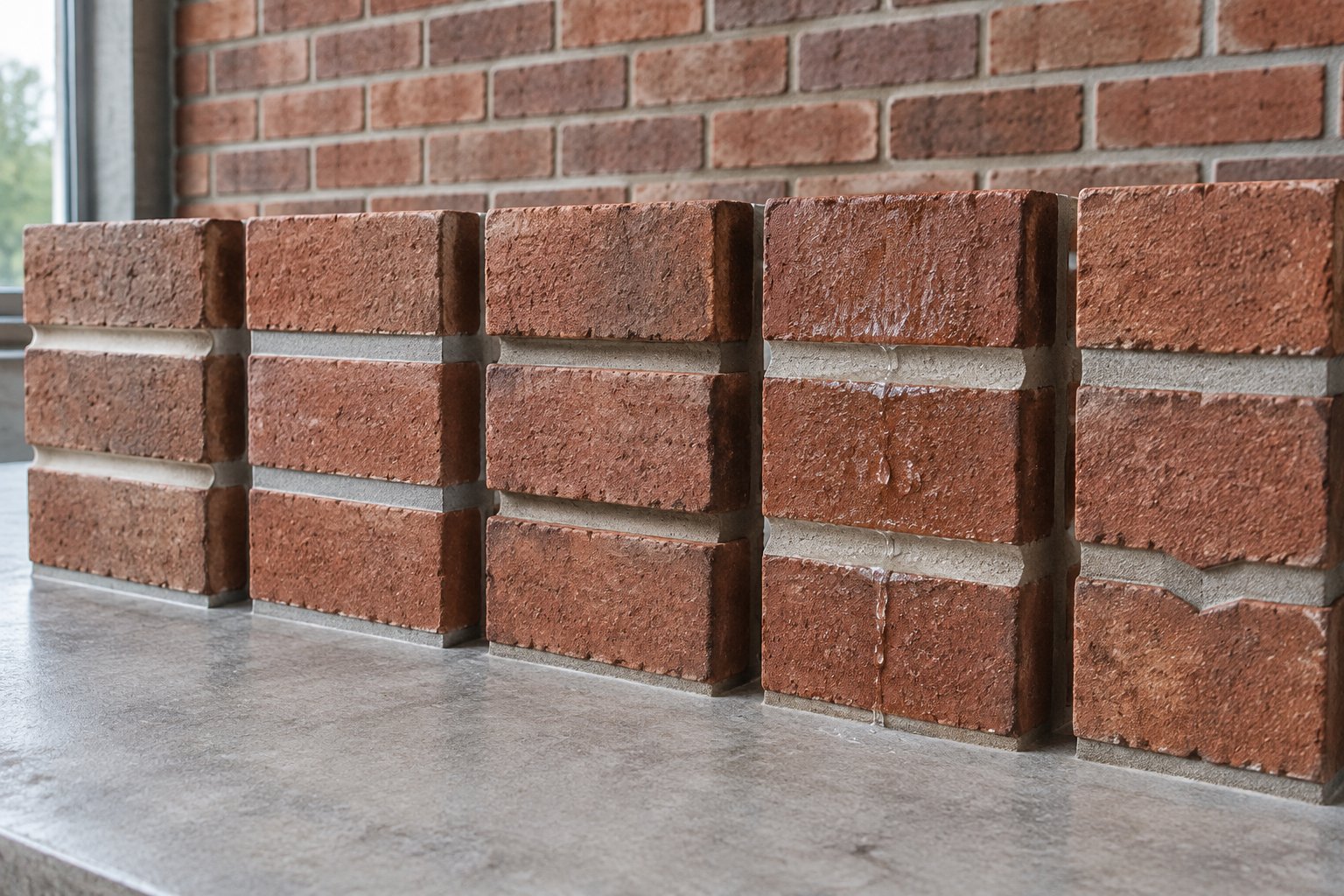
Coverage is the control you have. A light pass leaves most of the brick showing with white mortar caught in the pores and along the arrises. A heavy pass hides most of the face and leaves only glimpses of red or tan coming through. As coverage goes up the joint lines blur, and a tidy machine-laid grid starts to read as irregular brick bedded in wide mortar. Because the texture is physical rather than printed, raking light across the wall picks out ridges and hollows in a way paint never manages.
The name is recent, incidentally. It came out of a 2015 television renovation show and stuck, and you will see it spelled "German smear" just as often. Some trades use "mortar wash" for a thinner, more even version of the same idea.
How it differs from the other white finishes
It comes down to what the material is. Limewash is lime and water, it soaks into the brick, and it stays breathable. Modern whitewash is thinned latex or acrylic paint and generally wants recoating every five to seven years. Paint forms a film that can trap moisture and peel.
German schmear is mortar, so it adds genuine thickness and bonds tightly to the face. That bond is what makes it the most durable of the four and also the hardest to reverse. If you want to compare all of them properly before choosing, that is a separate decision and worth making deliberately.
When a coating is the right answer
When the brick you have is sound but looks wrong. A 1980s ranch in flat orange brick. A wall patched in three different reds over forty years. An addition that never matched the original house. All of those can read as one coherent surface under a fuller schmear, and you keep the structure and skip a rebuild.
If the patchwork is the only problem, price it against matching reclaimed brick for the renovation before you coat an entire elevation. Replacing forty mismatched bricks is sometimes cheaper and always more reversible than coating four thousand.
Exterior facades are the common use and it suits cottage, farmhouse and old European styles. Interior walls and fireplace surrounds take it too, though indoors the texture sits close to the eye and reads considerably heavier than it does from the street. On a contemporary house the rustic effect can fight the architecture rather than soften it.
Three walls that should not be schmeared
Soft historic brick. Pre-1900 brick is soft and was laid in lime, with the joint deliberately the weak point so water can escape. Spread a hard Portland-rich mortar across that face and moisture starts leaving through the brick instead, which takes the fired skin with it. You will have spent money accelerating the decay of the thing you were decorating.
Painted brick. Mortar will not bond to paint. The paint has to come off first, which is its own project and its own risk to the brick.
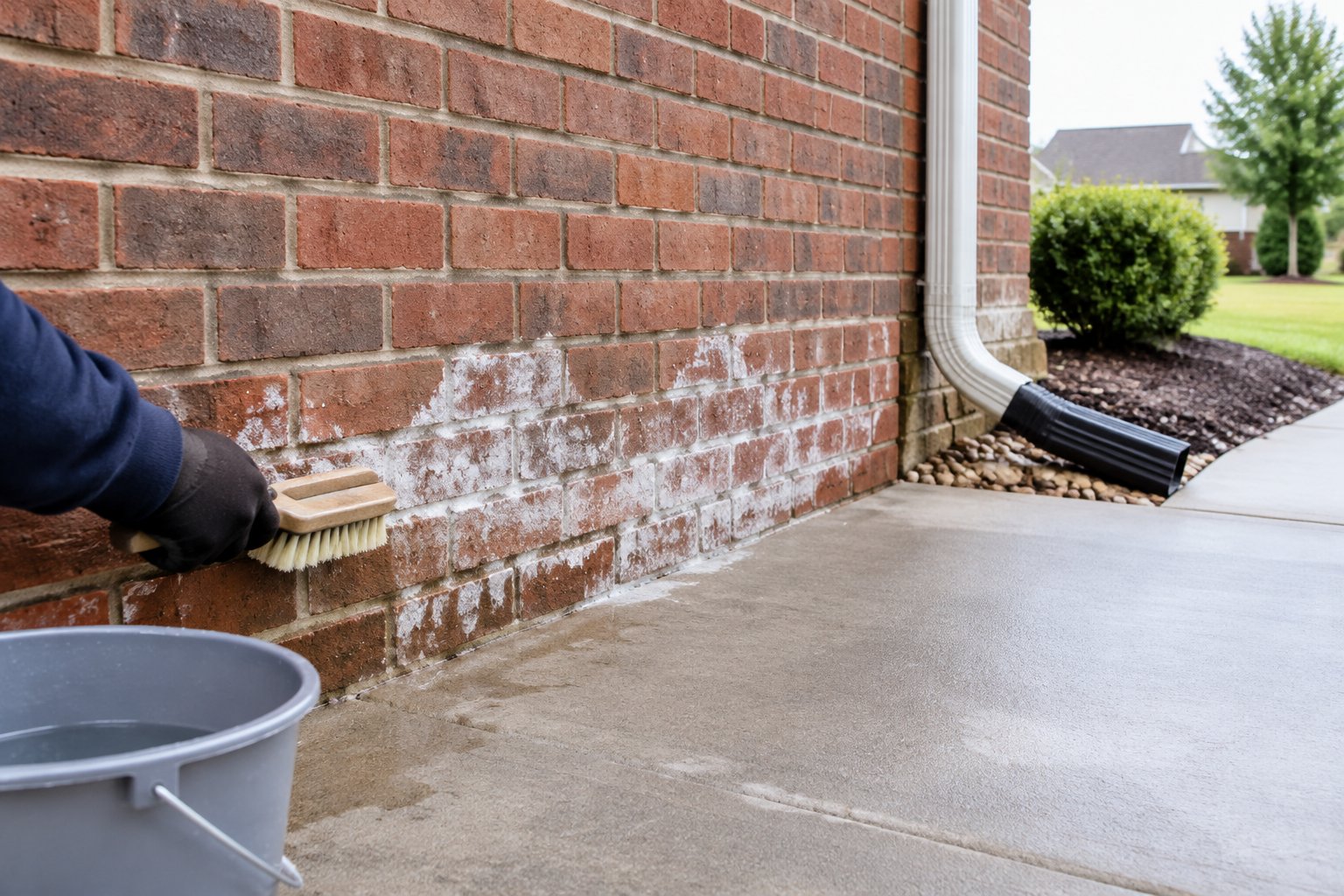
Anything damp. A wall already showing salt bloom, flaking or persistent damp has a water problem, and coating it hides the evidence while speeding up the damage. Fix the water, then decide.
And the case for starting with old brick instead
On a new build, a schmear is a way to buy the look of age. Genuinely old brick already has it, in the fired color, the worn arrises and the size variation that come from a century in a wall and cannot be applied afterwards. Antique brick from structures built roughly 1870 to 1940 carries the kind of patina that shapes architectural character all the way through the unit rather than across its surface. You also end up with nothing to crack, stain, patch or remove in fifteen years.
That is not an argument against schmear. It is an argument for knowing which problem you are solving.
Specifying the work
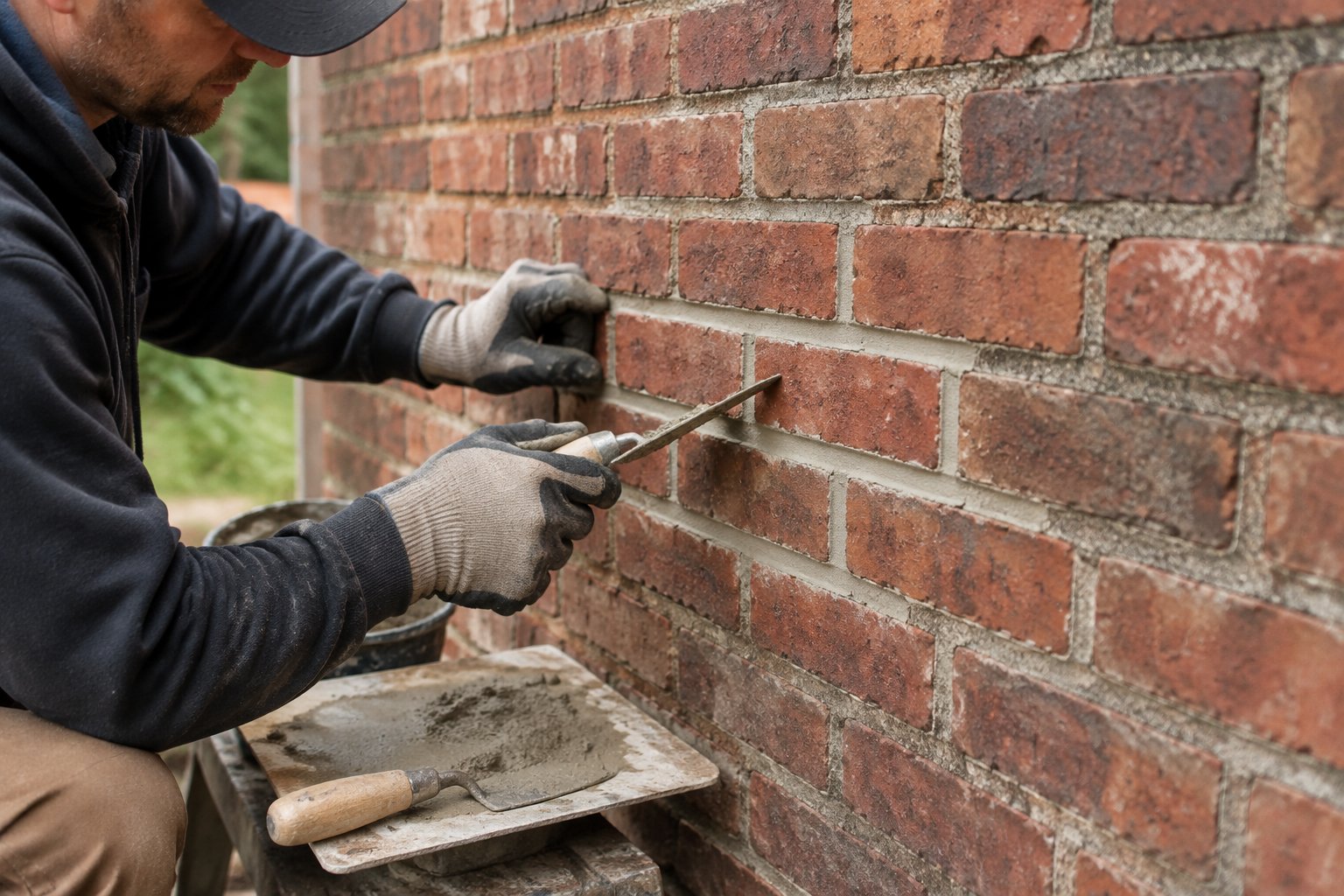
On paper the application is simple: clean, wet, spread, wipe back, cure. What decides the outcome is the specification you hand your contractor, and on any large wall this is work for a mason or an experienced finisher rather than a weekend.
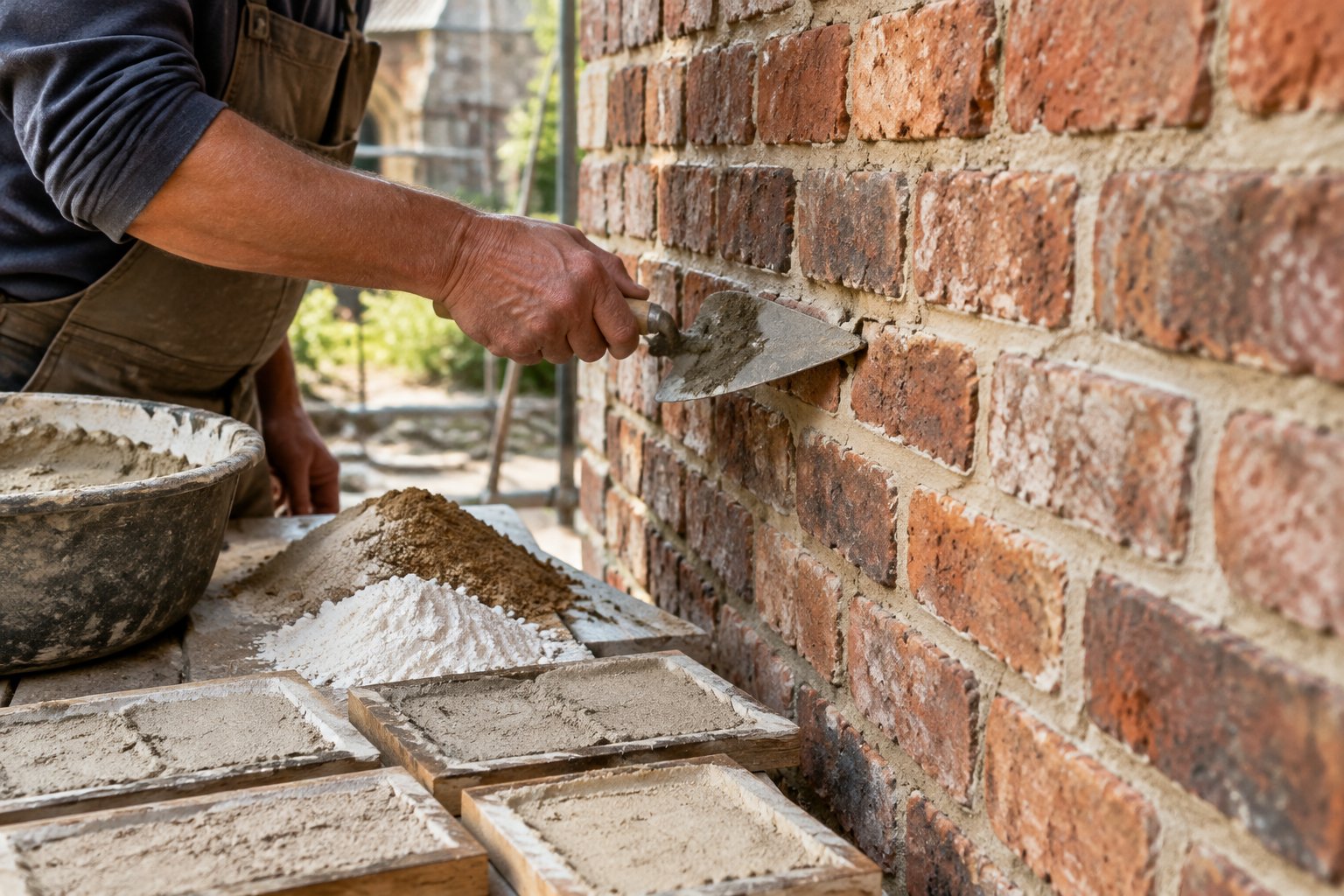
The mortar must never be harder than the brick or the joints beneath it. Most guides call for bagged premixed white mortar, which is Portland cement, lime and sand in set proportions, and that is reasonable on hard modern brick. On anything softer, ask for a lime-rich or lime mortar and get it in writing. The Brick Industry Association treats aesthetically applied surface mortars alongside paints and stains as finishes that change how masonry performs, which is the right way to think about it.
Insist on a sample panel on the actual wall, in daylight, cured before you approve it. Wet mortar looks darker and the brick looks brighter than either will end up. Agree how much brick shows, how heavy the texture is, and the mortar color, then keep that panel as the standard for the whole job.
The wall needs cleaning of dirt, grease and mildew, then dampening so the mortar does not flash off. Work runs top to bottom in sections of about five feet square, because mortar starts setting in twenty to forty-five minutes depending on heat and humidity and the crew has only that long to wipe it back to the approved coverage.
Two things to nail down before anyone starts. How will they stop the wall drying too fast in sun or wind, and what happens if frost is forecast. And confirm that weep holes at the base of a veneer wall and above the openings stay clear. A schmeared weep hole stops the wall draining, and trapped water will cause far more trouble than any cosmetic flaw ever would.
What it costs
Mortar is cheap. labor, access and preparation are where the money goes. A professional job on a house averages around $5,000, with a realistic range from about $500 for mostly DIY work up to $15,000 on something large or tall.
Bagged mortar is roughly $5 to $10 for an 80-pound bag and a whole house may use less than $100 of mix. labor runs about $1 to $3.50 per square foot. Extra stories add ladder and scaffolding cost. If paint has to come off first, add roughly $0.50 to $2 per square foot, which on a house is another $1,000 to $4,000. Any brick repair happens before the finish and is priced separately.
A fireplace surround is a genuine weekend job: mortar, a trowel, sponges and drop cloths. A whole exterior is not. It needs safe access, a steady hand across large areas and consistency from one elevation to the next, and mistakes on a big wall are difficult to correct. That is the main argument for hiring exterior work out.
On an existing house a schmear will almost always cost less than rebricking, because you are keeping the wall. On a new build the comparison is different and much closer than people assume: the mason lays either brick for roughly the same labor, so what you are really comparing is the brick price difference against the cost of the schmear plus its upkeep. Our house blends run from about $1.70 a brick for St Louis Red through $1.85 for Soft Red and Old Chicago to $2.00 for New Orleans Hard Tan, and reclaimed brick cost also turns on freight and waste allowance.
If you want to run that comparison properly before deciding, send a photograph of the wall taken in daylight with a coin or a tape in the frame and we will tell you what the equivalent in reclaimed brick would cost. Standard samples are free to the trade and ship in about two business days.
How it ages, and why you are keeping it
A good schmear lasts decades with little attention, but it ages on its own terms. Exposed walls soften as rain wears the thin edges of mortar away. Shaded, humid elevations collect algae and dirt in the texture, and white mortar shows every bit of it. Hairline cracks appear where the wall moves or where the coat went on thick.
Small repairs are possible, but matching aged mortar for color, texture and coverage is genuinely skilled work and a fresh patch will sit brighter than its surroundings for a year or two.
Clean it with a hose, a soft brush and a mild cleaner. Keep pressure washers off it, because they strip mortar unevenly and leave a patchy result that is worse than the dirt. Sealing is optional and usually a poor idea, since many sealers slow the wall's drying and add an unwanted sheen, and our piece on whether sealing protects patina or traps moisture applies just as much to a coated wall as a bare one.
Removal is the part to be realistic about. Mortar bonds to brick the way it is designed to, so taking it off means acid, sandblasting or grinding, and all three attack the fired outer skin. Once that skin is gone the brick drinks water and spalls faster. On soft brick, removal can leave you replacing units. Treat the decision as permanent, because in practice it is.
Buy the age or apply it
A simple rule covers most cases. If the wall already exists, is structurally sound, is hard modern brick, and you dislike its color or its patchwork, German schmear is a fair and cost-effective fix. If the brick is soft and old, painted, or damp, leave the coating off and deal with the masonry first.
And if you are building new or adding on, consider buying the age rather than applying it. For a period project in particular, period-correct materials keep a house honest to its era in a way a surface treatment cannot.
Both routes can look superb. The difference is that a schmear is a coating with its own aging curve, while reclaimed brick carries its character all the way through.
Call the New Orleans office on 225-284-7529 or email hays@bourgeoismaterials.com and we will tell you honestly which one your project wants, including when that answer is the schmear.
Frequently asked questions
Is German schmear good for brick?
It is fine on hard, sound, modern brick provided the mortar is no harder than the brick. It can do real harm to soft historic brick by trapping moisture and forcing it out through the face. Have a mason assess the brick and the joints before committing.
Is German schmear going out of style?
It peaked after its television moment in 2015 and some homeowners have moved toward limewash or bare brick since. Because the finish is effectively permanent, choose it only if you like it on its own merits rather than because it is current. Old brick is not subject to the same cycle.
Can it be used on a brick backsplash?
It can, but the rough texture holds grease and is harder to wipe than a smooth surface. Brick near a stove wants a finish you can scrub, which is why reclaimed thin brick with its natural face is often the better answer there.
What mortar should I use?
White or gray premixed mortar is widely available in 80-pound bags and is fine on hard modern brick. On anything soft or historic, specify a lime-rich or lime-based mix and put it in writing. Avoid mixing your own unless you know the ratios you are aiming at.
Can I change the coverage once it has cured?
You can add coverage with another coat. Taking coverage away is very difficult, because wire brushing or acid removes mortar unevenly and can scar the brick. Settle the coverage on a cured sample panel before the full wall goes ahead.