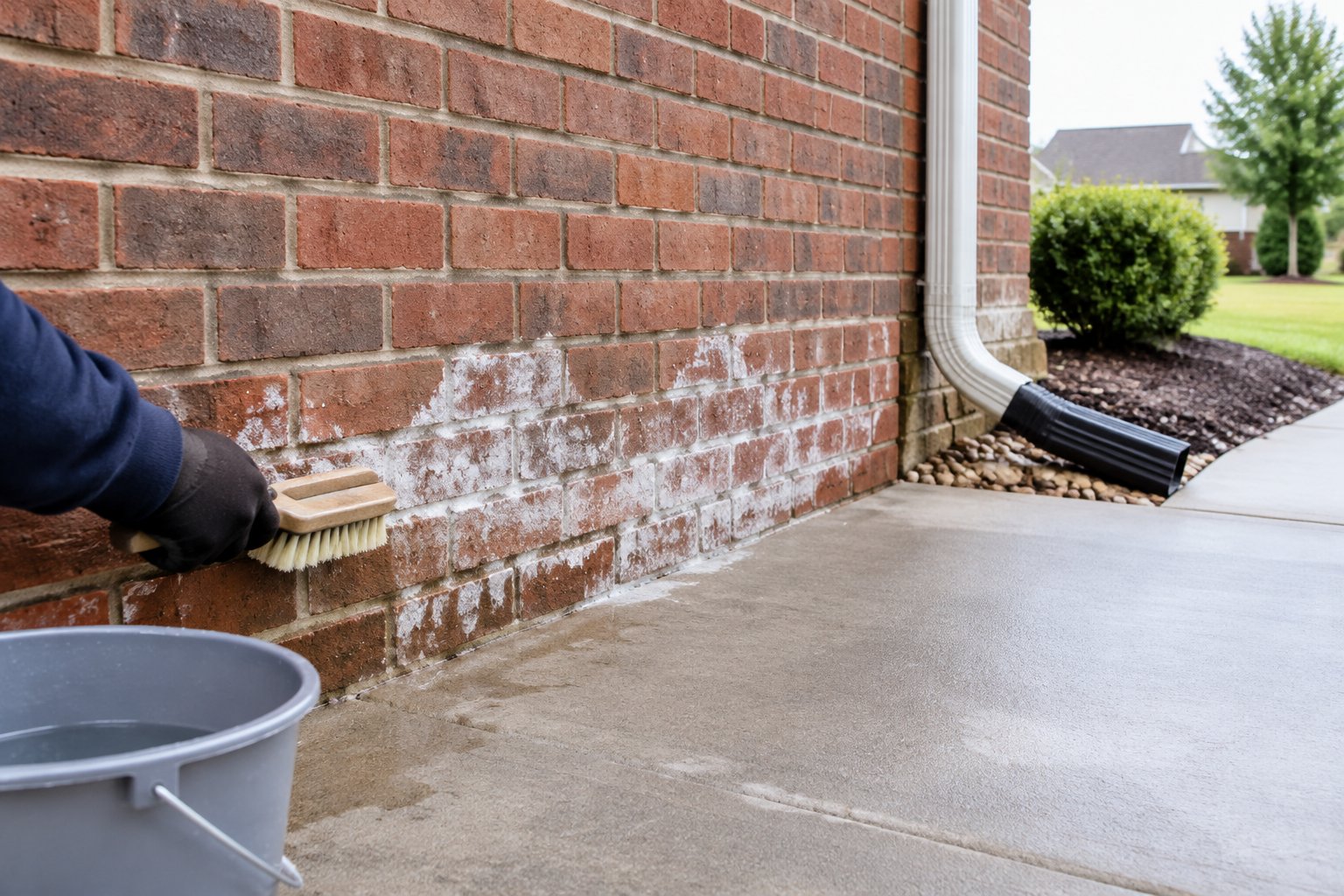
White powder on brick is almost always efflorescence: salt that water carried out of the wall and left behind on the face as it dried. A light, even haze on new work or on brick fresh off a pallet is ordinary and weathers away. A bloom that keeps returning to the same spot is telling you water is still moving through that wall, and the water is the problem rather than the salt.
Which makes efflorescence genuinely useful, if you read it rather than just scrubbing it. It marks the exact places where moisture enters and leaves a wall, which is information you would otherwise pay somebody to find.
The stakes are highest on old, soft brick. The fired face on a pre-1900 unit is thin, and the wrong cleaning method will strip in an afternoon what a century of weather spent building up.
What it is, and what it is not
Three things have to line up for efflorescence to appear. Salts have to be present, in the brick, the mortar, the sand or the surrounding soil. Water has to get in and dissolve them. And that water has to reach the surface and evaporate, leaving the salt sitting on the face.
Mortar and cement are the usual source. Cement contributes soluble potassium, sulphate and sodium alkalis, and groundwater brings in more. Cool damp weather and shaded north elevations show the heaviest bloom, because water dries slowly there and has longer to pick salt up on the way out.
Telling it apart from its lookalikes takes about ten seconds. Rub a little between your fingers: efflorescence is dry and pale, it dusts away, and it dissolves in water. mold is green or black, often fuzzy, and it smears rather than dusts.
Lime deposits are the one that catches people out. Lime washing out of mortar reacts with carbon dioxide in the air and converts to calcium carbonate, forming a hard crust or streak that a brush and water will not shift. Masons call it lime run, and it needs a different approach entirely.
Patina is something else again. The soft color shifts, soot traces and worn edges on old brick are part of the fired surface and are much of what gives texture and patina in reclaimed materials their value. Patina stays put when you brush it. Salt does not. If you are unsure which you are looking at, brush a small area and see what is still there afterwards.
When the bloom is telling you something
Primary efflorescence, sometimes called new building bloom, turns up in the first weeks and months after construction as the water used in building leaves the wall. It is loose, white and brushes off by hand, and a season or two of rain and wind will deal with it.
Secondary efflorescence appears months or years later, in places that get soaked repeatedly: parapet tops, retaining walls, anything below a failing detail. If white deposits are still coming back after two seasons, water is getting in from somewhere and it is worth finding out where.
Location does most of the diagnostic work. A band along the bottom of a wall means rising damp, splashback off a path, or soil and mulch piled against the brick. The same thing happens with reclaimed brick pavers, which draw salt up out of wet bedding when the drainage underneath is poor. A streak below a sill, gutter or coping means water arriving from above. A patch in one corner usually lines up with a downspout if you go and look. Indoors, condensation from warm humid air meeting cold masonry will feed salts just as well, which is why basements are such reliable producers of it.
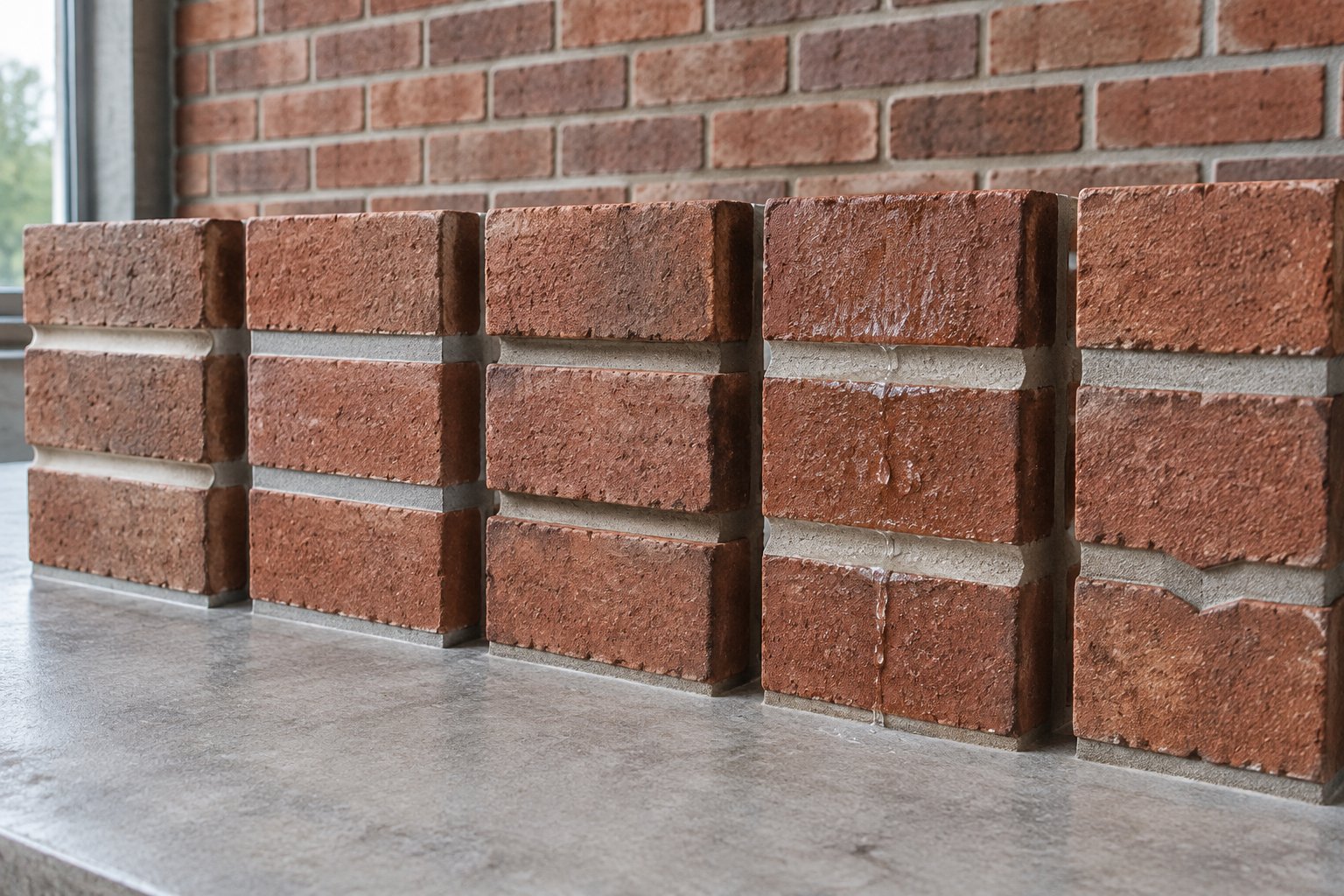
Some signs mean stop brushing and get somebody out. A flaking brick face. Soft or crumbling mortar. A wall that stays damp. Moisture showing on the inside. Those suggest salt is crystallising beneath the surface rather than on it, which is sometimes called cryptoflorescence, and it builds enough pressure to pit and pop the face off. At that point the brick cannot be restored and needs replacing with a matched unit.
Removing it without doing damage
Work from gentlest to strongest, and fix the water first or you will be doing this again next year.
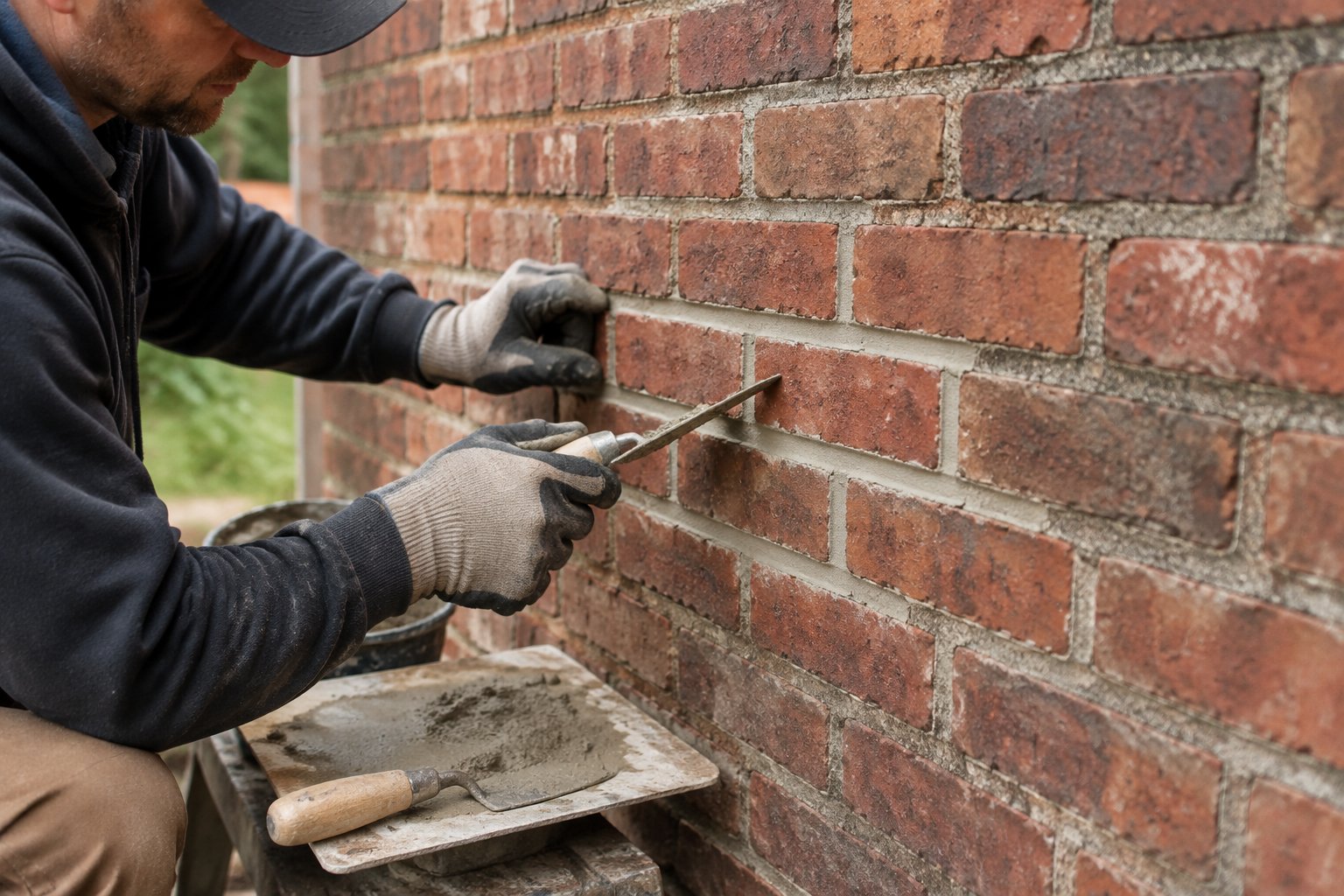
Start dry. Pick a warm dry day and brush the deposit off with a natural or nylon bristle brush. Never wire, and never steel wool, both of which scratch the face and leave metal staining behind. Sweep or vacuum the dust away from the base rather than letting it wash straight back into the wall. On loose bloom this is usually the only step needed. Photograph the area first so you can compare the pattern if it comes back.
If brushing leaves a haze, a low-pressure rinse with lukewarm water from a garden hose will take it. Use as little water as the job allows, because some of what you put on carries salt back into the brick, and let the wall dry fully between passes. Expect to repeat it two or three times rather than solving it in one go.
Hard calcium carbonate crusts need a proprietary masonry cleaner formulated for brick. Wet the wall first, test on a few units somewhere out of sight, follow the label, and rinse thoroughly. The approach in our old red brick restoration guide applies here: test, wait, and judge the result once it is dry rather than while it is still wet.
Three things that will make it worse
Acid washing is the most common way people turn a cosmetic problem into a permanent one. Strong acid dissolves far more salt than water does, and some of it converts into green vanadium and brown magnesium stains that are close to impossible to remove. On soft historic brick it also eats the fired skin and the lime mortar around it. Never acid wash antique brick.
Sandblasting strips that same fired skin, and what is underneath drinks water like a sponge and then spalls.
High-pressure washing drives water deep into the wall, cuts mortar out of the joints, and produces a heavier bloom than you started with once the wall dries out.
Keeping it from coming back
You cannot remove the salts, they are in the materials. You stop the water instead, and most of that is cheap.
Clear the gutters. Extend downspouts away from the foundation. Grade soil away from the wall and pull mulch and planting beds back off the brick. Point sprinklers somewhere else. Then look for open joints, cracked units and failed flashing at sills and roof lines, and get a mason onto them.
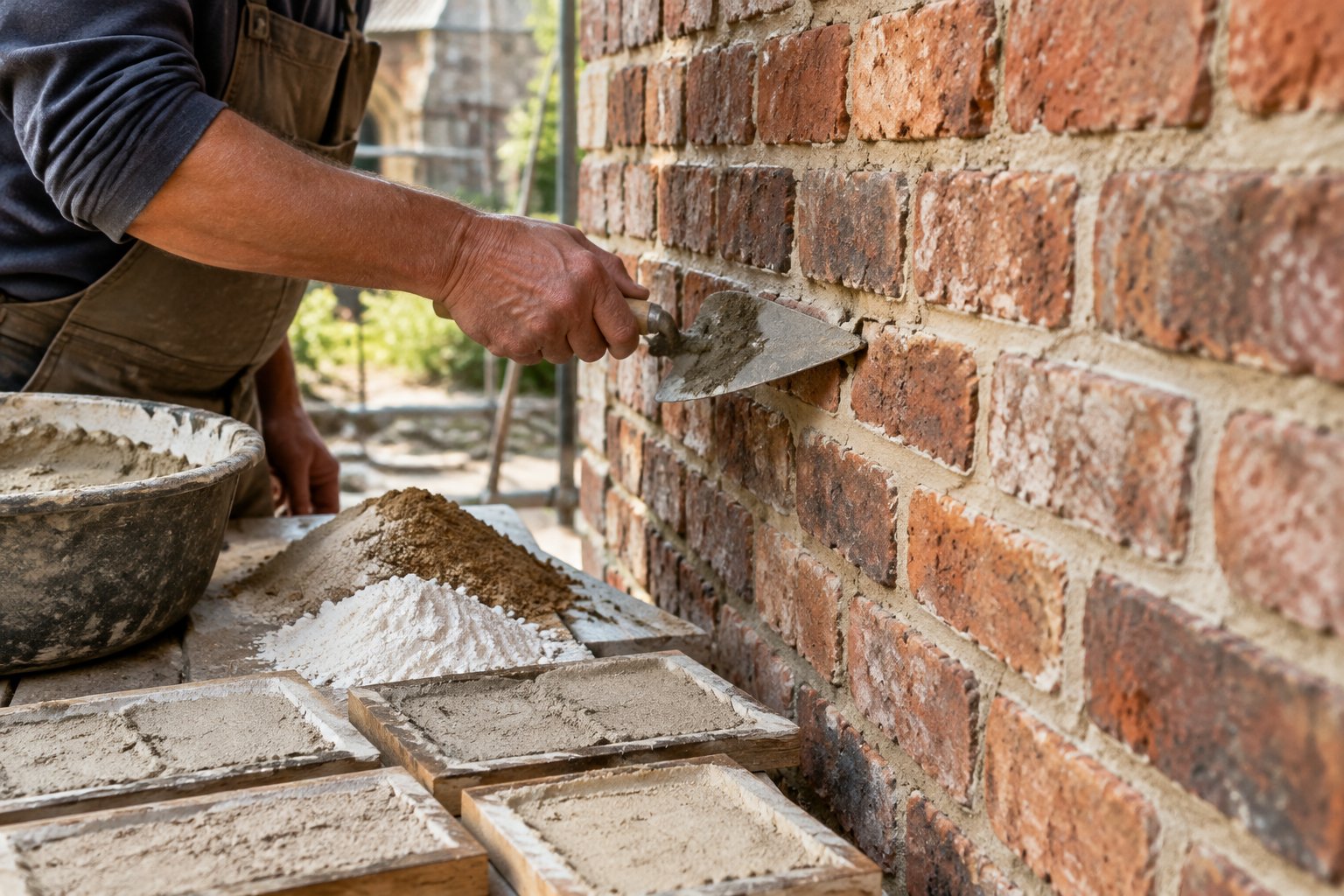
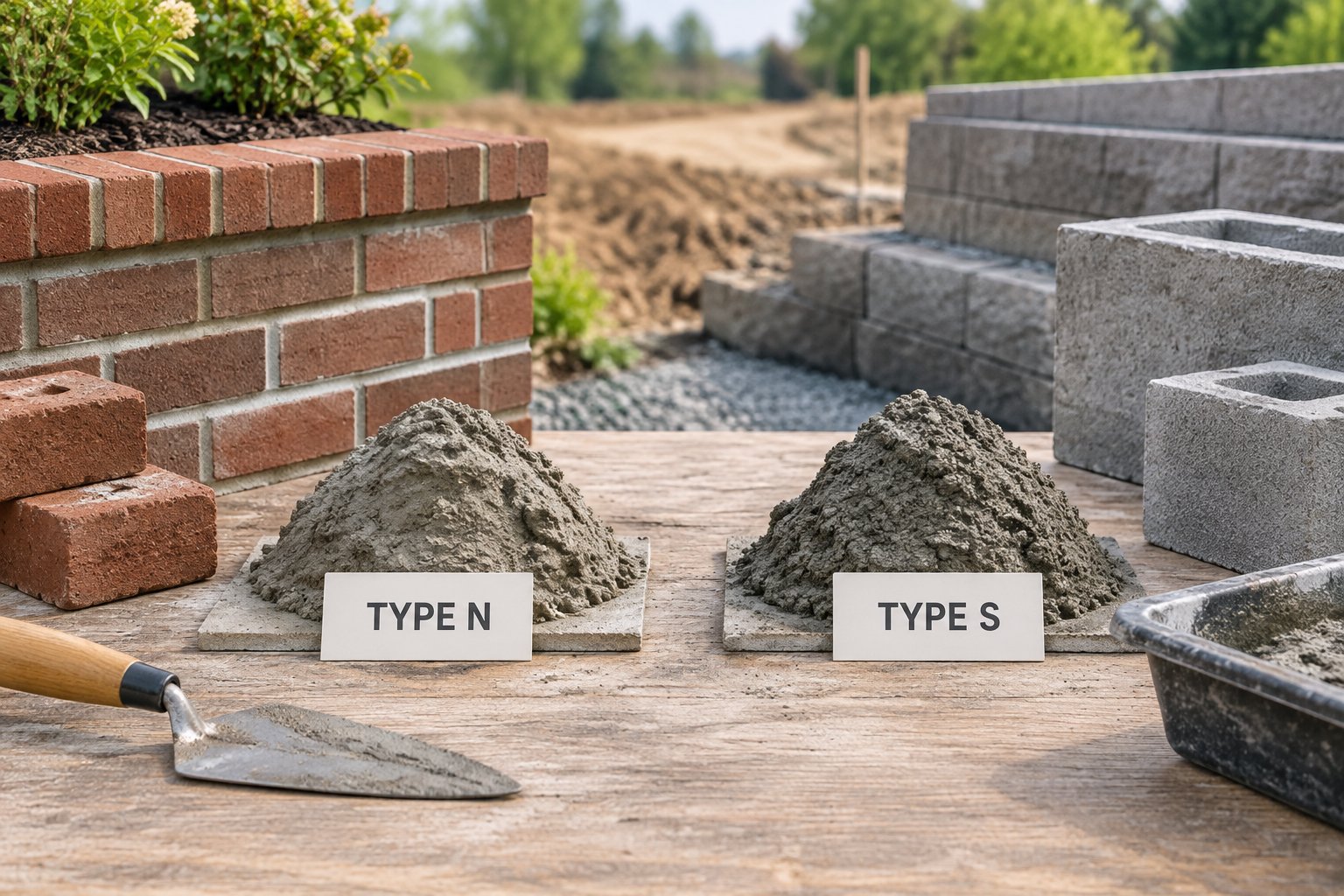
Mortar decides where water leaves. On historic brick, lime or a lime-rich mix sits softer than the brick so moisture exits through the joint, while hard Portland-rich mortar traps it and forces it out through the brick face instead. On new work, the Brick Industry Association recommends low-alkali cements and mortars with a high lime-to-cement ratio specifically to cut efflorescence potential.
Detailing carries the rest. Through-wall flashing, clear weep holes, decent eaves and drip edges, and a capillary break between masonry and ground to stop water and soil salts wicking up from below. The old brick buildings still standing mostly got these basics right: soft joints, generous overhangs, dry footings.
One thing not to do. A film-forming sealer over a wall that is still pushing moisture out traps the water and the salt behind it, and then either the coating blisters or the brick face pops. If you are considering a water repellent at all, choose a breathable one and apply it only after the source is fixed and the wall has fully dried, and read our piece on sealing reclaimed brick before you commit.
Bloom on brick you have just taken delivery of
Common, and almost always harmless. Salvaged brick has spent a century in a wall absorbing salts from old mortar, soil and weather, and after cleaning, storage and freight some of that works its way to the surface. A thin white haze on arrival tells you the units have been wet and have dried. Nothing more. It brushes off and weathers away once the brick is laid in a wall that can drain.
What actually deserves attention at delivery is a face that is flaking, crumbling or soft when you scratch it. Note anything visible with the driver before signing and photograph it, and call us on 225-284-7529 if something looks wrong. We would far rather sort it on the day than hear about it once it is in a wall.
Keep pallets off the ground on timber or blocks so they cannot wick up groundwater and soil salts. Cover them with sheeting that sheds rain but still lets air move underneath. Cover the top course of unfinished walls at the end of every day. Brick that goes into a wall dry carries less salt to the face later.
Ask your supplier what structures the brick came out of, roughly what period, and whether it is hard-fired or soft, because antique brick from about 1870 to 1940 varies in both size and hardness and both feed into the mortar decision. Then hand your mason that information along with written guidance on mortar strength, joint profile and cleaning limits, meaning no acid and no high pressure. Installing reclaimed brick starts with a mortar weaker than the brick and good drainage at the base.
Read the bloom, then fix the water
Efflorescence is a symptom and a map. On new work it means the wall is drying and will stop on its own. On an older wall, returning in the same place season after season, it is pointing at a gutter, a flashing, a grade or a mortar mix that needs attention. Brush it dry, rinse it gently, keep acid and pressure washers away from it, and spend the money on the water rather than the cleaning.
If salt has already cost you brick faces, we hold four blends of reclaimed brick on pallets ready to ship, matched on size, hardness, color range and texture rather than color alone. Send a photograph taken in daylight with a coin or a tape in the frame, or a loose brick, to hays@bourgeoismaterials.com, or call the New Orleans office on 225-284-7529. Standard samples are free to the trade.
Frequently asked questions
Will efflorescence go away on its own?
Light new-build bloom will, as rain and wind wash the soluble salts off over a season or two. Bloom that keeps coming back on an older wall will not stop until the moisture source is dealt with.
Can I use vinegar on it?
Better not. Vinegar is a weak acid and a poor choice on brick, particularly soft historic brick and lime mortar. Dry brushing and a light rinse handle most deposits, and a proper masonry cleaner tested on a hidden patch will handle a stubborn lime crust.
Does efflorescence mean my reclaimed brick is defective?
No. Salvaged brick carries salts from decades in service and a light haze on arrival is normal. Flaking or crumbling faces are the thing to look for, so check and photograph at delivery.
Can it be stopped permanently?
You can stop new bloom by keeping water out, since the salts themselves are present in nearly all masonry. Good drainage, sound flashing, soft breathable mortar and dry storage before laying between them keep salt from traveling to the face.
Should I replace bricks that keep blooming?
Not on that basis alone, because the fault is in the water path rather than the brick. Replace a unit when its face has actually spalled or crumbled, and match the replacement on size, color range, texture and hardness.