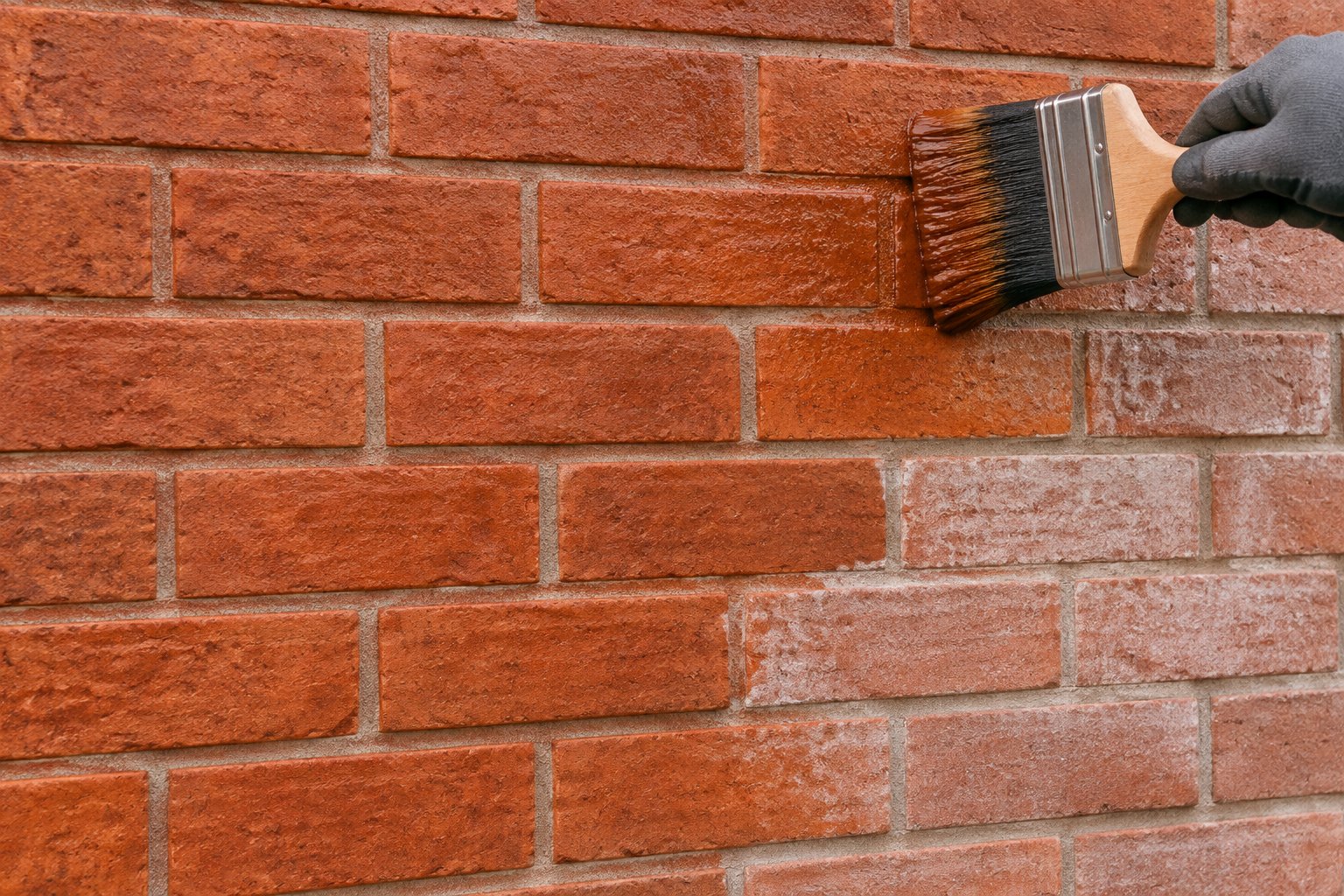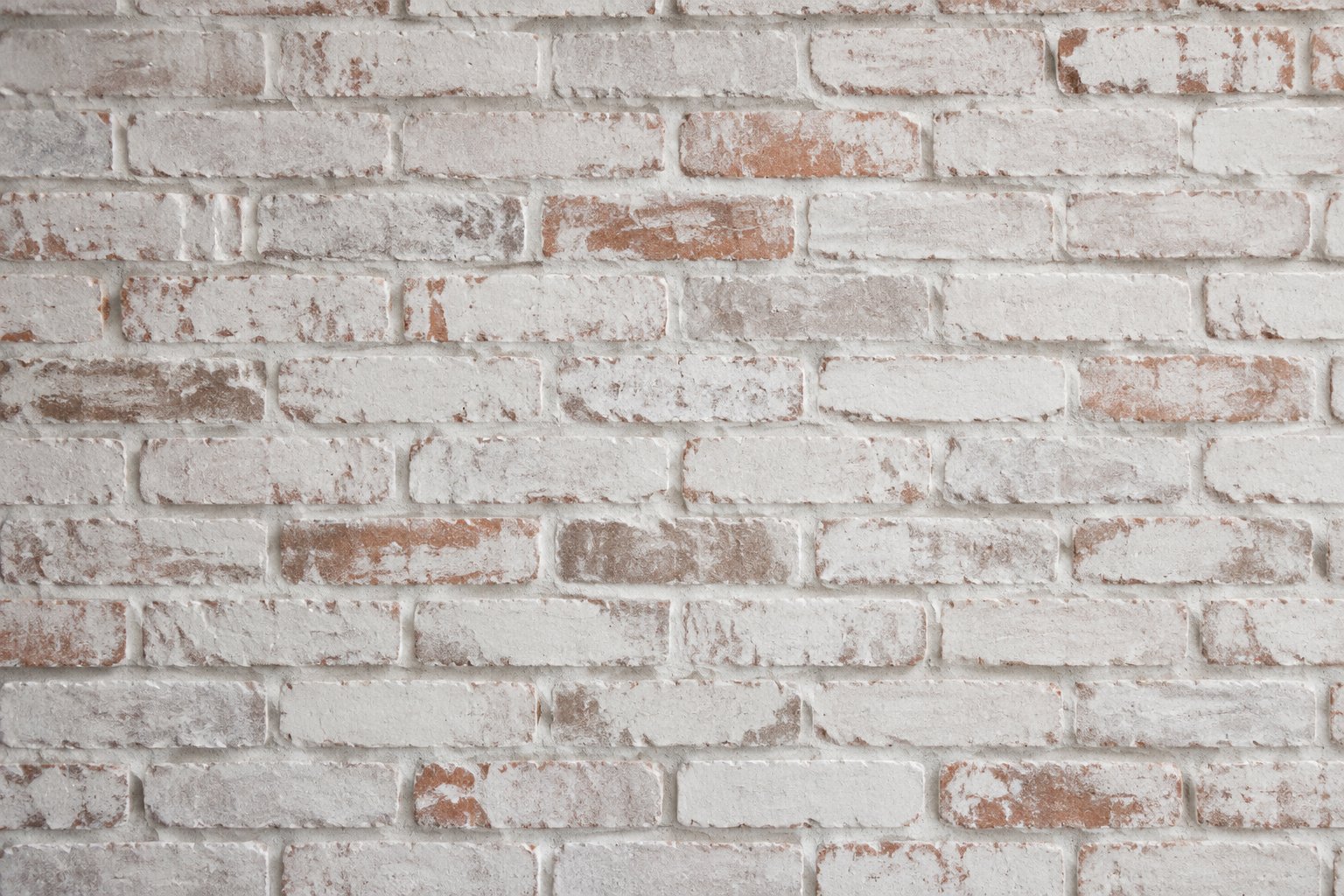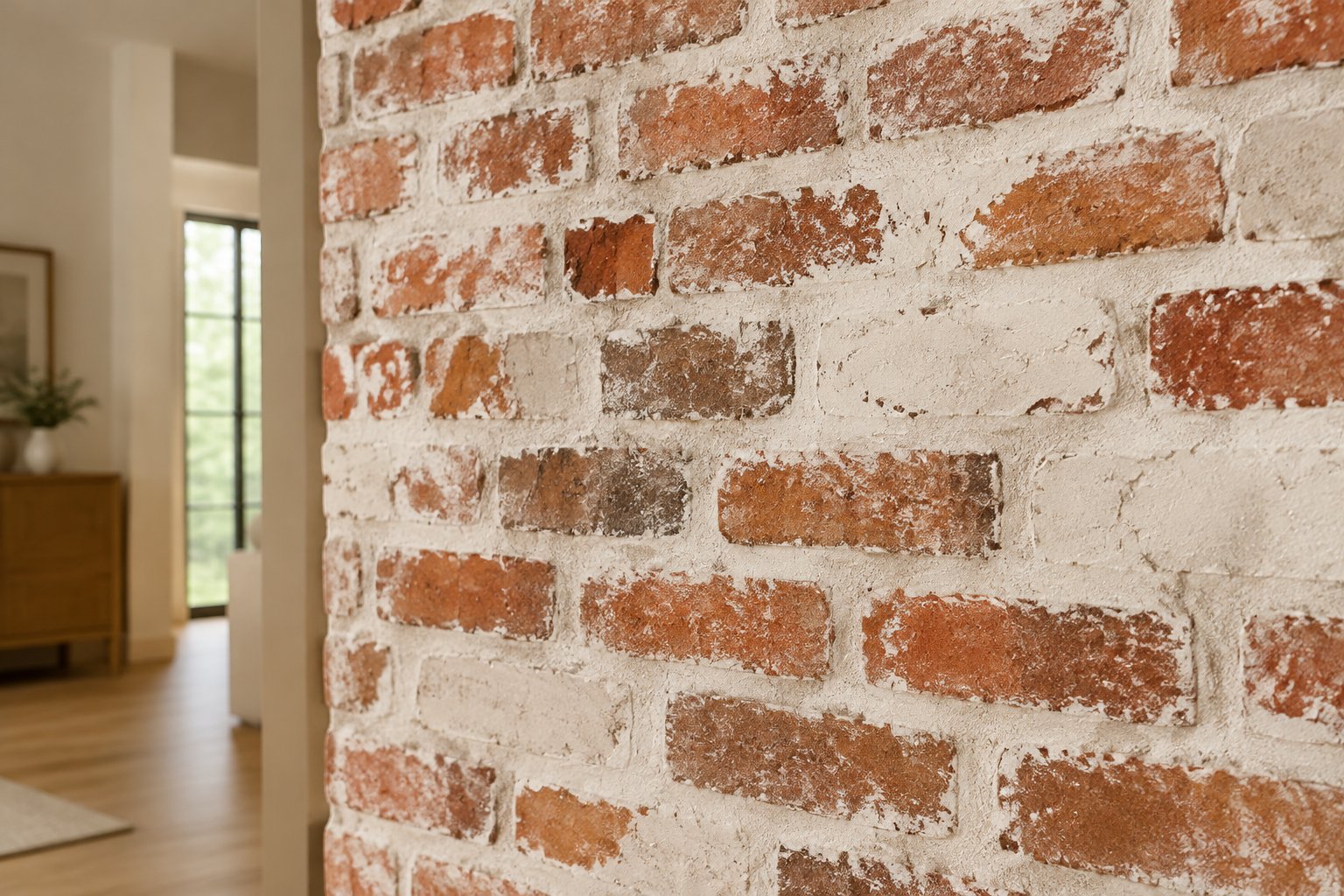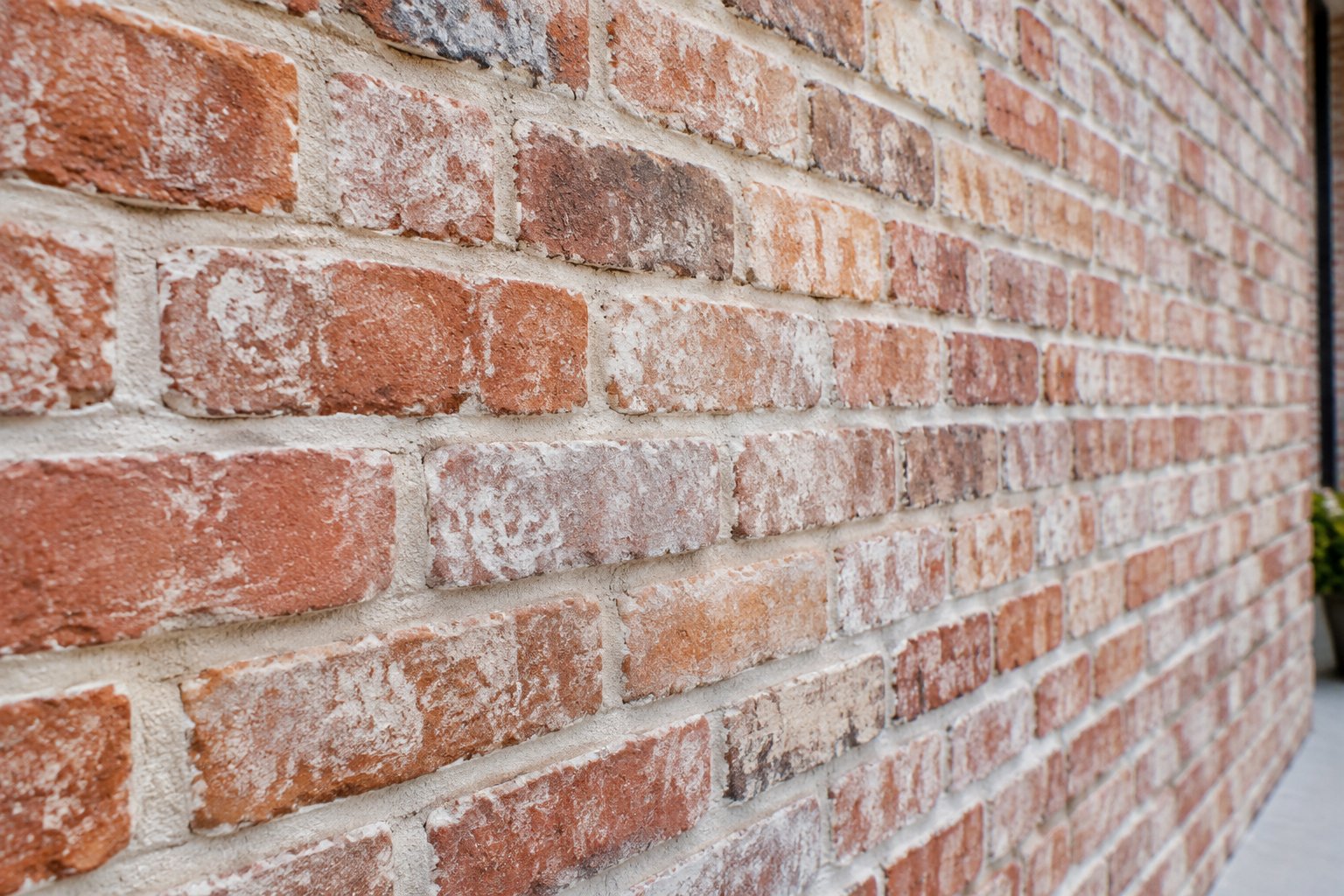
A mortar wash is a thin coat of watered-down mortar brushed over brick and wiped back while it is still wet. It mutes the color, settles into the hollows in each face, and leaves enough brick showing that the wall still reads as brick rather than as render.
The appeal is obvious. A good wash makes a wall look like it has stood through fifty summers. The catch is that mortar bonds to brick, which means the decision is close to permanent, so the mix, the coverage and the brick underneath all need settling before anyone mixes a bucket.
What separates it from the other finishes
A light wash lands unevenly, and that unevenness is the whole point. Mortar collects in the low spots, pits and arrises while the high points wipe cleaner. A strong red or orange brick shifts toward a softer, chalky tone with the original color still coming through in patches.
No two bricks take it identically, because each has its own texture and its own rate of absorption. A dense smooth brick holds less. A soft open-faced brick holds more. You cannot dial this in the way you would a paint color, so plan for variation and treat it as the finish rather than a fault in it.
Mortar wash and German schmear are the same material at different thicknesses, and there is no industry line marking where one becomes the other. In common use, mortar wash means the lighter end with much of the brick visible, and German schmear means a heavier, more opaque coat that can blur the joints entirely. Since the labels are unreliable, skip them when you brief your mason: say roughly what share of brick face you want left showing, and point at a panel on your own wall.
The paint-based finishes behave differently again. Limewash is crushed lime and water, thinner than a mortar wash, breathable, and much easier to adjust in the first few days. Whitewash is thinned paint, giving a smoother film with no texture and generally wanting reapplication every five to seven years. Painted brick carries a full opaque film that hides the brick and can trap moisture if the wrong product goes on. Of the group, a mortar wash gives the most texture and is the hardest to reverse.
Specifying and applying it
Specify a mortar wash the way you would specify joint work. Match the mix to the brick, choose the color deliberately, and sign off a cured panel before the full wall happens.
The wash must be softer than the brick beneath it. Same rule as mortar joints, same reason: mortar is meant to be the part that wears and lets moisture out. A hard cement-rich mix traps water and pushes it out through the brick face, which flakes and spalls it. On pre-1900 brick, which is smaller and softer and was laid in lime, you want a lime-rich wash. On modern hard brick in standard mortar, a Type N style mix is the usual choice. Have your mason confirm what the existing joint mortar actually is before picking the wash, so the two work as one system.
On color, white mortar gives the brightest and most recognizable result, reading as soft pink-white over red brick with warmer patches. Plenty of people find pure white too stark, and tinted mixes in cream, buff or light tan sit more comfortably on tan and soft red brick while looking closer to genuinely old lime. One detail that ties a wall together nicely: use the same mortar color for the wash and the joints, so the two read as a single material rather than a bright wash over gray joints.
The wall has to be sound first. Loose bricks, cracked or crumbling joints and active leaks all need repair, because a wash will conceal them for a season and no longer. The brick needs to be clean and free of paint, sealer and dirt so the mortar can actually bond.
Then the panel, on the real wall, somewhere you see in ordinary daylight, judged only once cured. Wet mortar looks considerably darker than dry, and the color shifts as it sets. A few square feet of panel is what stands between you and living with a finish you did not expect.
The application itself belongs to your mason and it moves fast. Brick gets dampened so it does not pull water out of the mortar too quickly, the wash goes on with a brush, sponge or gloved hand across a small area, then it is wiped back with a damp sponge, burlap or brush before it stiffens. Small sections keep the look even across a big wall. Sun, wind and dry brick all accelerate the set, so shade and timing matter outdoors, and it is worth asking how they plan to keep section forty looking like section one.
How much brick to leave showing
This changes the character of the wall more than any other decision. A light wash leaves most of the brick visible with mortar mainly in the texture. A medium wash balances the two. A heavy wash makes mortar the dominant color with brick showing only at edges and corners.
For a classic mortar wash, aim light to medium. And if you are washing reclaimed brick, keep it light, because you paid for the color range and patina of old brick and a heavy coat buries most of what you bought. Write the target coverage into the job notes so the mason is working to the approved panel rather than to memory.
Where it belongs
Vertical brick, inside or out, where it faces weather but not feet.
Washed and lime-coated brick has a long history in Southern houses. In a warm, humid climate, soft local brick was routinely protected and brightened with lime coats, and over decades those coats wore thin and uneven. That worn surface is exactly what a mortar wash imitates. It suits Creole cottages, Acadian houses and the French country homes that A. Hays Town made part of the Louisiana vocabulary, where old brick, soft color and lived-in surfaces define the whole look. On an exterior, a light wash ties patched areas together and calms a brick that is simply too bright for the house. Keep weep holes, flashing and drainage paths clear of mortar while the work happens.
Indoors it holds up well, because it never meets rain or frost. A washed fireplace surround is one of the most popular uses, brightening a dark room and giving the hearth a rustic feel. Keep the wash to the surround, breast and hearth face, since the firebox needs fire brick and no coating. If you are choosing brick for a new surround, many of the rustic reclaimed bricks that suit a fireplace already carry the muted tone people are trying to create with a wash.
Floors are a different problem
A washed floor takes wear a wall never does. Feet, chair legs, grit and cleaning all grind at the surface, so the wash goes first on high spots and in walking lines and the floor grows less even over time. Many people like that, but decide in advance rather than discovering it.
Floors also deal with spills and frequent washing, and a mortar wash leaves a porous matte surface that holds stains in both the joints and the brick face, which is why floors almost always need a tested finish over the top.
Start with brick that can take traffic. Dense hard-fired brick, pavers or purpose-made floor brick last far better than soft wall brick, and reclaimed pavers bring real wear and color from day one, which often makes a heavy wash unnecessary. Our reclaimed brick flooring range is worth looking at with that in mind. Match the joints to floor use, match the wash to the joints, and test any sealer on the panel for how much it darkens the color and how slippery it gets wet.
How it weathers, and how to look after it
Outdoors, rain and sun thin the wash over the years, fastest on the elevations taking the most weather, and more brick color returns. On a sheltered wall or indoors it can look much the same for decades. Floors change faster, wearing off the walking lines while corners keep their mortar.
Treat removal as off the table. Once cured, the mortar is bonded, and taking it off means chemicals, grinding or blasting, all of which scar the fired skin of the brick. Soft old brick is most at risk, because once that skin is gone the brick drinks water and starts to spall.
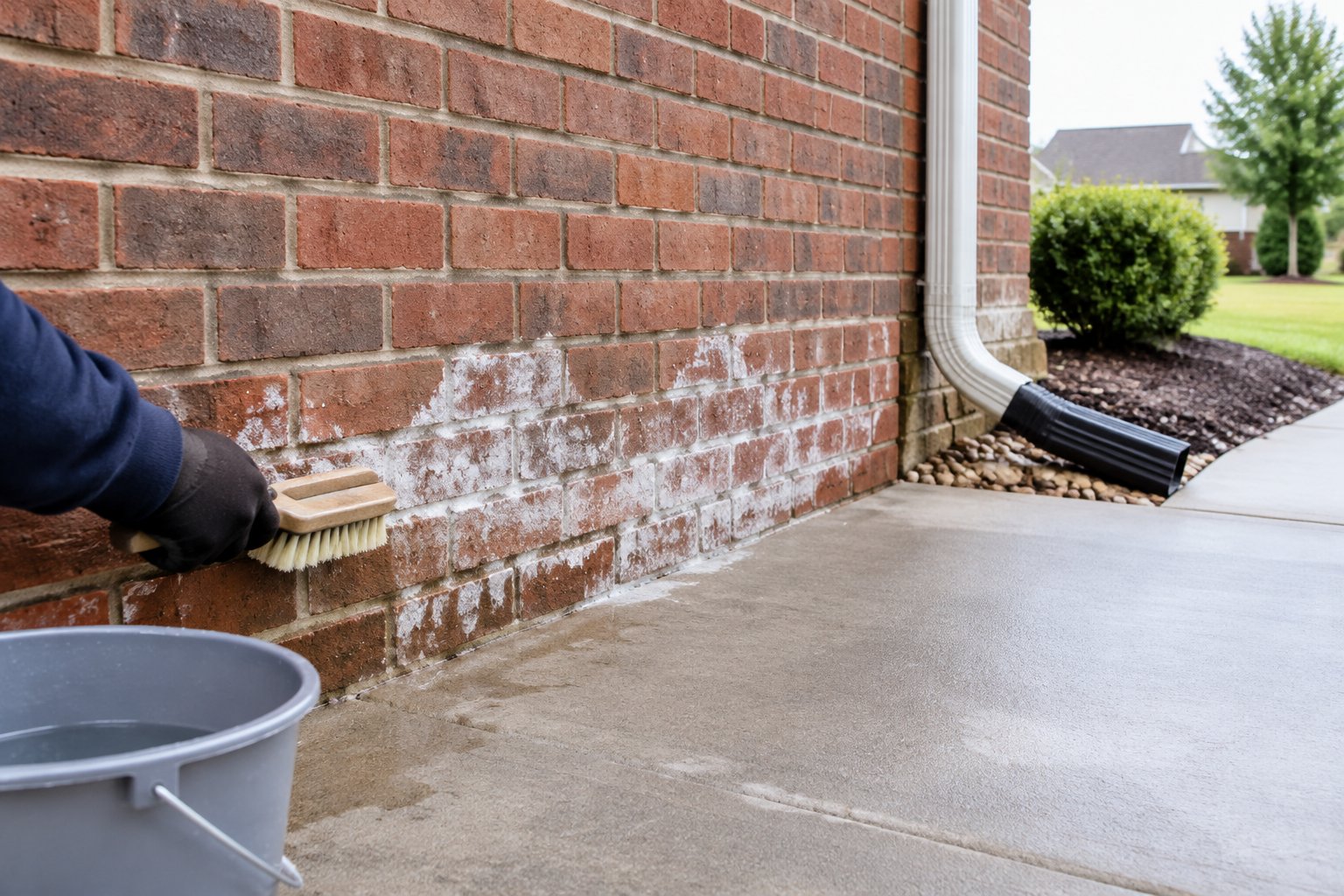
Clean with the gentlest thing that works, usually plain water and a soft brush. No wire brushes, no strong acids, no pressure washing, all of which strip the wash and damage the joints underneath.
White powdery bloom that appears after washing is efflorescence, salt carried out of the masonry by moisture. On a washed wall it can blend in at first and then show as patchy streaks. A little on new work usually fades. If it keeps returning, something is letting water in, whether a leaking gutter, missing flashing, open joints or ground water, and that wants fixing before you clean anything.
Most exterior washed walls need no sealer at all, and a film-forming one will trap moisture inside the brick and push it out through the face. If you are weighing one up, the questions in whether sealing protects patina or traps moisture apply exactly as much to a washed wall as a bare one. Floors and busy kitchen walls are the real exceptions, and there you want a breathable penetrating product tested on the panel first.
Cost, and whether it is the right spend
The mortar is almost free. What you pay for is cleaning, repairing loose brick and bad joints, masking windows and planting, scaffolding, and the slow hand work of washing and wiping back. Two-story elevations, chimneys and anything with a lot of corners or arches push it up. A full exterior on a house is a five-figure job in most markets; a fireplace or a single interior wall is a fraction of that. Get quotes that itemize prep, access and application separately, because those three move independently.
A wash earns its money when you already own brick you dislike. A house carrying years of patches and additions in mismatched brick reads as one wall afterwards. A flat, harsh 1980s brick looks softer and older. In both cases a wash costs far less than stripping and rebricking.
If you are planning an addition, though, matching the original brick gives a better result than washing over a mismatch, and brick matching turns on four things rather than one: size, color range, texture and mortar. Get all four right and the wash may be unnecessary.
Send a photograph taken in daylight with a coin or a tape in the frame, or post us a loose brick, and we will tell you whether a match exists before you commit to coating anything. Standard samples are free to the trade and ship in about two business days.
On a new build the comparison is sharper still, because a mortar wash is a way of buying the look of age and reclaimed brick salvaged from buildings standing roughly 1870 to 1940 already has it, in real color range, worn arrises and lime-stained faces that no wash fully reproduces. The numbers are closer than people assume: our blends start around $1.70 a brick for St Louis Red, $1.85 for Soft Red and Old Chicago, and $2.00 for New Orleans Hard Tan, which stacks up well against new brick plus the labor of washing it. And if you still want a lighter tone, a very thin wash over reclaimed brick keeps most of its patina and architectural character intact.
Choose the brick and the finish together
The best mortar wash starts with the right brick underneath it. Specify a mix softer than the brick, pick a white or warm tone that suits it rather than one from a photograph, approve a cured panel, and keep enough brick showing that the wall still reads as masonry. On floors, start with floor-rated brick and test the finish properly. On old walls, treat the wash as permanent and deal with every water problem before it goes on.
A mortar wash imitates a century of weather. Reclaimed brick has been through one. If you are building new, decide the brick and the finish in the same conversation, because the right brick may need the lightest of washes or none whatsoever.
Call the New Orleans office on 225-284-7529 or email hays@bourgeoismaterials.com and we will help you work out which it is.
Frequently asked questions
Are mortar wash and German schmear the same?
Same material, different coverage. Mortar wash usually means a lighter coat with more brick showing; German schmear usually means heavier and more opaque. Since neither term is standardized, describe the coverage you want and confirm it on a panel.
Can you mortar wash painted brick?
Not successfully. Mortar needs bare clean brick to bond and will not grip paint. The paint has to come off first by the gentlest method that works, and any brick damaged in the process may need replacing before a wash goes on.
What does it cost?
Almost all labor, prep and access, since the mortar is cheap. A full exterior runs into five figures in most markets while a fireplace or single wall is far less. Ask for itemized quotes from masons who have done it before.
Can it be removed without damaging the brick?
Not reliably. Cured mortar is bonded, and removal means chemicals, grinding or blasting, all of which risk the fired face. Plan on it being permanent.
Is it suitable for a floor?
Yes, with care. You need dense floor-rated brick, joints mixed for floor use, and a tested protective finish to cope with traffic and spills. Expect the wash to wear along walking lines over time.