You are standing at the edge of a half-finished patio, looking at a pallet of new concrete pavers that all look exactly the same. Flat color. Sharp edges. No character. Now picture the alternative: reclaimed clay brick pavers pulled from a century-old warehouse floor, each one carrying subtle color shifts, softened edges, and an earthy patina that no factory can reproduce.
That difference is not cosmetic. It is the difference between a surface that looks installed yesterday and one that looks like it belongs.
When you start searching for brick pavers for sale, the options pile up fast. Big-box stores, online outlets, and local yards all carry something they call a paver. But reclaimed brick is a different category entirely.
New Orleans Brick Co keeps meaningful inventory of hand-selected reclaimed pavers on hand, sourced from structures over 100 years old, and ships nationwide within 48 hours of invoice payment. That means your project does not stall while you wait months for a specialty order to arrive.
Keep reading to learn how to compare reclaimed clay brick pavers against concrete alternatives, which varieties hold up best under foot traffic and vehicle loads, how laying patterns affect both appearance and stability, and what questions to ask before you commit to an order.
Every recommendation here comes from hands-on experience with these materials, not a product catalog.
What to Look for When Comparing Brick Pavers for Sale
The single most important distinction is what the paver is made of and where it came from. A reclaimed clay brick paver fired over a century ago in a regional kiln is a fundamentally different product than a concrete paver stamped in a modern factory.
Understanding that difference saves you from buying material that fades, cracks, or looks out of place within a few years.
How Reclaimed Brick Differs From Concrete Pavers
Reclaimed clay brick pavers start as natural clay and shale, fired at high temperatures that fuse the minerals together. As noted in a guide on brick paver basics, this firing process makes clay pavers nonporous through vitrification. They resist water absorption far better than most concrete alternatives.
Concrete pavers are cast from a cement and aggregate mix, which means their color sits on or near the surface. Over time, UV exposure fades concrete pavers noticeably. Clay brick holds its color because the pigment runs through the entire body of the material.
Reclaimed brick adds another layer. These pavers have already survived a century or more of weather, load, and use. Their durability is not theoretical. The worn faces and rounded edges carry a visual warmth that new clay pavers try to imitate with tumbling machines but never quite match. When you hold a reclaimed paver next to a tumbled new one, the difference in texture and depth of color is immediately obvious.
- Concrete pavers: Uniform color, sharp edges, prone to UV fading, lower cost per square foot
- New clay pavers: Consistent sizing, durable, color-fast, moderate cost
- Reclaimed clay pavers: Proven durability, natural patina, dimensional variation, unique character
That dimensional variation in reclaimed brick is worth noting. Slight differences in width and length from paver to paver create organic-looking joints that give a surface its aged, settled appearance. This is a feature, not a flaw.
Why Surface Texture, Patina, and Color Variation Matter
Patina is the accumulated surface character a brick develops over decades of exposure. It includes mineral staining, slight moss residue, fire marks, and tonal shifts that range from deep umber to warm cream. This is what makes a reclaimed brick patio feel timeless rather than manufactured.
No two reclaimed pavers look identical. That irregularity is what architects and designers specifically seek out.
Surface texture also affects grip. A reclaimed paver with a slightly rough, sand-struck face provides natural traction underfoot, even when wet.
Smooth-finished concrete pavers can become slick in rain, which matters for walkways and pool surrounds. If you are specifying material for an area that sees moisture, texture is a practical concern. It is not just an aesthetic one.
Where Thin Brick Fits and Where It Does Not
Thin brick is a real product category. It serves a different purpose than full-depth pavers. A thin brick veneer runs roughly half an inch to three-quarters of an inch thick.
It works well for interior flooring, wall applications, and overlay projects where you are adhering material to an existing slab or substrate. It does not belong in a sand-set patio or a dry-laid walkway where full-thickness pavers carry their own weight.
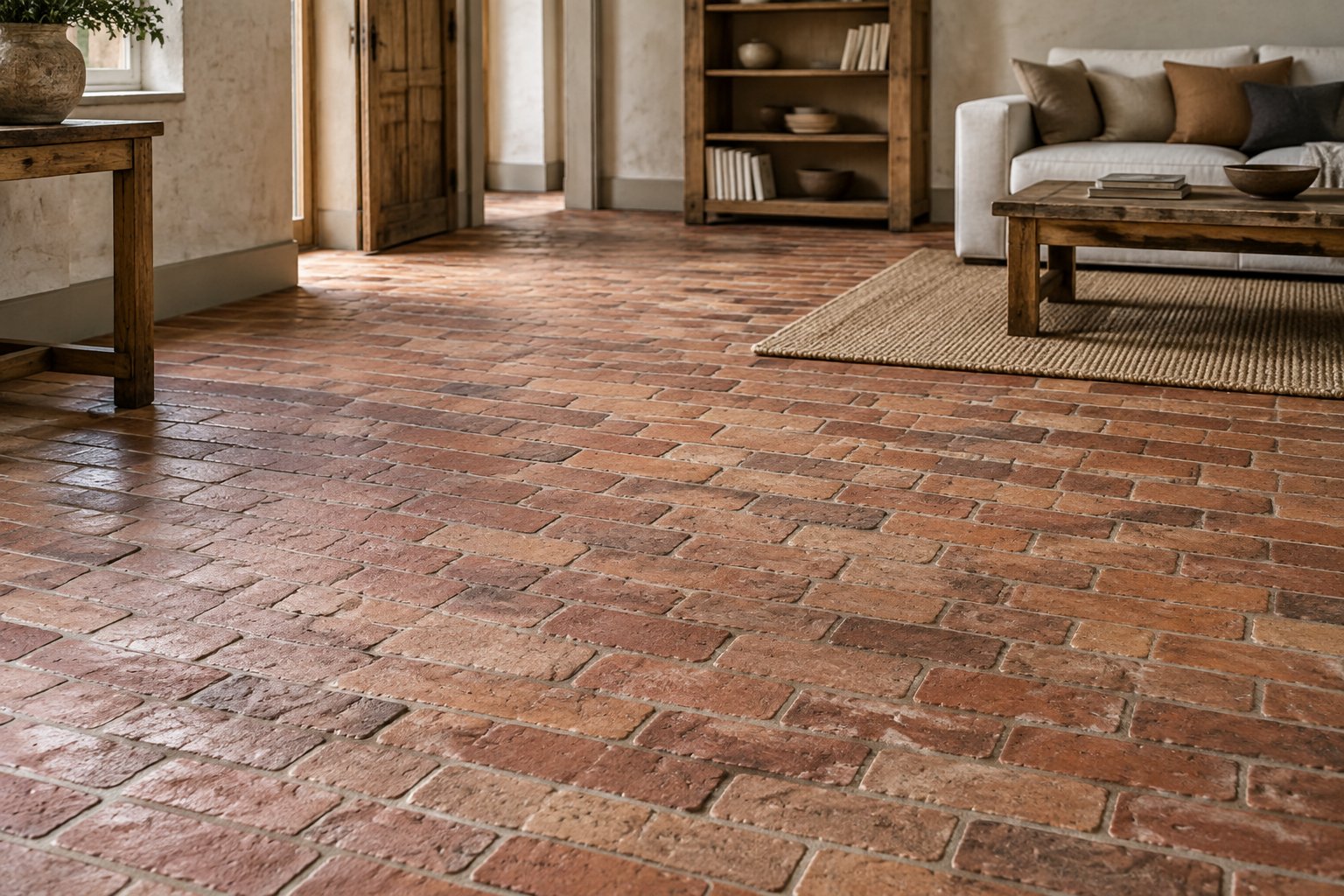
If your project is an indoor mudroom floor or a reclaimed brick flooring application over concrete, thin brick is a smart, lighter-weight option. For outdoor ground-contact paving, you need full-depth pavers, typically 2 inches or thicker. Knowing which product fits your application keeps you from ordering material that will not perform.
Best Paver Types for Patios, Walkways, Courtyards, and Driveways
The right paver depends on what is rolling, walking, or sitting on top of it. A patio that sees barefoot traffic on summer evenings has different demands. A driveway that handles a loaded truck every day has its own requirements.
When Brick Pavers Make Sense Under Foot Traffic
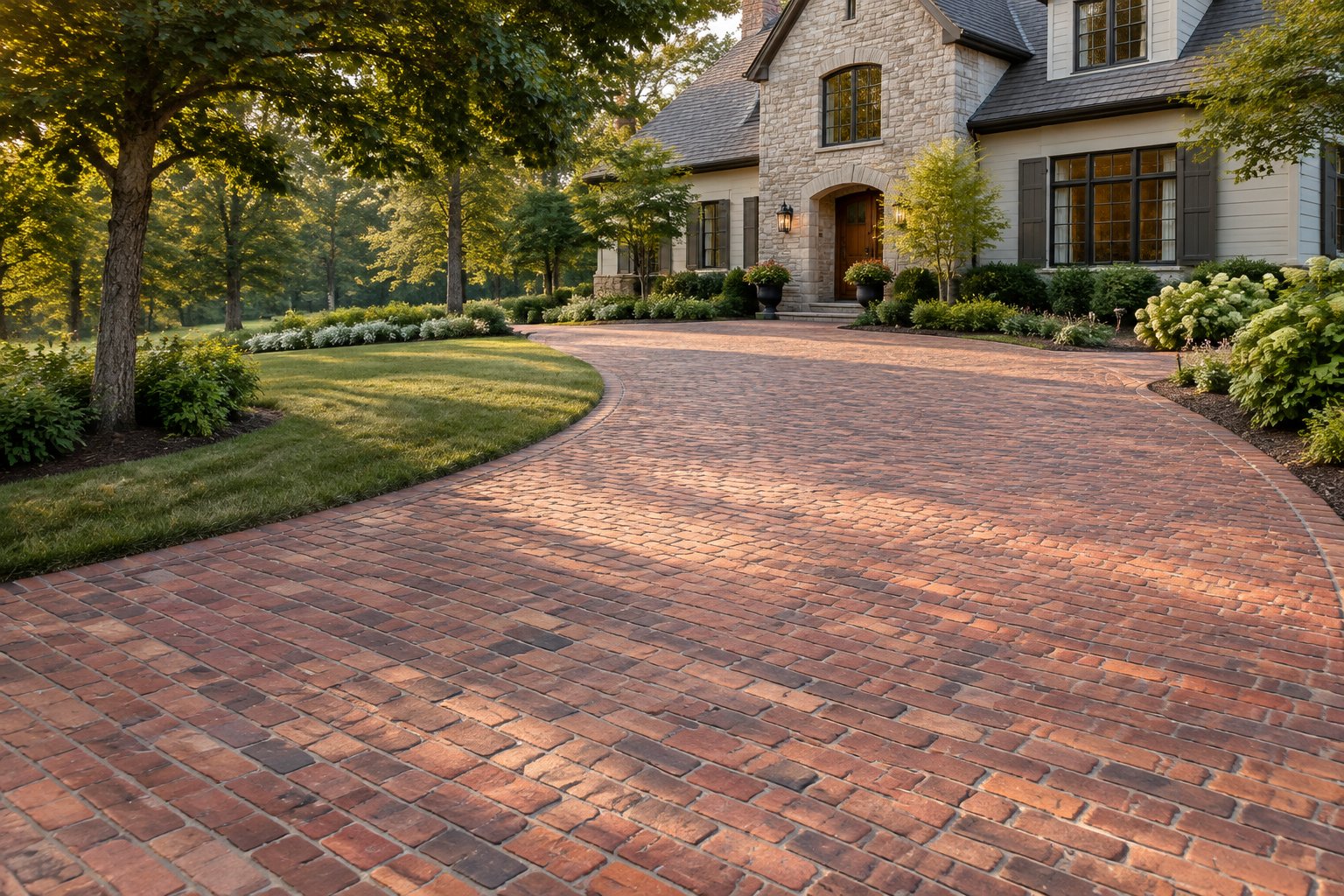
Patios, walkways, and courtyards are where reclaimed clay brick pavers truly shine. Foot traffic is relatively light. The dimensional variation of reclaimed brick creates the kind of outdoor living surface that looks better with age rather than worse.
A standard 4-by-8-inch reclaimed paver at roughly 2¼ inches thick is more than sufficient for pedestrian use when set on a properly compacted base with a sand bedding layer.
For courtyards and garden paths, the earthy tones and weathered faces of reclaimed pavers blend naturally with plantings and older architecture. The irregular edges soften the visual line of the surface. This is exactly what you want in a relaxed residential setting.
What to Check Before Using Brick in Heavier Load Areas
Driveways and areas that see vehicle traffic demand harder, denser pavers. Not every reclaimed brick is suited for this. You need to confirm the compressive strength of the specific lot you are buying.
Hard Tan reclaimed bricks, for example, were originally fired at higher temperatures and tend to be significantly denser than softer varieties. A Soft Red works beautifully for a patio. It may not hold up under repeated vehicle loads without a thicker concrete base beneath it.
Before specifying reclaimed brick for a driveway, ask about the original use of the source material. Pavers pulled from old industrial floors and warehouse foundations have already proven they can handle heavy loads. Brick from interior walls may not have the same density rating.
Material Performance: Thickness, Hardness, and Brick Variety
Thickness and hardness are not interchangeable. Both affect how your pavers perform over years of use. A thick but soft paver will eventually spall in a freeze-thaw climate. A thin but hard paver may crack under point loads if the base shifts.
Why Thickness Affects Stability and Installation Options
Full-depth clay brick pavers at 2¼ inches or thicker can be dry-laid on a compacted gravel and sand base without mortar. This is the most common residential installation method and the easiest to repair if a single paver chips or settles.
Thinner pavers, anything under 2 inches, generally need to be adhered to a concrete slab to stay stable. That adds cost and complexity.
When you are working with reclaimed brick, thickness can vary slightly from piece to piece. A well-sorted lot will group pavers within a tight tolerance, usually within an eighth of an inch. This is something to confirm with your supplier before you order. Wider thickness variation means more time spent shimming during installation.
How Hard Tan and Soft Red Perform in Real Use
Hard Tan reclaimed bricks were originally fired at temperatures approaching 2,000°F. That high-temperature firing creates a dense, vitrified body with minimal water absorption. In freeze-thaw climates, Hard Tans resist spalling far better than softer varieties.
Their surface tends to be smoother and their color ranges from warm buff to deep golden tan.
Soft Red bricks were fired at lower temperatures and have a more porous body. They are lighter in weight, easier to cut, and carry the classic red-to-salmon color range that most people picture when they think of old brick.
For patios and walkways in mild climates, Soft Reds start at $1.85 per brick and deliver exceptional visual warmth. In northern states with harsh winters, Hard Tans at $2.00 per brick are the safer choice for any ground-contact application.
What Century-Old Sourcing Can Tell You About Durability
A reclaimed paver from a building constructed in the 1890s has already survived over 130 years of exposure.
That track record is more convincing than any lab test. When you source reclaimed brick from century-old structures, you are selecting material that has proven itself in real conditions over multiple generations. The bricks that survived are, by definition, the strongest of the original batch.
This natural selection process is something new brick cannot offer. A new paver comes with a warranty and a spec sheet. A reclaimed paver comes with a century of evidence. That matters when you are building something meant to last another hundred years.
Patterns That Change Both Appearance and Stability
Your laying pattern does more than set the look of the finished surface. It directly affects how well your pavers lock together and resist shifting under load.
When to Use a Running Bond Pattern
A running bond is the simplest brick pattern: each row is offset by half a brick length from the row below. It is fast to lay, produces minimal cutting waste, and works well for walkways and patios where foot traffic moves in one primary direction.
The staggered joints create a clean, directional rhythm that pairs naturally with the subtle color variation found in reclaimed pavers.
The downside of a running bond is lateral stability. Because the joints all run in one direction, the surface can shift sideways over time if edge restraints are not solid. For a narrow garden path or a patio bordered by landscape edging, this is rarely an issue. For a large open courtyard, consider a more interlocking pattern.
Why a Herringbone Pattern Is Often Better for Load and Movement
A herringbone layout sets each paver at a 45 or 90 degree angle to its neighbor, creating a zigzag interlock that resists movement in all directions. This is the preferred pattern for driveways and any surface that handles wheeled traffic.
The interlocking geometry distributes load across multiple pavers rather than concentrating it along a single joint line. Herringbone does require more cuts at the edges, which increases installation time and material waste by roughly 10 to 15 percent.
With reclaimed brick, those cut pieces often find a home in border details or accent rows, so the waste is manageable. The structural advantage is worth the extra labor, especially when laying reclaimed brick pavers in a driveway.
How Pattern Choice Affects Layout Waste and Visual Style
- Running bond: 3 to 5 percent waste, clean directional look, best for walkways
- Herringbone (90°): 10 to 15 percent waste, strong interlock, best for driveways and courtyards
- Basketweave: 5 to 8 percent waste, classic traditional look, best for patios and entries
- Stacked bond: Under 3 percent waste, modern grid look, weakest interlock
With reclaimed pavers, the dimensional variation between individual bricks adds visual interest to any pattern. Even a simple running bond looks more layered and historic when the pavers themselves carry slight size differences and varied patina. The pattern becomes a frame for the material's natural character.
Questions to Ask Before You Place an Order
Ordering reclaimed brick pavers is not the same as ordering commodity building materials from a big-box store. The right questions upfront save you from delays, surprises, and returns.
How to Confirm Live Availability and Project Quantities
Reclaimed materials are finite. A specific lot of St. Louis Reds or Hard Tans may be available today and gone next week. Never assume that a product listed online is sitting in unlimited supply. Call the supplier directly, describe your project size in square footage, and ask what they have on hand right now.
A reputable reclaimed brick supplier will give you a straight count and let you know if additional sourcing is needed.
Order 10 to 15 percent more than your calculated square footage. This covers cuts, breakage during shipping, and the reality that reclaimed brick lots can include a small percentage of pieces that do not meet your standards once you inspect them on site.
What to Ask About Freight, Pallets, and Curbside Delivery
Reclaimed brick ships on pallets via freight carrier. Delivery is curbside unless you arrange otherwise. That means you need a plan for unloading. Ask these questions before you finalize:
- What is the estimated freight cost to your zip code?
- How many pallets will your order require?
- Can the carrier deliver to a residential street, or is there a length restriction?
- Do you need to rent a forklift or arrange a crew for unloading day?
Freight charges are based on weight, destination, and delivery requirements. Get a written shipping estimate before you pay the invoice, and factor that freight cost into the total reclaimed brick cost for your project.
How to Review Variation, Damage Policies, and Final Sale Terms
Reclaimed brick is sold with the understanding that color variation, weathering marks, and slight size differences are inherent to the product. These are not defects. They are the reason you chose reclaimed over new.
Make sure you are comfortable with that before you order, because most reclaimed and specialty brick sales are considered final for those characteristics.
If an order arrives with visible shipping damage, note it with the driver before signing the delivery receipt. Contact the supplier within five business days with photos. A trustworthy supplier will work with you on a replacement or partial refund.
Cancellations are generally possible within 24 hours of purchase if the pallet has not yet been prepared for shipment.
Ready to Source Brick With Real Character
Speed matters when a project timeline is tight. So does knowing that the material showing up on the truck is exactly what you expected.
How Fast Shipping Helps Keep a Project Moving
A 6 to 12 month lead time from a large supplier can push your entire build schedule back by a full season. New Orleans Brick Co keeps reclaimed pavers on hand and can have a truck on the road within 48 hours of invoice payment.
That means you can confirm availability on Monday and have material on site by the end of the week, depending on your location. For builders juggling multiple trades and tight deadlines, that kind of turnaround changes the math on the entire project.
Every pallet ships via freight carrier with curbside delivery. The process is straightforward: call, confirm what is in stock for your project size, get a quote, pay the invoice, and the material moves. No long chains of emails. No automated hold queues.
When to Call for Expert Guidance and Inventory Checks
If you are not sure whether a Soft Red or Hard Tan is the right fit for your application, pick up the phone.
The Bourgeois family has spent decades handling these materials and can tell you exactly what is on the yard today, what variety suits your climate and use case, and how to install reclaimed brick for a result that lasts.
Ready to spec the right brick for your build? Call New Orleans Brick Co at the number on the site and ask what is currently in stock for your project size. If your timeline is tight, material can be on a truck within 48 hours of payment.
Frequently Asked Questions
Do you have reclaimed clay pavers in stock right now, and what are the current lead times to ship?
Inventory changes regularly because reclaimed materials are sourced from finite demolition projects. The best way to confirm current stock is to call directly and ask what is available for your specific square footage needs. Once an invoice is paid, shipping typically happens within 48 hours.
How much do reclaimed brick pavers cost, and does pricing change by variety and quantity?
Reclaimed clay brick pavers here start around $1.70 to $2.00 per brick depending on variety. St. Louis Reds start at $1.70, Soft Reds and Old Chicagos at $1.85, and Hard Tans at $2.00. Shipping is free on orders over $999, and larger orders may qualify for better per-unit pricing. Call for a fast quote tied to your project quantity and chosen variety.
How can I tell reclaimed clay pavers from concrete pavers, and which holds up better in freeze-thaw?
Reclaimed clay pavers have natural color variation throughout the body of the brick, softened edges, and visible patina from decades of use. Concrete pavers tend to have uniform color concentrated near the surface. In freeze-thaw conditions, properly vitrified clay brick with low water absorption outperforms most concrete pavers. Concrete pavers can crack and scale as moisture expands in the porous cement matrix.
Do you sell used pavers by the pallet, and what kind of color range and patina should I expect?
Yes, used pavers typically ship by the pallet. Color range depends on the source lot and can span from deep salmon reds to golden tans and charcoal-flashed tones. Patina, fire marks, and surface wear are natural characteristics and are part of what gives reclaimed brick its visual depth.
What base and bedding do you recommend for a patio or walkway, and can these be installed over compacted dirt?
A compacted gravel base of 4 to 6 inches topped with a 1-inch sand bedding layer is the standard for dry-laid paver installations. Do not install pavers directly over compacted dirt. Dirt settles unevenly, holds moisture, and will cause your pavers to shift and become uneven within a season or two.
How many pavers do I need for a 20x20 patio, and what should I budget for material and delivery?
A 20 by 20 foot patio covers 400 square feet. Using standard 4 by 8 inch pavers, you need roughly 1,800 pavers plus 10 to 15 percent overage for cuts and breakage, bringing the total to approximately 2,000 to 2,100 pavers. Budget for material cost based on the variety you select, plus freight charges calculated by weight and destination.