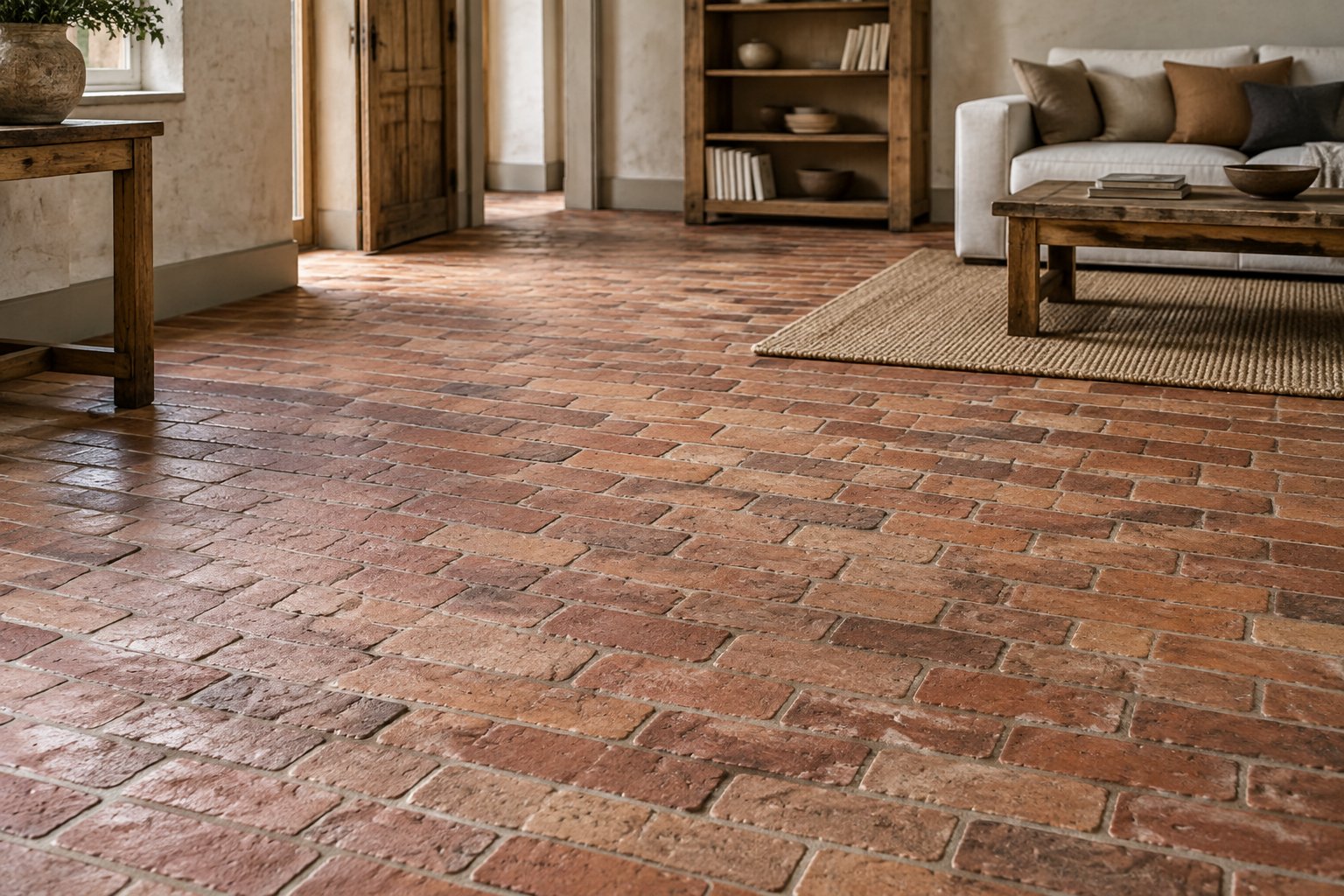
A brick floor was just spec'd for the kitchen, and the subfloor cannot take the weight or depth of a full paver. The timeline is locked, the cabinets are ordered, and you need a surface that reads as genuine clay brick without rebuilding the whole floor assembly.
Thin brick flooring solves that: the aged texture and color of real brick at about half the thickness, so you keep door clearances, cut dead load, and still walk on brick rather than tile.
New Orleans Brick Co stocks reclaimed thin brick hand-picked from buildings that stood for over a century.
Soft Red thin brick starts around $1.85 per brick, and Hard Tan near $2.10, both shipping on pallets within 48 hours of a paid invoice. That speed matters when the flooring decision is holding up the drywall crew.
This guide covers how thin brick flooring compares with full-depth pavers, what the installation assembly looks like on wood and concrete, which setting materials installers reach for, and how to confirm real inventory before you commit.
What It Is and Where It Makes Sense
Thin brick flooring uses real clay brick units, either sliced down or made to a 1/2-inch to 3/4-inch thickness, then set with mortar over a prepared substrate, much like large-format tile. The result is a true brick surface that weighs and builds up less than a traditional brick paver floor.
How a Surface Veneer Differs From Full-Depth Brick Underfoot
Standard clay brick pavers run about 2-1/4 inches thick and weigh 4.5 to 5 pounds each. Thin brick tiles are 1/2 to 3/4 inch thick and weigh 1 to 1.5 pounds. That puts your total floor build-up, including thin-set and grout, around 3/4 inch to 1 inch, not the 3 inches or more a full paver system needs.
Thin brick tiles bond directly to the substrate with thin-set mortar, so they go down more like tile than masonry.
No sand bed, no compaction, and you keep the ceiling height and door clearance. The tradeoff is that you cannot re-lay thin brick if the substrate shifts much, unlike loose-set reclaimed brick pavers.
Best Interior Uses for Kitchens, Fireplaces, Mudrooms, and Accent Floors
Thin brick flooring shows up most in kitchens, mudrooms, hearth surrounds, and hallway accents, where you want the warmth of reclaimed brick flooring without reworking the floor structure. It is especially useful in remodels where subfloor height is set by the rest of the house.
Fireplaces are a natural fit, with a small footprint and a strong visual payoff. A hearth pad in reclaimed thin brick brings texture that porcelain brick-look tile cannot fake. Mudrooms and laundry entries work well, since the sealed clay surface handles foot traffic and moisture better than most natural stone.
When Full Brick Pavers Are Still the Better Choice
For a patio, walkway, or any exterior surface on compacted gravel, use full-depth brick pavers. Thin brick tiles are not made for dry-set outdoor use where freeze-thaw and ground movement are factors. For those, use full pavers on a proper sand-and-gravel bed.
Full pavers also make more sense for commercial entries and garage-adjacent spaces where heavy loads could crack a thinner veneer. The next question is how reclaimed thin brick compares with factory-made veneer.
How Reclaimed Material Changes the Look
Reclaimed thin brick brings a century of weather, kiln quirks, and surface wear that no machine or stain can fake. The difference between reclaimed and new-production thin brick shows as soon as you lay the first row.
Why Patina, Edge Wear, and Age Read Differently Than New Production
Every reclaimed brick spent decades in a wall or chimney, absorbing soot, lime, and moisture. That exposure leaves a patina, a mineral bloom, and a color shift in the clay's pores. Edge chips and mortar shadows add depth.
New brick veneer, even the antiqued kind, has distressing that looks uniform, and anyone who has worked with brick can spot the difference.
When you compare reclaimed vs new brick, the real gap is randomness. Reclaimed pieces vary in color, face texture, and size. That is what architects mean when they ask for character in a spec.
Soft Red and Hard Tan as Practical Visual References
Soft Red reclaimed thin brick offers a warm, earthy palette, from deep salmon to dusty rose. It pairs well with white grout and light wood cabinetry. Hard Tan leans golden buff to pale cream, sometimes with a fire flash, and works with limestone, concrete counters, and steel details.
Both types are cut from full reclaimed brick pulled from 100-year-old structures. Color profiles vary by lot, so ask for current yard photos before you settle on a variety.
How Grout Color Affects the Final Floor
Grout color shifts the whole mood of a thin brick floor. Light gray or white grout opens up the pattern and makes each brick stand out. Dark charcoal grout blends the joints, gives a more monolithic look, and hides kitchen stains better over time.
On reclaimed floors, many installers choose a medium warm gray, which keeps the aged look without high-contrast grid lines. Your grout choice also depends on whether you use sanded or epoxy grout.
Floor Assembly, Depth, and Structural Considerations
A thin brick floor adds about 3/4 inch to 1 inch of total build-up, combining brick, thin-set, and grout. That is roughly a third of what a traditional brick paver floor on sand requires.
Wood Subfloors, Concrete Slabs, and When to Use Backer Board
On a concrete slab, set thin brick right over the surface after cleaning and flattening it. Concrete does not flex, so it is the easiest substrate. On a wood subfloor, lay 1/4-inch or 1/2-inch cement backer board first, screwed every 6 inches, to create a rigid layer that prevents cracks.
If your wood subfloor bounces when you walk on it, reinforce the joists before installing backer board. No flexible thin-set will save thin brick on a springy floor.
Transitions, Door Clearances, and Build-Up Planning
Do the build-up math before ordering the brick. Measure door swings, flooring heights in adjacent rooms, and appliance clearances. A 3/4-inch build-up usually sits close to luxury vinyl or engineered hardwood, so transitions are often flush or need only a reducer strip.
Where thin brick meets tile, such as at a bathroom doorway, a metal transition bar keeps it tidy. Mapping every transition on your floor plan before install day saves frustration and trimming.
Installation Materials That Matter
The thin-set mortar and grout you choose decide whether your thin brick floor holds. If the bond fails, you get hollow spots and pop-offs. The wrong grout leads to stains or cracks.
Thin-Set Mortar Selection and Bonding Basics
Use a polymer-modified medium-bed thin-set rated for large and heavy tile. Products like Multimax from Custom Building Products work well with the uneven backs of reclaimed brick. They stay workable longer and bridge small voids. Use a 1/4-inch by 3/8-inch notched trowel, and back-butter each brick for full coverage.
Standard unmodified thin-set is too rigid and sets too quickly for reclaimed material. Since reclaimed bricks vary slightly in thickness, you need mortar that gives some working time before it skins over.
Sanded Grout Versus Epoxy Grout for Wear and Cleanup
- Sanded grout is cheaper, comes in many colors, and works for joints 1/8 inch and up. It needs sealing for stain resistance.
- Epoxy grout resists water, grease, and mold without sealing. It costs three or four times as much as sanded.
- Sanded grout is easier to tool into the uneven joints of reclaimed brick.
- Epoxy grout sets harder, which helps in high-traffic spots like kitchens.
- Cleanup is faster with sanded grout, while epoxy grout must be wiped off almost immediately or it hazes.
For most homes, sanded grout with yearly sealing is the practical route. Save epoxy for commercial kitchens or spots that see a lot of water.
Product Families Commonly Specified by Installers
Poly Blend sanded grout from Custom Building Products is a common choice. Mapei's Keracolor U (unsanded) or S (sanded) lines offer tight color consistency and are easy to find. For epoxy, Spectra Lock Pro from Laticrete is a favorite among tile setters.
Most installers have their own preferences, so the priority is matching the grout type to your floor's needs.
All of these assume a clean, properly cured thin-set bed underneath. Even the best grout cannot fix a floor set on weak mortar. Layout and long-term care deserve as much attention as the install itself.
Layout, Performance, and Maintenance Over Time
Pattern choice and regular sealing decide whether your thin brick floor still looks sharp in five years or starts showing haze and trapped moisture after year one.
Joint Width, Running Bond, Herringbone, and Other Practical Patterns
Running bond keeps things simple and uses the least material, usually under 5 percent waste. Herringbone patterns push waste to about 10 to 15 percent and take longer to install, but they ground a room visually in ways running bond cannot.
A standard brick pattern guide covers basketweave, stacked bond, and other layouts that work for floors.
Most reclaimed thin brick joints run from 3/8 inch to 1/2 inch. Tighter joints give a more polished look, while wider joints feel rustic and make it easier to absorb size variation between bricks.
Sealing, Cleaning, and How to Prevent Mold and Mildew
Seal new thin brick floors with a penetrating matte sealer once grout cures, usually after 48 to 72 hours. Penetrating sealers soak into the clay and grout, skipping the glossy plastic look and avoiding slick spots when wet. Kitchens and mudrooms do best with resealing every 12 to 18 months.
To keep mold and mildew down, do not let water sit. Wipe up spills quickly and ventilate damp rooms. A pH-neutral cleaner and a stiff nylon brush handle regular cleaning without stripping the sealer or dulling the brick's patina.
How Thin Brick Performs in Busy Residential and Light Commercial Interiors
Real clay thin brick stands up to foot traffic, rolling chairs, and dog nails better than most owners expect. The fired clay surface is tougher than the grout, so you see wear in the joints first. Reseal once a year and touch up hairline cracks with grout to keep the floor looking good for years.
In light commercial spaces such as tasting rooms, cafes, or retail, thin brick brings a texture that polished concrete or LVP cannot match. Knowing what to expect over the long haul helps before you order.
Sourcing Thin Brick Flooring for a Live Project
Getting the right reclaimed thin brick to your site means confirming three things: quantity, how much variation you will accept, and a freight timeline that fits your schedule.
What to Confirm Before Ordering: Quantity, Cuts, and Consistency
Measure your floor, then add 10 percent for running bond or 15 percent for herringbone to cover cuts and breakage. Always ask for a sample set of at least 10 to 12 bricks so you can check the color range, thickness, and face condition before buying full pallets.
Reclaimed thin brick will not be perfectly uniform, and that variation is part of the look. Still, confirm the usual thickness spread, about plus or minus 1/8 inch, before your installer starts.
How Freight, Lead Times, and Pallet Shipping Affect Scheduling
Reclaimed brick ships on pallets by freight carrier, with curbside delivery unless you arrange otherwise. Many nationwide reclaimed suppliers quote six to twelve week lead times. A supplier that keeps real inventory can deliver in days, not months.
Freight cost depends on weight, distance, and delivery details. One pallet of thin brick usually covers 50 to 70 square feet, depending on size and joint width. A 200-square-foot kitchen needs three or four pallets. Always get a freight quote up front so reclaimed brick cost factors do not catch you off guard.
Checking Current Availability and Pricing Before You Commit
Reclaimed inventory moves fast. The Soft Reds and Hard Tans you see today may be gone next week. Call to confirm what is in stock, ask about per-brick pricing, and lock in your order with a paid invoice to get a truck rolling within 48 hours.
Frequently Asked Questions
How Do You Install Brick Over a Concrete Slab Without It Cracking Loose?
Clean the slab thoroughly and grind off old sealer or paint, then check flatness with a 10-foot straightedge. Use polymer-modified thin-set with a notched trowel, and back-butter each thin brick. A clean, porous slab and full mortar coverage keep the bond solid.
Can Thin Brick Hold Up on an Outdoor Patio in Heat, Rain, and Freeze-Thaw?
Thin brick tiles bonded to a slab work well for covered outdoor areas. For fully exposed patios with standing water and freeze-thaw cycles, full-thickness reclaimed brick pavers on a proper base are the safer long-term choice.
How Does a Herringbone Pattern Affect Cuts, Waste, and Installation Time?
Herringbone needs angled cuts at every wall, so waste jumps to 10 to 15 percent. Install time usually rises 20 to 30 percent versus running bond, since each row takes more measuring and dry-fitting.
What Should I Expect to Pay per Square Foot, All In?
Reclaimed thin brick runs about $8 to $14 per square foot, depending on type. Add $2 to $4 for thin-set, grout, sealer, and backer board. Professional labor is typically $6 to $10 per square foot, so plan on $16 to $28 all-in for most residential floors.
Your Next Step Starts With a Phone Call
Thin brick flooring brings the depth and texture of old clay without the heavy build-up of full pavers. Whether you are choosing material for a custom kitchen, a fireplace hearth, or a showroom, the real decision is finding reclaimed brick that is actually in stock and ready to ship.
Call New Orleans Brick Co to check what is on the yard and get your order moving within 48 hours of a paid invoice. One conversation sorts out your quantity, color, and freight timeline so the project stays on track.