The driveway spec is due, the client wants the home to look like it’s stood for a century, and the bid deadline won’t budge. Usually, you’re picking between a brick driveway and cobblestone, and these two materials behave very differently once trucks start rolling.
A brick is a fired clay unit with flat faces and neat joints. Cobblestone is cut stone, usually with a rounded top and a hand-set, old-world look.
Most folks working through this decision end up calling a reclaimed supplier before reaching out to a mason. New Orleans Brick & Stone, for example, is a family-run operation pulling brick and stone from buildings over a hundred years old.
They keep real stock on hand and can get a truck rolling within 48 hours after you pay the invoice. That’s a big deal when your paver order might otherwise get stuck in a six-month queue.
Let’s get into how fired-clay brick pavers and real cobblestone differ in makeup, how each holds up under vehicles and freeze-thaw, what you’re actually paying in labor, and how to pick the right period look for the house you’re building. Both handle the job, but only one is easy to match, repair, and live with, and decades of handling these materials make that clear.
Brick Driveway vs Cobblestone: Material Differences That Drive the Choice
The main difference is straightforward. Brick pavers come from fired clay. Cobblestone is natural stone, cut from quarries. Everything else follows from that: the joint width, the ride quality, the repair method.
How Fired-Clay Brick Pavers Differ From Natural Stone
Brick pavers start as clay and shale, either pressed or hand-molded, then fired in a kiln at almost 2,000 degrees. That process vitrifies the clay, which is why fired clay brick performs as a dense, low-maintenance surface for decades.
Most reclaimed paver sizes land around 8 by 4 inches, with thickness between 2 1/4 and 2 3/4 inches. Natural stone skips the kiln. Granite, basalt, and limestone are cut straight from the quarry, so the density and hardness come from the rock itself. Granite cobblestone, for example, is the heaviest and shrugs off abrasion.
True Cobblestones, Setts, and Belgian Blocks Explained
People throw these words around on job sites, but it’s worth sorting them out:
- Cobblestones: naturally rounded stones, often pulled from riverbeds, with domed tops and irregular sizes.
- Setts: rectangular cut stone, usually granite, sized about 4 by 4 by 4 inches or 4 by 7.
- Belgian block: larger cut granite blocks, often 5 by 8 by 4 inches, common in old port cities and now used for edging and aprons.
Most driveways sold as “cobblestone” are really setts or Belgian block, since true rounded cobbles ride rough under a car.
Why Reclaimed Materials Carry Different Visual Character
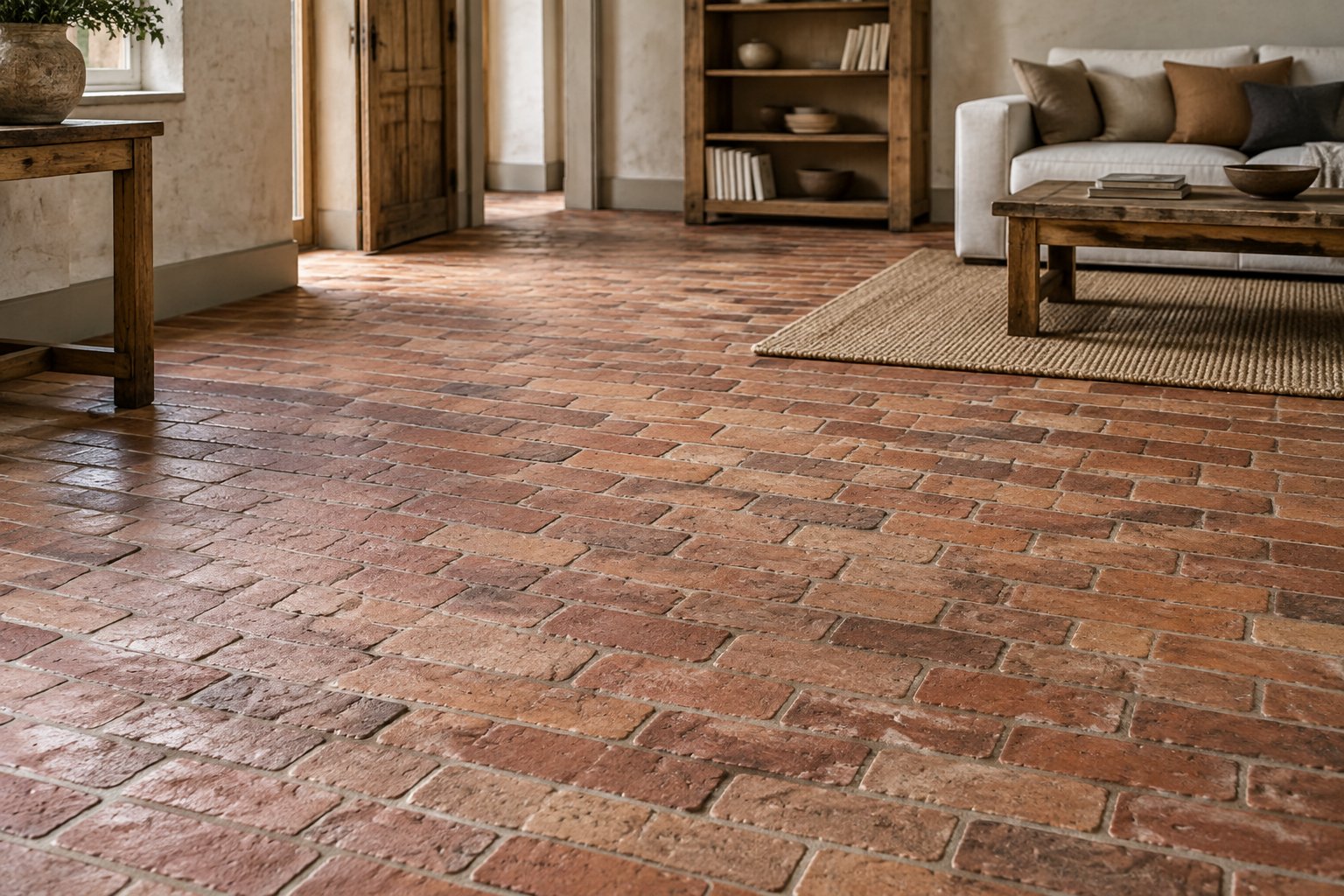
New units out of a plant look identical. Reclaimed brick and stone come out of old buildings, so the faces show mortar shadows, kiln marks, and a century of weather. That mix of color across a pallet is what gives a rustic surface its depth. Antique pavers just look older because they are, and that difference stands out when the surface has to take weight.
Performance Under Vehicles, Weather, and Daily Use
Both brick and cobblestone outlast asphalt by decades if you prep the base right. Most failures trace back to a bad subgrade, not the paving material.
Load-Bearing Strength in High-Traffic Areas
Granite setters win when it comes to raw strength. A 4-inch-thick granite block easily handles a loaded concrete truck, which is why old city streets are still granite.
Hard-fired brick pavers do fine with residential loads when laid at 2 1/4 inches or thicker over a solid base. Softer reclaimed wall brick is a different story. Soft Red brick looks great, but it really belongs in a walkway, patio, or a low-traffic apron, not under daily truck tires. Sorting matters, and good suppliers grade brick for driveway use separately.
Freeze-Thaw Cycles, Cracking, and Surface Movement
Water causes trouble in both systems. Freeze-thaw cycles lift joints, spall faces, and push units out of alignment. Hard, portland-rich mortars can cause brick masonry problems by trapping moisture against the brick, and that goes for mortared driveway joints too.
Sand-set installations move with the ground instead of fighting it. If a concrete slab cracks, you have to cut it out. If a brick or stone field settles, you just lift, re-screed, and reset it.
Accessibility, Ride Quality, and Snow Removal
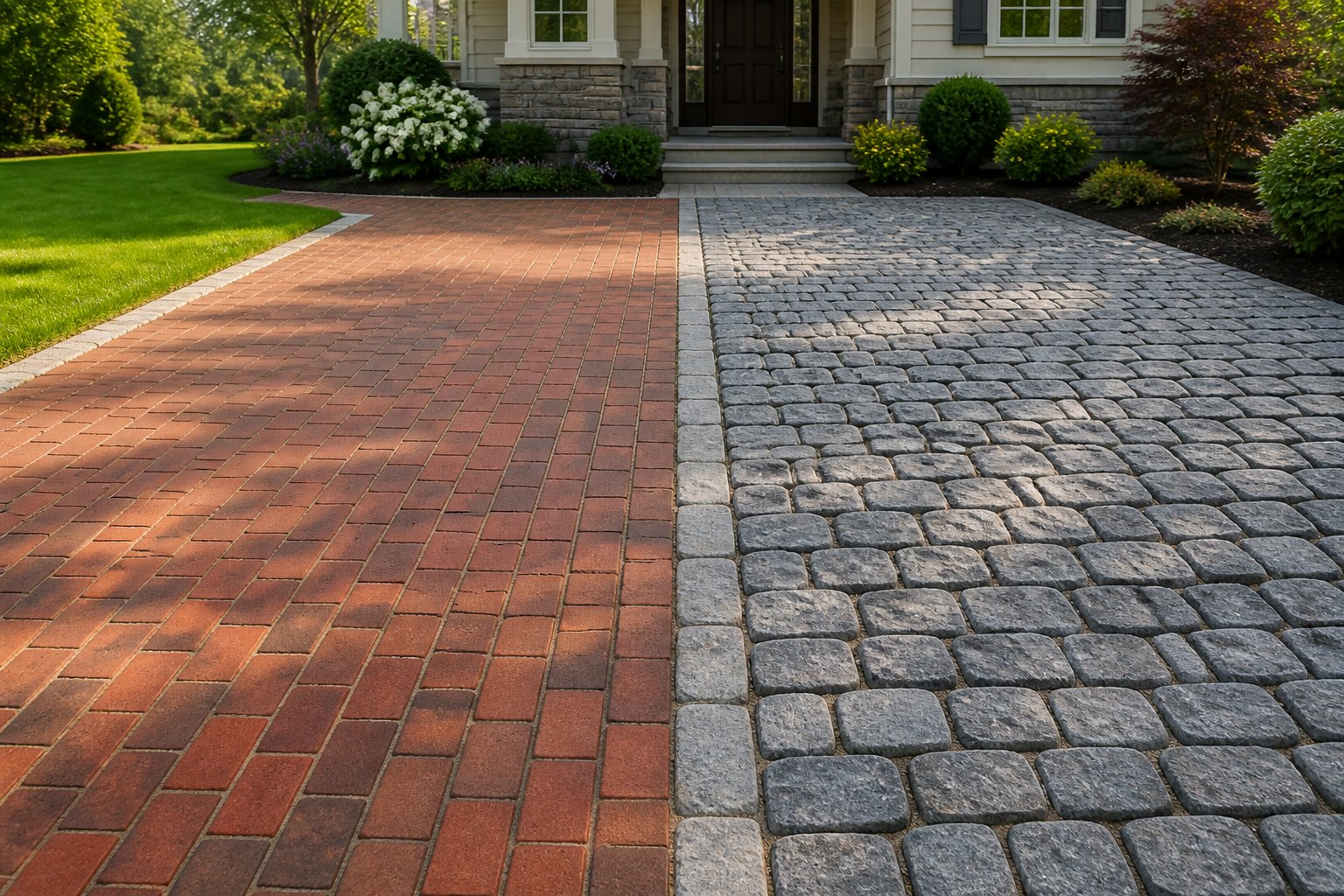
Brick gives you a much flatter surface. Joints run about 1/8 to 1/4 inch, so strollers, wheelchairs, and heels all work fine. Rounded cobblestones can leave a half-inch or more of surface bumps, charming to look at, but not so easy to walk across.
Snow removal is similar. A plow blade glides over brick but can catch on domed cobbles. You’ll see that difference again during installation.
Installation Requirements and Design Flexibility
Installation cost splits these materials more than the material price itself. Brick sets fast in repeating patterns. Cobblestone gets placed one piece at a time.
Base Preparation, Compaction, and Drainage
Spend your money on the base. For a residential driveway, plan for 8 to 12 inches of compacted crushed stone, compacted in 4-inch lifts, then a 1-inch bedding sand or chip layer.
Drainage is everything. Both brick and stone joints let some water through, so they work as semi-permeable surfaces. Open-jointed systems cut runoff by letting water move down, not across. Slope the finished grade at least 1 to 2 percent away from the house.
Patterns and Borders for Reclaimed Brick Driveway Ideas
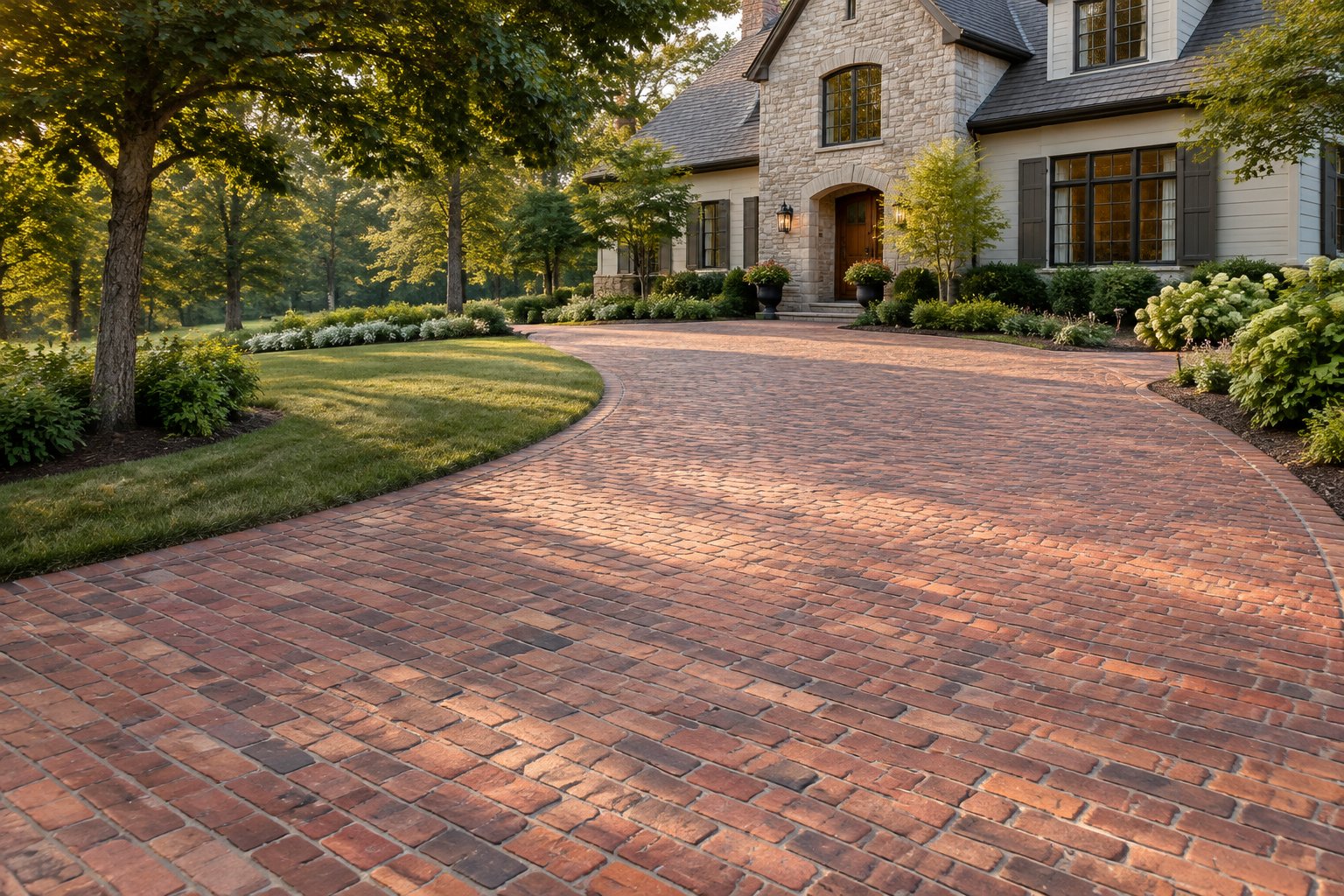
Brick gives you a lot of pattern options. Running a bond is the fastest and feels calm. Herringbone at 45 degrees interlocks best under turning tires and is the go-to for driveways.
Some classic combos:
- Herringbone field with a double soldier-course border
- Running bond field with a Belgian block edge
- Basketweave apron at the garage, herringbone down the drive
Reclaimed brick pavers handle these layouts easily since the sizes stay close within a lot.
Why Cobblestone Installation Requires More Hand Work
Cut stone varies in depth and face size, so setters have to shim, sort, and tap each piece individually. Labor on a hand-set cobble driveway often runs two or three times what you’ll pay for a brick field of the same size. That labor gap really drives the total cost.
Upfront Cost, Maintenance, and Long-Term Value
Material price only tells part of the story. Both surfaces cost more than concrete and asphalt to start, but they end up costing less over 50 years.
What Shapes Cobblestone Paver Driveway Cost
Installed cobblestone driveways usually run $18 to $50 per square foot. Brick paver driveways fall closer to $10 to $30 per square foot.
Concrete pavers land around $10 to $25, and plain asphalt sits at about $7 to $13. Cobblestone paver driveway cost climbs with stone type, block thickness, shipping weight, and all those hand-setting hours. Granite weighs about 165 pounds per cubic foot, so shipping isn’t cheap.
Per-Brick Pricing Context for Soft Red and Old Chicago Brick
Reclaimed brick is usually priced per brick, not per square foot, so takeoffs are straightforward. Figure 4.5 to 5 bricks per square foot laid flat.
Soft Red reclaimed brick has the warm, chalky faces most people picture in a French Quarter courtyard. Old Chicago brick is more tumbled and multi-toned, with heavier char and mortar traces.
Current per-brick pricing moves with reclamation lots, so it’s worth calling to confirm. A fuller breakdown of reclaimed brick cost helps when you’re budgeting.
Sealing, Joint Repairs, and Replacement Over Time
Neither brick nor cobblestone really needs sealing to last. Sealing brick can deepen color and slow staining, but if you use too much, it traps moisture. Real maintenance is all about the joint sand. Sweep polymeric sand back into the joints every few years, pull weeds early, and reset any unit that settles. Swapping out a single brick is a quick job.
Curb Appeal, Property Value, and Environmental Impact
Both brick and cobblestone add curb appeal that concrete just can’t match. Reclaimed brick brings something extra: keeping usable masonry in service instead of dumping it in a landfill.
Reusing construction materials cuts waste and new manufacturing demand. That’s one reason architects often specify salvage first, though period accuracy usually decides it.
Selecting a Period-Correct Surface for the Project
Match the material to the house and the era, not just to a trend. Historic driveway materials were regional, and getting that right is what makes a new build feel old.
When Reclaimed Brick Is the Stronger Fit
Reclaimed brick is usually the safer pick for most Southern and Gulf Coast homes, Colonial Revival projects, and A. Hays Town-style architecture. It sits flat, repairs easily, and ties in visually to brick walls, chimneys, and walkways on the property.
You also get more pattern flexibility than with stone. Running the same brick from the drive into reclaimed brick patios and walkways creates a nice sense of continuity across the site.
When Cobble Driveways or Belgian Block Are Worth Specifying
Cobblestone really shines in the right context:
- Northeastern and mid-Atlantic homes with granite curbs and stone foundations
- Steep drives where a rougher surface helps with traction
- Aprons, gutters, and edge restraints where brick alone might shift
- Estate entries where heavy vehicles cross daily
A hybrid works well too: Belgian block borders framing a reclaimed brick field.
Confirming Limited Reclaimed Inventory Before Finalizing Plans
Salvage inventory is limited. A particular brick type only exists in the amount pulled from a specific building, so a 1,200 square foot driveway at about 5 bricks per square foot needs roughly 6,000 units from one matching lot. Check the count before you commit to the spec.
Source Materials Before the Schedule Tightens
Lead time for materials is where most people get caught off guard. Having pallets in hand now beats a cheaper price months down the line.
Checking Live Inventory and Per-Brick Pricing by Phone
Just call to get the count, current per-brick price, and an honest answer about whether one reclaimed lot covers your square footage. Guidance on how to choose reclaimed bricks helps you ask the right questions about hardness, sizing, and sorting before you order.
Ask specifically about grading for driveway use. Not every used brick for sale is dense enough to go under vehicles.
Planning Nationwide Truck Delivery Within 48 Hours of Invoice Payment
Bricks ship on pallets by freight, curbside, unless you arrange something else. Orders are usually prepped in two or three business days, and once you pay the invoice, a truck can be rolling within 48 hours. Have a forklift or offload plan ready, since curbside delivery just means the driver leaves the pallets at the curb.
Getting the Right Surface Under Your Client's Tires
Cobblestone offers real weight and a rugged, rounded look. Reclaimed brick gives you a flatter ride, quicker installation, easier repairs, and per-brick pricing that keeps your budget honest.
For most period-correct homes, brick wins on character and practicality. Choosing between reclaimed brick and new brick usually settles the debate, since nothing new can fake a hundred years of weather.
Call New Orleans Brick & Stone at 225-284-7529 to check what’s in stock and get a truck moving within 48 hours. You’ll get real answers on counts, pricing, and freight before your spec is locked.
Frequently Asked Questions
What Is the Cost per Square Foot for a Brick or Cobblestone Driveway?
You’ll usually pay $10 to $30 per square foot for installed brick paver driveways. Cobblestone costs more: $18 to $50 per square foot. Reclaimed brick is priced per brick. You’ll need about 4.5 to 5 bricks for every square foot, so it’s best to call for a quote if you want real numbers.
Which Driveway Material Lasts Longer Under Daily Vehicle Traffic?
Granite cobblestone handles heavier loads because of its higher compressive strength. If you use hard-fired brick pavers at least 2 1/4 inches thick and set them on a well-compacted base, they’ll hold up to residential traffic for decades.
What Are the Main Drawbacks of a Brick Driveway?
Softer reclaimed brick won’t stand up to vehicle traffic, so you need to sort each piece for hardness. Brick driveways also require you to refresh joint sand every few years. Salvaged brick supply depends on what’s actually been reclaimed, so availability varies from lot to lot.
Are Cobblestone Driveways Harder to Install and Repair Than Brick?
Yes. You have to sort, shim, and set each stone by hand. This process usually takes two or three times as long as laying brick. Repairs aren’t impossible, but matching the stone size and depth is tricky. Swapping out a single brick is a lot easier.
How Much Maintenance Does Each Driveway Need Over Time?
Both types need regular weeding and occasional joint sand replacement. If any unit settles, you’ll have to reset it. Sealing is optional for both. Heavy sealing on brick can actually trap moisture instead of protecting the surface, so it’s something to consider.
Which Material Gives a Home a More Authentic Historic Look?
It depends on where you live. In the South, on the Gulf Coast, or with Colonial Revival homes, reclaimed brick just looks right. Granite setts and Belgian block feel more at home in Northeastern properties, especially if you’ve got stone curbs or old foundations.