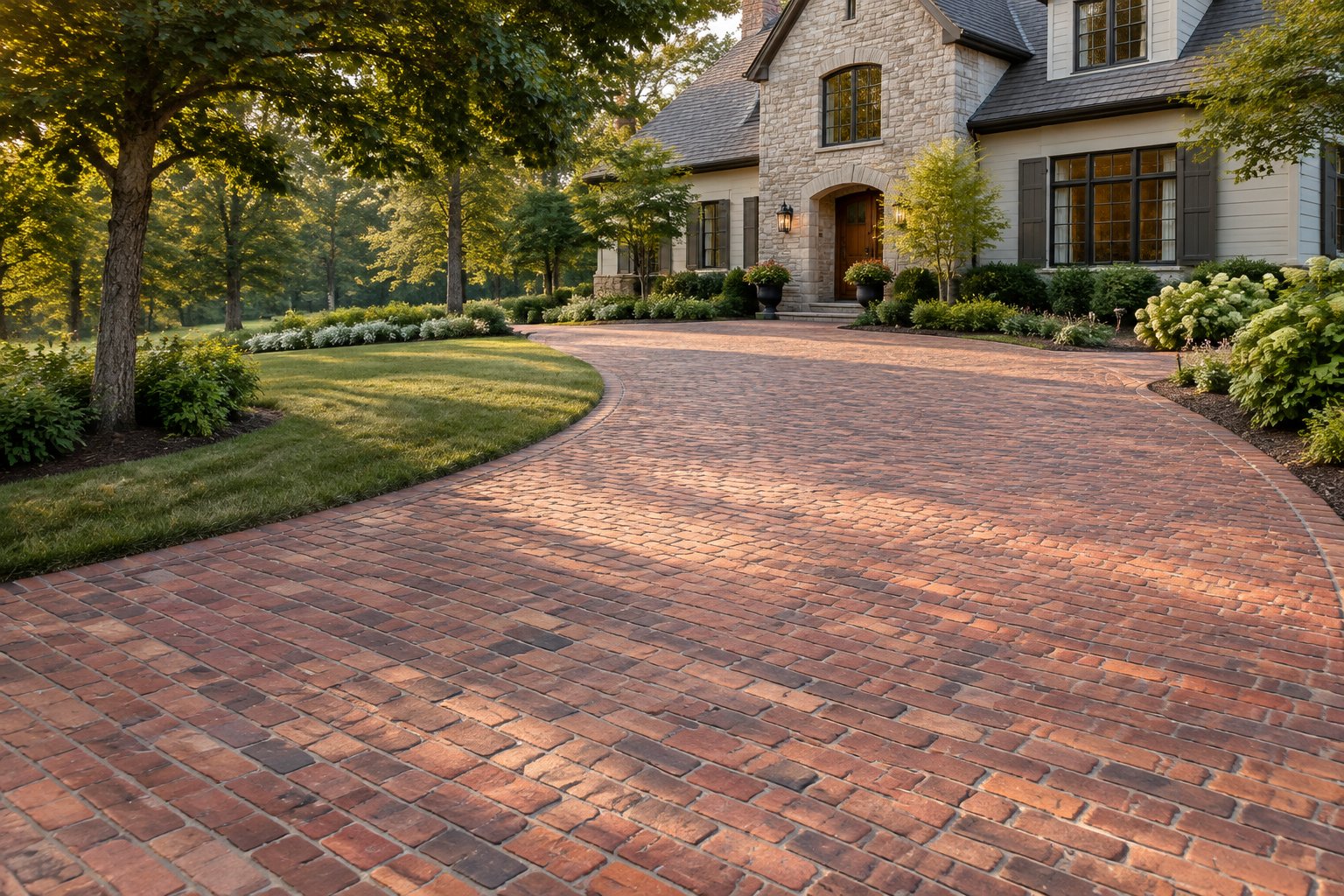
A driveway that needs to look like it has been there for a hundred years asks more of its material than most surfaces do. The pavement has to handle daily traffic, hold its color through every season, and age with grace instead of cracking apart after a few freeze-thaw cycles. That is where genuine reclaimed cobblestone earns its place.
No poured concrete mold or tumbled reproduction carries the density, the mineral patina, or the wear patterns left by a century of wagons, foot traffic, and weather. When you start searching for cobblestone for sale, sourcing matters as much as the stone itself.
The Bourgeois family at New Orleans Brick Co. sources reclaimed brick, stone, and related materials from structures over 100 years old, keeps meaningful inventory on hand, and can have a pallet on a truck within 48 hours of invoice payment.
That kind of speed matters when your project timeline is tight, and the material has to be right.
Keep reading to learn how to separate authentic reclaimed cobblestone from manufactured copies, choose the right format for your driveway or walkway, compare regulation and jumbo sizes, and get honest answers on pricing and freight before you commit. This guidance comes from handling real stone, not quoting a supplier's listing.
What Buyers Should Check First When Comparing Cobblestone for Sale
The first thing to verify is whether the stone you are considering is genuinely reclaimed or simply made to look old. That single distinction affects density, color depth, surface character, and long-term performance under load.
How Genuine Reclaimed Cobblestone Differs from Manufactured Reproductions
Authentic reclaimed cobblestones were quarried and hand-cut decades or centuries ago. They spent their working life set in streets, courtyards, or loading docks, absorbing iron stains, developing a mineral patina, and hardening further through repeated wet-dry and freeze-thaw cycles.
When you pick one up, the weight surprises you. The edges are slightly rounded from wear, and no two faces look the same.
Manufactured reproductions start as poured concrete or machine-cut stone tumbled in a drum to simulate age. They weigh less per unit, show uniform color, and often crack along molding seams within a few years. Under a magnifying glass, you can see air bubbles in concrete copies that never appear in natural granite cobblestone or basalt.
Here is a quick checklist for evaluating any cobblestone listing:
- Weight: Genuine granite cobblestone is noticeably heavier than concrete reproductions of the same size.
- Surface texture: Look for natural tool marks, mineral veining, and uneven wear rather than stamped patterns.
- Color variation: Real patina shifts across the face of each stone. Fakes show batch-consistent dye.
- Edge profile: Reclaimed stones have softened, irregular edges. Machine-tumbled copies feel uniformly rounded.
- Density test: Tap the stone with a hammer. Dense natural stone rings; porous concrete thuds.
What Period Authenticity, Patina, and Density Tell You About Quality
Period authenticity is not just an aesthetic preference. A cobblestone pulled from a 19th-century Belgian block street has already proven it can survive over a century of compression, moisture, and temperature swings. That track record is something no manufacturer's warranty can match.
Patina tells you where the stone has been. Iron-rich soils leave rust-colored veining. Limestone bedding mortar leaves pale deposits in the pores.
These marks cannot be faked convincingly. They give your finished project a visual depth that new stone needs decades to develop. If a seller cannot explain where the stone was salvaged from, that is a red flag.
Density matters most for driveways and vehicular areas. Granite cobblestone typically measures 6 to 7 on the Mohs hardness scale, which means it resists crushing under passenger vehicles and even light commercial loads.
Softer stones like sandstone or certain limestones can work for garden paths but may spall under tire pressure. Knowing the stone type and its hardness rating helps you match material to application. That is exactly what the next section covers.
Best Fits for Driveways, Walkways, and Border Work
Reclaimed cobblestone performs differently depending on format, thickness, and where you lay it. Matching stone to application keeps your project structurally sound and visually consistent for decades.
When a Cobblestone Driveway Makes Sense
A cobblestone driveway is the right call when you want a surface that handles vehicle weight without cracking and looks better with age.
Granite and basalt cobblestones, especially those reclaimed from European streetscapes, were designed for exactly this kind of load. Their thickness, typically 4 to 6 inches in full-bed formats, distributes weight evenly across a compacted base.
The key installation detail is the setting bed. Most cobblestone driveways perform best on a 6-inch compacted gravel base topped with a 1-inch sand or stone-dust leveling layer. Polymeric sand or a dry mortar mix fills the joints and locks the stones in place.
If you are comparing this approach to brick pavers, the main difference is depth. Cobblestones sit deeper and handle heavier loads without a concrete slab underneath.
Choosing Stone for Walkways, Garden Paths, and Edging
Walkways and garden paths do not need the same load capacity, so you can use thinner cobblestones or smaller formats. Stones in the 3 to 4 inch thickness range work well for pedestrian traffic. The dimensional variation in reclaimed pieces actually helps here, creating a slightly uneven surface that looks natural alongside plantings and aged brick borders.
For edging, cobblestones set vertically or at an angle create a durable border that will not shift the way landscape timbers do. The worn faces become the visible edge, showing off the patina and color depth that make reclaimed stone worth seeking out.
If you are planning patio and pathway layouts, mixing cobblestone borders with reclaimed brick field pavers creates a layered, historic look.
Where Belgian Block and Larger Formats Work Best
Belgian block is the workhorse of the cobblestone world. These rectangular granite blocks, usually about 5 by 5 by 9 inches, were the standard paving unit for streets in cities like New York, Philadelphia, and New Orleans from the 1800s onward.
They are ideal for driveway aprons, courtyard entries, and transitions between paved and unpaved areas. As noted in guidance on building a driveway apron, a properly set stone apron outlasts poured concrete by decades.
Larger formats also suit commercial applications like restaurant courtyards or hotel motor courts. Their mass and interlock keep them stable under repeated turning movements. The question most buyers ask next is what sizes are actually available. That is where we are headed.
Understanding Sizes, Shapes, and Common Cobble Formats
Cobblestone is not one-size-fits-all. The format you choose determines coverage per pallet, joint width, and how the finished surface handles traffic.
Regulation Cobblestone Sizing
Regulation cobblestones are the most common format in the reclaimed market. They typically measure roughly 4 to 5 inches wide, 4 to 5 inches tall, and 7 to 9 inches long. These are the stones you see in historic streetscapes across the Northeast and Gulf Coast. Their proportions allow tight-jointed patterns that shed water and resist shifting.
Because regulation cobblestones are relatively uniform, they are the easiest reclaimed format to lay in rows or fan patterns. Expect some dimensional variation, usually plus or minus half an inch, which is inherent to hand-quarried and century-worn stone. That variation is part of the character, not a defect.
Jumbo Cobblestone Sizing
Jumbo cobblestones run larger, typically 5 to 7 inches wide, 5 to 7 inches tall, and 9 to 12 inches long. They cover ground faster and create a bolder visual scale. You will find jumbo formats used most often in vehicular plazas, estate driveways, and commercial entryways where the stone needs to make a visual statement.
The tradeoff is weight. A single jumbo cobblestone can weigh 25 to 40 pounds. This means heavier pallets and higher freight costs per square foot. Installation also requires more base preparation because the heavier stones need a deeper compacted layer to stay level over time.
Square, Rectangular, and Full-Bed Stone Profiles
Beyond regulation and jumbo categories, cobblestones come in square cubes, flat rectangles, and full-bed profiles. Square cubes, sometimes called setts, are roughly equal in all three dimensions and work well for mosaic-style patterns. Rectangular stones like Belgian block suit linear rows and running-bond layouts.
Full-bed stones have the deepest profile and the most mass. This makes them the first choice for areas with heavy loads.
- Square cubes (setts): 4x4x4 inches typical. Best for decorative patterns, fan layouts, and lighter-traffic walkways.
- Rectangular (Belgian block): 5x5x9 inches typical. Best for driveways, aprons, and streetscape restorations.
- Full-bed profiles: 5x7x10 inches or larger. Best for commercial vehicle areas and historic restoration where original depth must be matched.
Knowing the format narrows your search considerably. The next step is understanding how these sizes affect what you pay.
How Pricing Usually Works Before You Place an Order
Cobblestone pricing is not as standardized as lumber or concrete. The cost depends on origin, size, preparation, and how far the stone has to travel.
Per-Unit vs Per-Square-Foot Pricing
Some suppliers price cobblestone by the individual unit, especially for Belgian block and jumbo formats. Others quote by the square foot, which makes it easier to compare against alternative paving materials. When evaluating a quote, make sure you know which method is being used and what the installed coverage rate is per pallet.
A pallet of regulation cobblestones might cover 40 to 50 square feet depending on joint width. A pallet of jumbo cobblestones covers more area per stone but fewer total stones per pallet. If you are budgeting alongside other reclaimed materials, our breakdown of reclaimed material costs gives you a useful comparison point.
What Changes Cost: Origin, Size, Preparation, and Freight
European-origin cobblestones, particularly granite setts from Belgium, Portugal, or Germany, tend to cost more than domestic reclaimed stone because of import logistics and limited supply. Larger formats also carry a premium due to weight and the difficulty of salvaging intact pieces.
Preparation matters too. Some cobblestones are sold as-is with old mortar still attached. Cleaned and sorted stone costs more but saves time on site. Freight is calculated by weight and destination. A full pallet of cobblestone is significantly heavier than a pallet of thin brick. Ask for a delivered price, not just a yard price.
Why Availability Should Be Confirmed Before Final Budgeting
Reclaimed cobblestone is a finite material. A specific lot of Belgian block might be available today and gone next week. Locking in pricing without confirming that the quantity you need is actually on the yard can leave you scrambling for a substitute mid-project.
The smart move is to call, confirm what is available in the size and stone type you need, and get a quote that includes freight to your job site. That way your budget reflects reality, not an estimate based on stone that may already be spoken for. This leads directly to the practical questions you should ask before placing an order.
Ordering, Shipping, and Live Availability Questions to Ask
The difference between a smooth project and a stalled one often comes down to what you confirm before you pay the invoice.
What to Confirm About Quantity, Lead Time, and Freight Delivery
Before you finalize an order, verify three things: the exact quantity available in your chosen format, the lead time from payment to shipment, and whether curbside freight delivery works for your site.
Cobblestone ships on pallets via freight carriers, and delivery is curbside unless you arrange for liftgate or forklift service in advance.
For nationwide reclaimed material orders, freight charges depend on weight and distance. A driveway project might require 8 to 12 pallets of regulation cobblestones, so getting an accurate freight quote up front prevents budget surprises. Ask whether partial shipments are possible if the full quantity is not on hand.
How Reclaimed European Stone and Related Materials May Expand Your Options
If a specific cobblestone format is out of stock, reclaimed European stone, antique pavers, and salvaged granite curbing can sometimes fill the same design role. Mixing formats within a project, such as using Belgian block for the driveway and reclaimed brick walkways to connect, is a common approach that architects use to create visual depth while staying within budget.
New Orleans Brick Co carries reclaimed stone and brick sourced from century-old structures, and the Bourgeois family can walk you through what is currently in the yard. Related materials like reclaimed soft reds or St. Louis reds pair well with cobblestone borders in residential settings.
Why It Helps to Call for Current Inventory and Project Matching
Reclaimed stone inventory changes constantly. What shows on a website may not reflect what arrived on the yard yesterday or what shipped out this morning. A five-minute phone call gets you a straight answer on availability, pricing, and whether the stone matches the character you need.
When you call, have your project square footage, preferred stone format, and delivery zip code ready. That gives the team everything they need to pull a quote and confirm whether they can have material on a truck within 48 hours.
Frequently Asked Questions
What sizes and thicknesses do you typically keep in stock for walkways and driveways?
Stock varies, but regulation cobblestones (roughly 4x5x8 inches) and Belgian block (5x5x9 inches) are the most commonly available reclaimed formats. Walkway projects can use thinner 3- to 4-inch profiles. Driveways need full-bed stones of 4 inches or more for load stability.
How does pricing usually break out per square foot or by the pallet, and what drives the cost up or down?
Pricing depends on stone origin, size, and preparation level. European granite setts cost more than domestic reclaimed stone due to import logistics. Cleaned and sorted stone carries a premium over as-is material. Always request a delivered price that includes freight so your budget reflects the true cost.
What's the lead time from order to delivery, and can you ship within 48 hours if it's on the yard?
If the material you need is on hand and your invoice is paid, shipment can happen within 48 hours. Large or custom orders may need additional preparation time. Confirming availability by phone before ordering is the fastest way to lock down your timeline.
Is reclaimed stone a better fit than new for heavy traffic, freeze-thaw, and long-term settling?
Reclaimed granite cobblestone has already survived decades of compression, moisture, and temperature cycles. That proven durability makes it a strong choice for driveways and high-traffic areas. Its density, typically 6 to 7 on the Mohs scale, resists spalling that can affect newer, less-tested materials.
How do I estimate how much material I need for a patio or courtyard, including waste and edge cuts?
Measure your area in square feet, then add 10 to 15 percent for edge cuts and fitting waste. Cobblestones with more dimensional variation may require slightly more overage.
What should I look for when matching color, patina, and wear so a new section doesn't stick out?
Request photos or samples from the specific lot you plan to order. Reclaimed cobblestones vary in mineral staining, surface wear, and color tone from batch to batch. Mixing stones from across a pallet during installation helps blend natural variation and avoids obvious color blocks in the finished surface.
The Fastest Way to Get Real Cobblestone on Your Job Site
Choosing authentic reclaimed cobblestone comes down to three things: verifying the stone is genuine, matching the right format to your application, and confirming availability before your project schedule depends on it.
Every detail in this guide, from density checks to freight logistics, is designed to keep you from wasting time on material that will not hold up or show up when you need it.
If your driveway, courtyard, or walkway project calls for stone with real age and proven strength, call New Orleans Brick Co at the number on the site. Tell them your project size, your preferred format, and your delivery zip code. The Bourgeois family will give you a straight answer on what is on the yard right now and what it takes to get it on a truck.