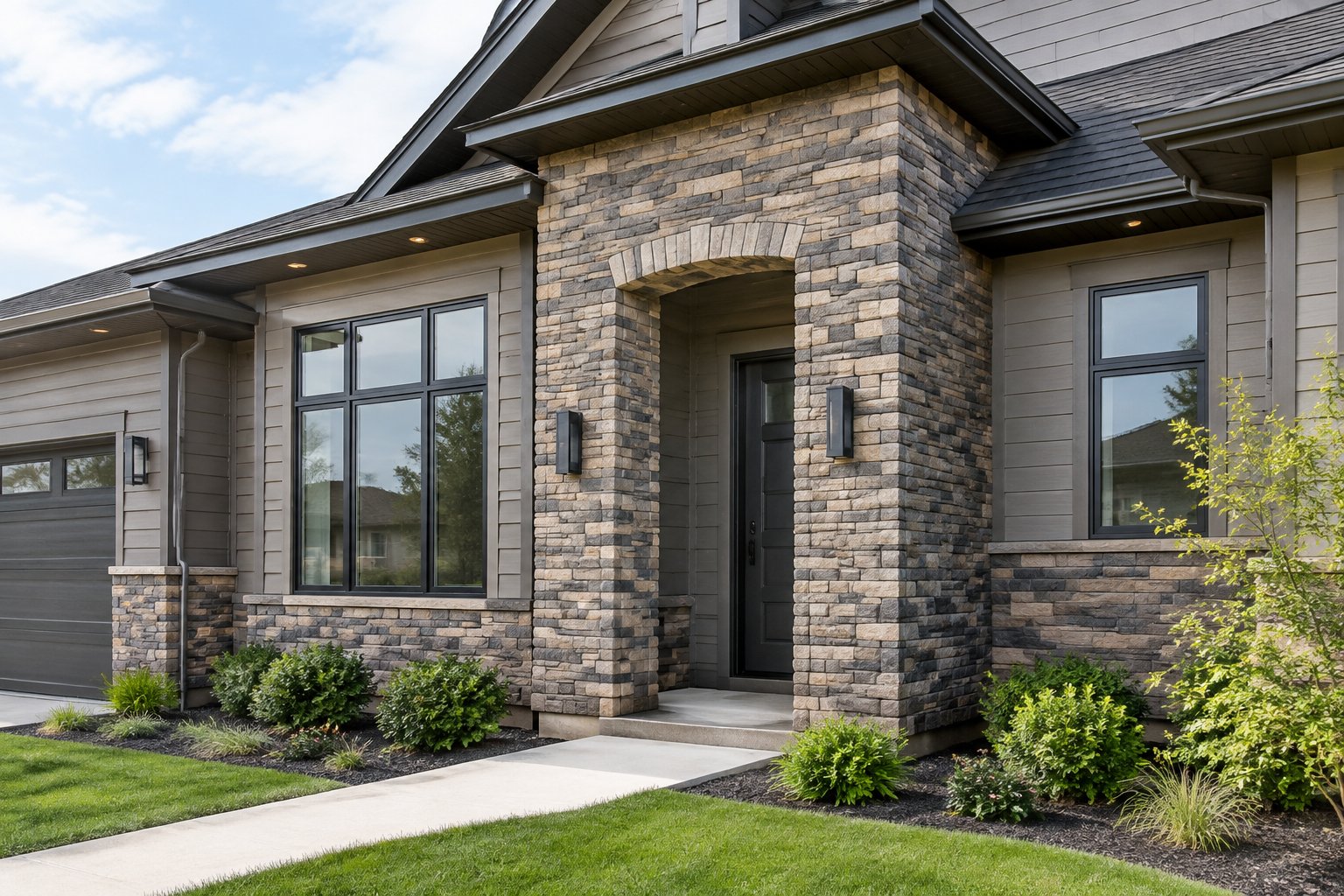
A 1920s facade needs 4,000 matching bricks, and the local salvage lot has 600 on a good day. The color is close but not right. The dimensional variation between their stack and the original wall is obvious from ten feet away. You need reclaimed brick that matches the period, holds up structurally, and arrives before the mason crew loses patience.
Searching for reclaimed bricks near me feels like a local problem, but it is really a sourcing one. New Orleans Brick Co keeps pallets of hand-selected reclaimed brick and vintage brick on hand at all times, sourced from buildings over a century old.
The Bourgeois family has spent nearly four decades curating this inventory, and once your invoice clears, a truck rolls within 48 hours. You do not need a local yard with a matching lot. You need a supplier with real stock and a freight lane to your job site.
Keep reading to learn how to search for reclaimed bricks near me and actually find authentic materials without geographic limits. You will get practical advice on verifying brick origin, comparing types like Soft Reds and Old Chicagos, evaluating salvage yard alternatives, and asking the right questions before you pay.
Every recommendation here comes from working knowledge of how reclaimed materials move from century-old structures to active job sites.
Why "Reclaimed Bricks Near Me" Does Not Have to Mean Local Pickup
Freight shipping has made geography irrelevant for reclaimed brick sourcing. A pallet of authentic reclaimed materials stacked in a New Orleans yard can reach a project in Colorado, Virginia, or Oregon in days, not weeks.
The phrase "near me" in your search bar really means "available now and deliverable fast." That is exactly what nationwide reclaimed brick shipping solves.
How Nationwide Freight Changes the Search
Most builders start by searching locally because they assume used building materials have to be picked up in person. That assumption costs time. A dedicated reclaimed brick supplier palletizes sorted, inspected brick and hands it to a freight carrier the same way any building product moves across the country.
Freight pricing is calculated by weight, destination, and delivery needs. For a full pallet of reclaimed brick averaging around 500 units, the freight cost per brick often adds less than you would spend driving a trailer two hours each way to a salvage yard. The real savings show up in consistency.
Every brick on the pallet has already been cleaned, sorted by color, and checked for structural integrity before it ships.
What 48-Hour Truck Dispatch Means for Active Jobs
When your mason crew is scheduled for next Monday, a supplier quoting four to six weeks does not help. The 48-hour dispatch window means that once payment clears, a loaded truck is on the road within two business days. That timeline protects your schedule and keeps subcontractors from sitting idle.
This speed is only possible because the inventory already exists on the yard. There is no waiting for a demolition to finish or a batch to be processed. The bricks are reclaimed, cleaned, palletized, and staged. You call, confirm what is in stock, pay, and the shipment moves.
When Curbside Delivery Works Best for Builders and Architects
All shipments arrive curbside via freight carrier unless you arrange otherwise in advance. For most residential and mid-size commercial sites, curbside works well when you have a forklift or a crew ready to offload. Architects specifying materials for a client project should confirm site access with the general contractor before the truck arrives.
Curbside delivery keeps freight costs lower because it avoids liftgate fees and inside-delivery surcharges.
If your site requires special access, mention it during the quoting call so the logistics team can price it accurately. Knowing how material gets to your site leads directly to the next question: how do you make sure what arrives is worth paying for?
What to Verify Before You Order
A reclaimed brick is only as valuable as its source and its condition. Before you commit to any supplier of antique brick or salvaged brick, verify three things: where the brick came from, whether the inventory is real right now, and how the pricing breaks down.
How to Confirm Brick Came from Century-Old Structures
Authentic brick salvage starts at the demolition site. Ask your supplier which structures the bricks were pulled from and what era those buildings date to. Pre-1920s handmade bricks show telltale signs: irregular edges, slight size variation from unit to unit, and a surface patina that develops only through decades of weather exposure.
Machine-made reclaimed bricks from the early 1900s have more uniform dimensions but still carry the dense fired hardness that modern production bricks often lack.
A trustworthy supplier can tell you whether a lot came from a warehouse in St. Louis, a mill building in the Midwest, or a historic structure in the Gulf South. If they cannot name a general origin, move on.
Why Live Inventory Matters More Than Catalog Photos
Photos on a website show you what a brick type looks like. They do not tell you whether 5,000 matching units are sitting on a pallet today. Live inventory means you can call, ask what is available in the color and size you need, and get a straight count.
This matters because reclaimed brick is a finite resource. Once a lot sells, that exact match may not come back.
The fastest way to confirm live inventory is a phone call. A real person walks the yard, checks the pallet, and tells you exactly what the color range, face condition, and quantity look like. That beats guessing from a product page every time.
What Pricing Transparency Should Look Like per Brick or per Pallet
Pricing for salvaged brick varies by type, condition, and rarity. You should expect a supplier to quote per brick or per thousand, with freight estimated separately. Understanding reclaimed brick cost factors helps you compare apples to apples.
- Per-brick pricing lets you scale orders precisely to your takeoff
- Per-pallet pricing simplifies budgeting for larger runs
- Freight quotes should be itemized, not buried in the unit price
- No hidden fees for sorting, cleaning, or palletizing already-prepared stock
When you know what a brick costs and why, comparing suppliers becomes straightforward. The next step is figuring out which brick type actually fits your project.
Which Brick Types Fit the Look You Want
The right reclaimed brick depends on the color palette, texture, and scale of your project. Each type carries its own visual signature, and choosing well means the wall or floor reads as authentic from day one.
Soft Red and St. Louis Reds for Warm Historic Character
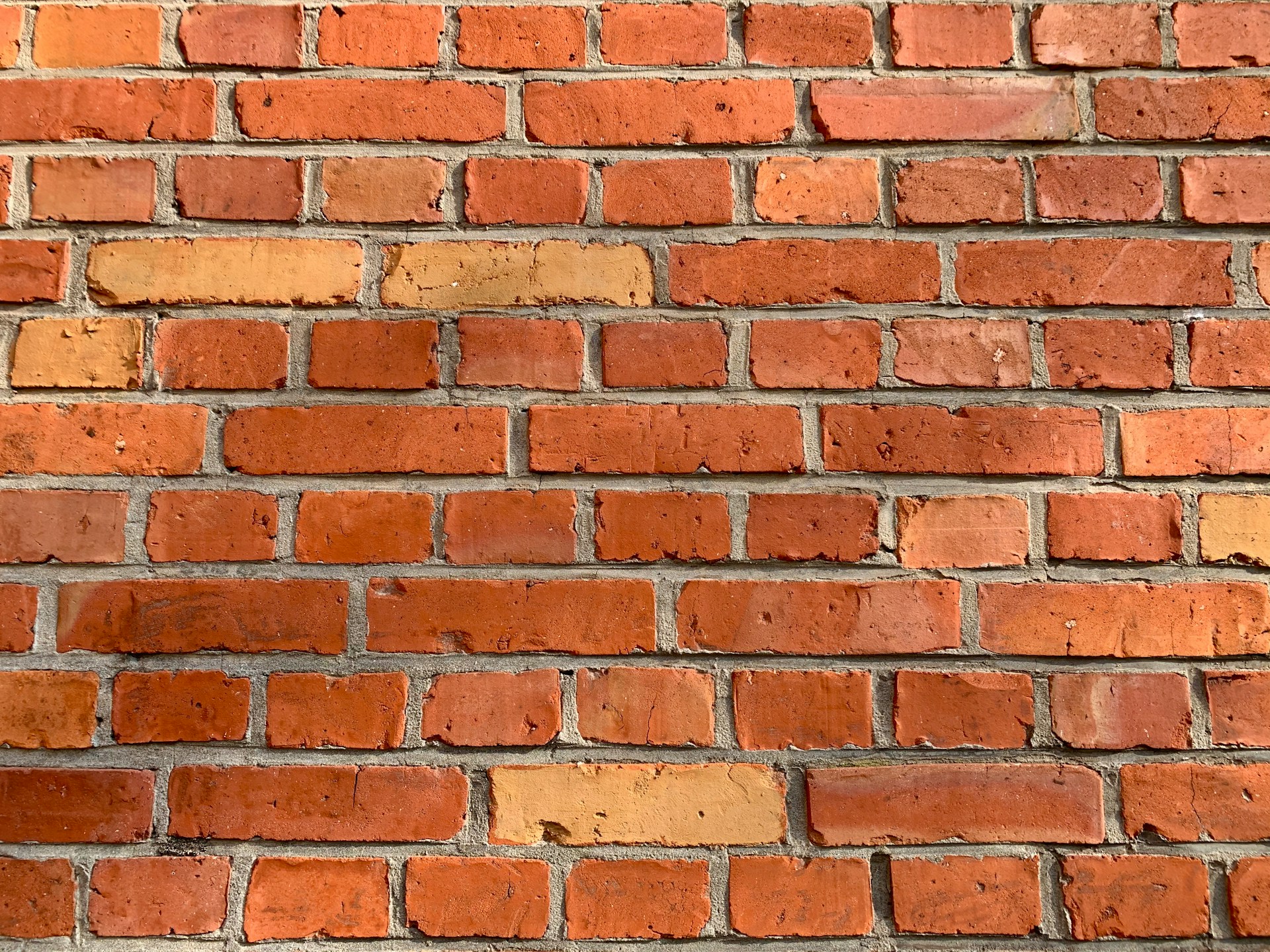
Soft Red reclaimed bricks deliver a deep, earthy warmth with a naturally weathered face, starting at $1.85 per brick. These handmade antique bricks show soft, irregular edges and rich color variation from burnt orange to dusty rose.
They are a go-to for architects designing in the A. Hays Town tradition, where reclaimed materials anchor a home's character. St. Louis Reds offer a similar red family palette with a slightly denser body and start at $1.70 per brick.
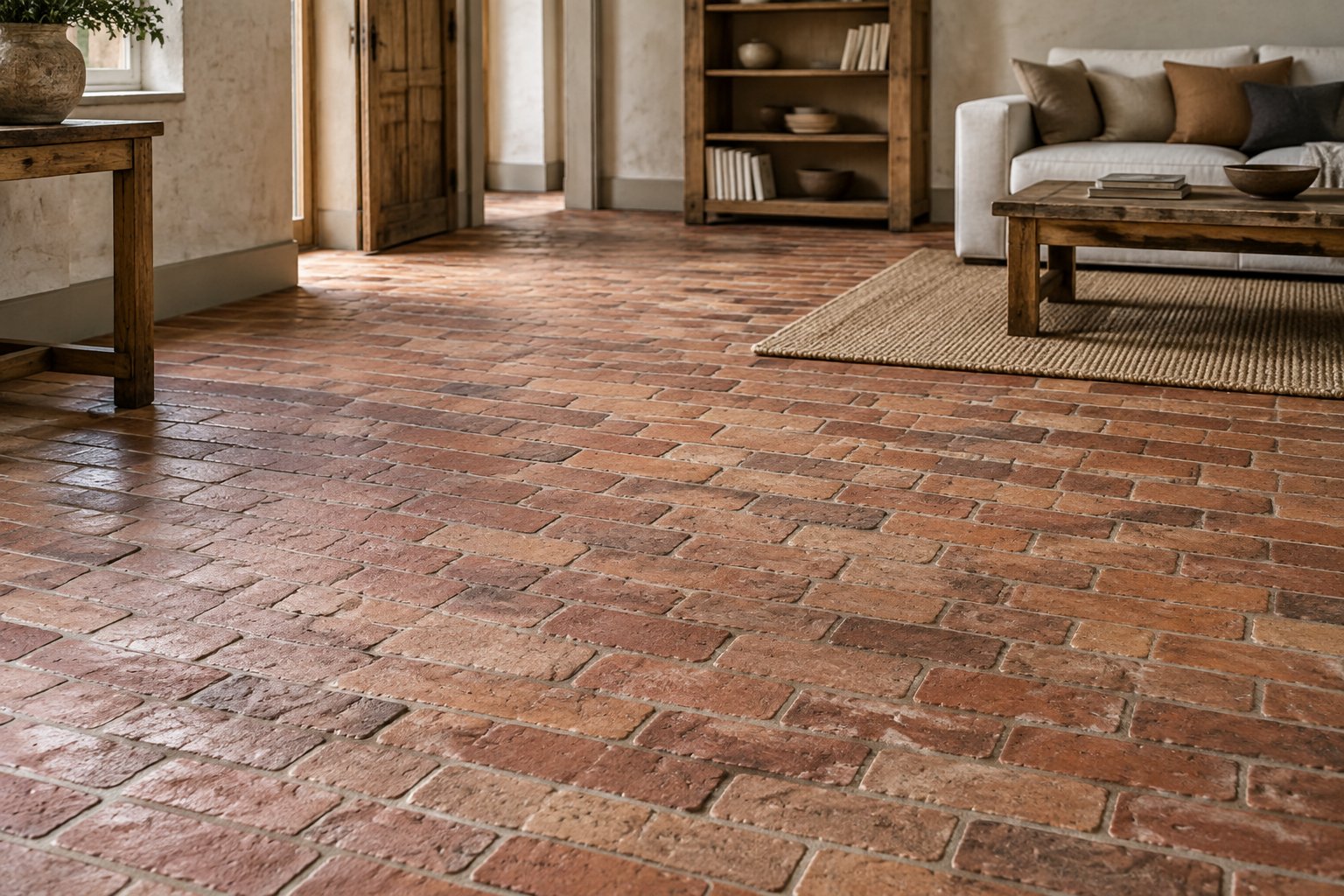
Pulled from Midwest industrial and commercial buildings, they carry a harder-fired profile that works well for both exterior walls and interior brick flooring. The color consistency within a lot tends to be tighter than handmade Soft Reds, making them easier to lay in large, uniform runs.
Hard Tan and Old Chicagos for Distinct Color and Texture
Hard Tans bring a sandy, buff-toned face with visible fire marks and mineral deposits that no kiln can reproduce today, and start at $2.00 per brick. Their compressive strength is notably high, which makes them suitable for structural and load-bearing applications as well as veneer work.
Old Chicago bricks carry a cooler gray-brown tone with occasional salmon highlights and start at $1.85 per brick.
They are machine-made, so their dimensions are more predictable, but the surface patina tells a century of weather and use. For projects that need a vintage brick with an urban industrial feel, Old Chicagos deliver without the softness of a Southern red.
When Thin Brick or Specialty Cuts Make More Sense
Full-depth reclaimed brick is not always practical. Interior accent walls, fireplace surrounds, and retrofit applications where wall depth or weight is limited call for thin brick sliced from full reclaimed units. Thin brick preserves the authentic face, patina, and color of the original while reducing weight and installation complexity.
Specialty architectural bricks, including molded pieces, arches, and corbels, serve restoration projects where period-correct masonry details must be matched precisely. These are not stock items everywhere. Confirm availability by phone before you spec them into a drawing set.
Knowing which type fits your design leads to the practical question of where most people look for these materials and what those options actually deliver.
Where Buyers Usually Look and What Those Options Miss
Most buyers start at the closest architectural salvage dealer or search for salvage yards near me. Those sources play a role, but they rarely solve the full problem.
How Architectural Salvage Differs from Full-Service Supply
An architectural salvage operation pulls mixed materials from demolition sites: doors, mantels, hardware, and sometimes brick. Brick is often a secondary product for these businesses. The inventory is unpredictable, sorting is minimal, and volume is limited. You might find 200 beautiful bricks and then nothing similar for months.
A full-service reclaimed brick supplier focuses exclusively on masonry. Every brick is cleaned, sorted by color and size, inspected for cracks or spalling, and palletized for freight. The difference shows up on the job site when your mason does not have to cull 30 percent of the delivery.
What to Expect from Salvage Yards and Home Salvage Sources
Local salvage yards can be a good place to find small quantities for a patio project or a single accent wall. The pricing may look low per unit, but factor in the time you spend picking through mixed piles, the breakage rate, and the lack of any color or size guarantee.
Home salvage from residential teardowns is even more inconsistent. The bricks may have been cleaned with methods that damage the face, or they may carry old mortar that has not been fully removed. Without proper preparation, these bricks can cause bonding issues with new mortar.
Why Small Local Finds Often Fall Short on Quantity and Match
The core problem with local-only sourcing is math. A residential facade might need 6,000 to 8,000 bricks with a consistent color range. A commercial accent wall can require 3,000 or more. Salvage yards near you rarely hold that volume in a single matching lot.
When you piece together brick from three different local sources, the color shifts are visible. A wall built from mismatched lots lacks the cohesion that makes reclaimed brick look intentional rather than random.
That gap between what local sources offer and what a project actually needs is exactly where the pre-purchase questions become critical.
Questions to Ask Before Paying the Invoice
A few direct questions protect your budget, your timeline, and the finished look of your project. Ask these before you send payment for any order of reclaimed bricks or used building materials.
How Many Matching Bricks Are Available Right Now
Get an exact count, not an estimate. Ask the supplier to confirm how many bricks in your chosen color and size range are on the yard today. Reclaimed inventory moves fast, and a lot that existed last week may be half sold by Friday.
If your project needs 5,000 and they have 5,200, you are cutting it close. Order 10 to 15 percent overage to account for cuts, breakage during installation, and the occasional brick that does not pass your mason's eye test. Confirm that the overage comes from the same lot so the patina and color stay consistent.
What Preparation, Sorting, and Palletizing Have Been Done
Not all used brick for sale arrives ready to lay. Ask whether old mortar has been removed, whether bricks have been sorted by face condition, and how they are palletized. A supplier that ships unsorted, mortar-caked brick is transferring labor costs to your crew.
Properly prepared reclaimed brick should arrive with:
- Old mortar removed or reduced to a thin residual layer
- Cracked, spalled, or structurally compromised units already culled
- Bricks sorted by color range and approximate size
- Pallets wrapped and secured for freight transit
What to Ask About Damage Notes, Delivery Inspection, and Final Sale Terms
Reclaimed and specialty brick sales are typically final because natural variation in color, weathering, and size is part of the product. Ask your supplier to confirm this policy before you order. Understand the window for reporting freight damage: five business days with photos is standard.
When the truck arrives, inspect every pallet before you sign the delivery receipt. Note any visible damage with the driver on the spot. If something is not right, a reputable supplier takes full responsibility and works to resolve it.
That confidence in the supplier's accountability is what separates a transaction from a relationship. It is also what sets the stage for choosing materials that perform as well as they look.
Choosing Materials That Carry Character and Hold Up
Reclaimed materials earn their place in a project by doing two things at once: delivering a visual depth that new products cannot copy and performing structurally for decades to come.
When Reclaimed Brick Outperforms New Look-Alikes
New brick manufacturers offer "tumbled" or "antiqued" finishes meant to mimic age. Side by side, the difference is obvious. Authentic reclaimed brick carries a surface patina formed by weather, mineral absorption, and time. The color variation runs through the body of the brick, not just a surface treatment.
Reclaimed brick from pre-1920s structures was often fired at higher temperatures or for longer durations than modern production allows. The result is a denser, harder unit with proven freeze-thaw durability.
As noted in guidelines for rehabilitating historic buildings, preserving original masonry materials maintains both the structural and aesthetic integrity that defines historic character. The benefits of reclaimed brick extend beyond looks into measurable performance.
How Granite Cobblestones Fit Hardscape Projects
For driveways, courtyards, and walkways, granite cobblestones offer a reclaimed hardscape option with extreme durability. Granite rates 6 to 7 on the Mohs hardness scale, making it resistant to chipping, staining, and heavy vehicle traffic.
Reclaimed granite cobblestone carries the same weathered character as reclaimed brick and pairs naturally in mixed-material designs.
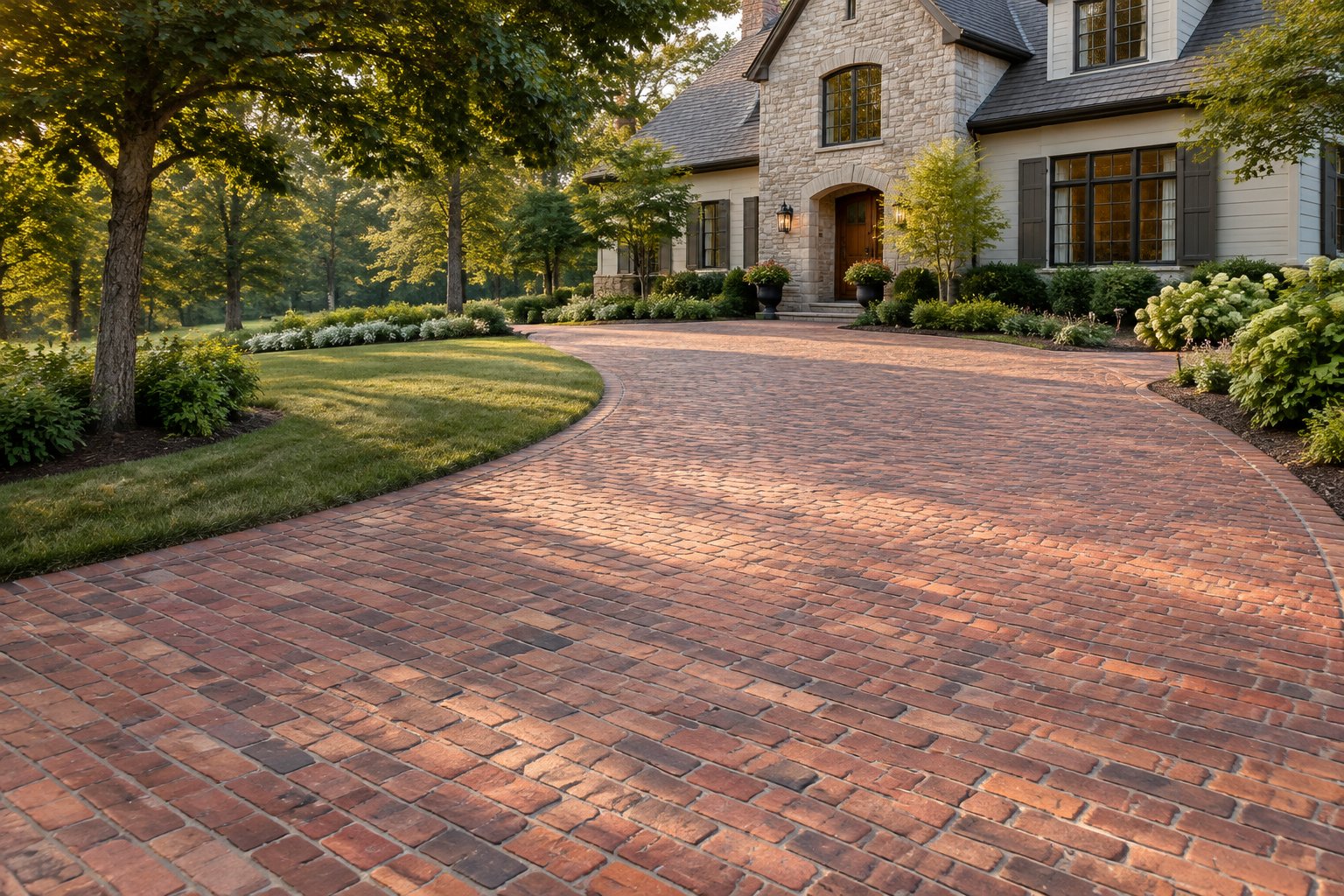
When designing outdoor reclaimed pavers, combining brick walkways with granite cobblestone borders creates a layered, heritage-driven look. The dimensional irregularity of both materials produces an organic surface pattern that poured concrete and stamped finishes cannot replicate.
How Reclaimed Wood and Masonry Work Together in Heritage-Driven Design
Reclaimed wood beams, mantels, and flooring paired with reclaimed brick walls or floors create the layered warmth that defines the A. Hays Town design philosophy. The materials share a visual language of age, texture, and craftsmanship that reads as coherent rather than assembled.
From a practical standpoint, reclaimed materials work well together because they occupy similar dimensional tolerances. A slightly irregular brick floor meets a hand-hewn beam without the clash that occurs when one material is machined, and the other is not.
Sourcing masonry from verified century-old structures gives the entire space a unified provenance that no showroom can manufacture. That brings us to the questions buyers ask most often before picking up the phone.
Frequently Asked Questions
Where can I buy real reclaimed brick locally, and can I see the actual pallets before I commit?
Most reclaimed brick suppliers do not operate walk-in showrooms. The standard process is to call, describe your project, and ask for photos of the specific pallets in stock. New Orleans Brick Co can walk you through what is on the yard by phone and send images of the actual lot you would receive.
What's the going price per brick or per 1,000 for reclaimed brick, and what drives the cost up or down?
Pricing typically ranges based on brick type, rarity, and condition. Handmade pre-industrial bricks cost more than machine-made units because supply is more limited. Freight distance and pallet count also affect total cost.
Do you have any budget-friendly lots, mixed runs, or imperfect pallets that still lay up well?
Mixed-color runs and utility-grade lots are often available at lower per-brick pricing. These pallets include bricks with minor face imperfections or wider color variation that still perform structurally. They work well for rustic patio projects and accent walls where variation is a design feature.
Are there legit ways to source used brick from demolitions or salvage yards, and what should I watch for?
You can source from demolition sites. Verify that the brick has been properly cleaned and sorted. Watch for bricks contaminated with lead paint, excessive mortar residue, or fire damage that compromises structural integrity. A reputable supplier handles all of this before the brick reaches your pallet.
How do I tell if an old brick is worth paying for: age, patina, strength, and how clean it is?
Look for a consistent surface patina without deep cracks or flaking faces. Tap the brick; a clear ring indicates good density, while a dull thud suggests internal fractures. Clean edges with minimal mortar residue mean the supplier invested in proper preparation. Dimensional variation is normal in handmade bricks and should not be confused with defects.
Who typically buys used brick from homeowners or job sites, and how do pickup and pricing usually work?
Salvage dealers and reclaimed brick suppliers sometimes purchase brick from homeowners or demolition contractors. Pricing depends on brick type, quantity, and condition. Most buyers require a minimum volume and will arrange pickup. If you have brick to sell, call a dedicated reclaimed materials supplier for an honest assessment.
Get Your Reclaimed Brick on a Truck This Week
Searching for reclaimed bricks near me is really about finding a supplier with real inventory, honest pricing, and the logistics to deliver on your timeline. Whether you are specifying Soft Reds for a restoration, Old Chicagos for an accent wall, or Hard Tans for a commercial facade, the material exists, and it ships fast.
You do not need to settle for whatever a local salvage yard happens to have on hand. Call New Orleans Brick Co at the number on their site, tell them what your project needs, and get a straight answer on what is available today. If your timeline is tight, a truck can be on the road within 48 hours of payment.