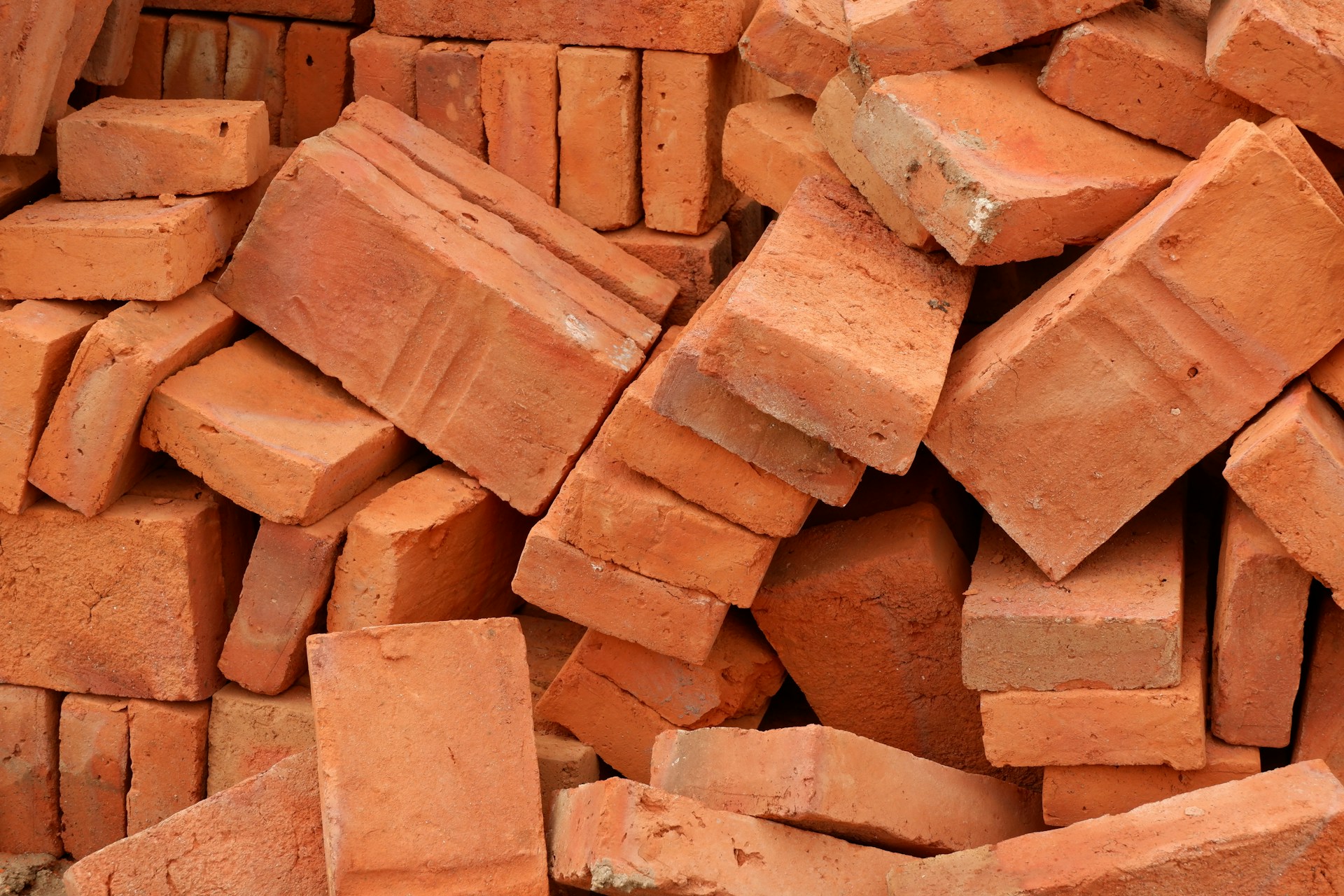
Lift a loose brick out of an old wall and you will often find a shallow dip pressed into one face. That is the frog, and it is considerably more useful than it looks.
It exists because it saved clay, made the brick lighter, and gave mortar a pocket to grip. For anyone restoring or extending an old wall it does a second job entirely: it frequently carries the maker's name or mark, and its shape and depth help place a brick in time and region. Read the frog alongside size, color and texture and you can describe a brick well enough for somebody to find you a genuine match.
What the recess is doing
Look at the two large flat faces, the ones that sit in mortar. The frog is on one of them, occasionally both. Most are rectangles with sloped sides, though some are oval, some are shallow wedges, and some are barely more than a smudge. It is never on the face that shows in a finished wall, which is why you will not see it until the brick comes out.
Old brick molds had a raised wooden block fixed to the base. When the brickmaker threw wet clay into the mold, that block pushed clay out into the corners and gave crisp edges, and it helped the green brick release cleanly. The dent it left behind is the frog.
The benefits carried on past the mold. Less clay meant less weight, faster drying and faster firing. Once laid, mortar fills the recess and forms a key that locks the courses together, which is where most of the structural argument for frogs comes from.
As for the name, it probably comes from the Dutch word for frog, which sounds close to "kicker", the old term for that wooden block. Nobody has ever proved it.
Frogged, solid and cored
Clay brick comes in three basic forms and each tells you something about how and when it was made.
A frog is a dip that stops partway into the brick. A cored brick has holes running straight through from one bed face to the other, and those mostly come from extrusion, where a machine pushes a column of clay through a die and wires cut it into units. Frogs come from molding or pressing instead.
Depth is where the two meet in the standards. In US practice a frog deeper than 3/8 inch is treated like a core when engineers calculate net area, and a frog has to stay at least 3/4 inch clear of any edge.
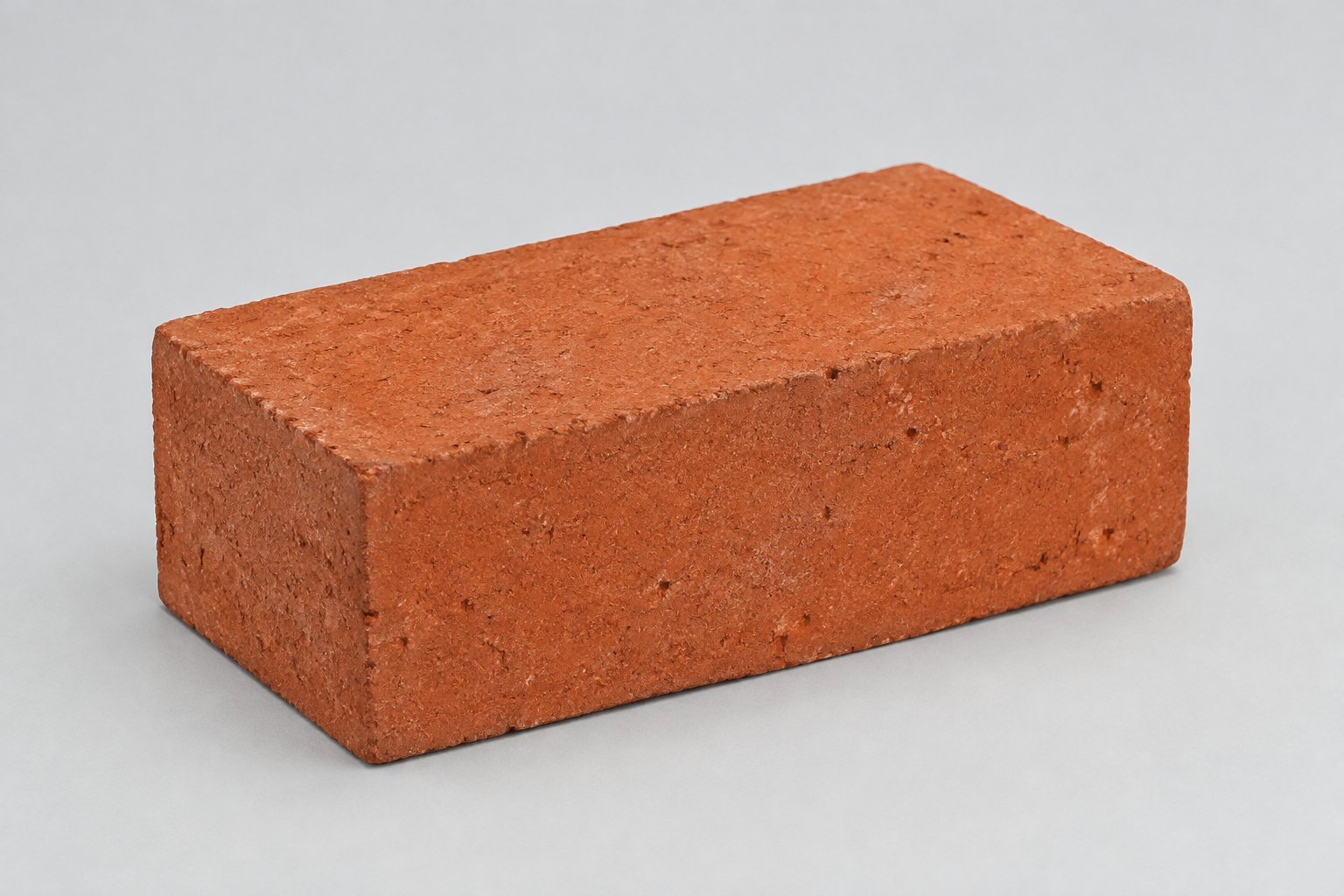
A solid brick has flat faces and no voids at all. Solid units are dense and heavy, which is exactly why they turn up so often as paving, and why most reclaimed brick pavers are solid. A paver with a frog would hold water on its surface, which is the last thing you want underfoot in a freeze.
One thing worth saying plainly, because it trips people up when they are assessing salvage: plenty of genuinely old American brick has no frog whatsoever. A great many handmade bricks were formed in plain wooden molds with no raised block, and later machine-made brick came out solid or cored. A missing frog proves nothing about age. Judge an unfrogged brick on everything else instead, which means size, surface texture, firing color and the wear on its arrises. Brick pulled from old buildings for restoration can be solid, frogged or cored and all three can be well over a century old.
Frog up or frog down
Frog up, filled with mortar. That is the short answer and it is what the British code of practice for masonry requires, with the deeper frog facing up when a brick has two.
The reasoning is straightforward. With the recess facing up, the mason fills it completely as the next bed of mortar goes down, so the pocket bonds the brick above, spreads load across the whole face and leaves no hollow. Laid frog down, the recess traps an air gap and the load then rides on the edges of the brick instead of across it.
Some bricklayers still prefer frog down, because it is faster and uses less mortar, and on a garden wall nobody will ever know. On anything structural, or anything you are paying a premium of reclaimed brick for, specify frog up in writing.
While you are writing it, specify that the frogs must actually be filled. An unfilled frog costs you structural, thermal and acoustic performance all at once, and it is the kind of thing that gets skipped first when a crew is behind schedule. Name the orientation, call for full frogs, and name the mortar. On reclaimed brick from before 1900 that mortar should be a soft lime mix, because hard cement traps moisture and forces it out through the brick face, which spalls it.
We supply the brick and we do not lay it, so these notes belong with your mason along with how to install reclaimed bricks before anyone starts.
What the frog can tell you about an old brick
Start with any stamp. Many brickyards pressed their name, their initials or a symbol into the frog, and brushing old mortar off with a stiff dry brush often brings the letters back. Keep wire wheels and acid away, because both will erase a shallow stamp permanently. Write down every letter you can make out, including partial ones, because collectors maintain catalogs of brick marks sorted by maker initials and a half-legible stamp is often enough to find a match.
A legible stamp is also one of the strongest indicators that you are holding genuine antique brick rather than something manufactured to look old. It ties a unit to a city or a region, and a St. Louis stamp points to a different clay and a different color range than a Chicago common. If you are weighing up a seller's claims, checking whether the marks fit the story is part of how you tell what is authentic before you buy.
Then read the shape. Frog style follows manufacturing method, so before about 1870 most American brick was hand-molded in wooden forms and the frogs are uneven, sometimes off-center, with soft edges and occasionally finger marks nearby. Pressed brick from the late 1800s shows crisper, more regular frogs, and stamps become common. Extruded brick from later decades tends toward cores instead.
Treat all of that as a clue rather than a date. Brickyards used the same molds for decades and rural yards took up machinery long after city yards did. Size helps fill the gap, and pre-1900 brick commonly runs near 8 5/8 by 4 by 2 1/2 inches, noticeably larger than modern modular.
Recording it properly
Photograph in daylight. Shoot the frog straight on, then the face that shows in the wall, then an end, with a coin or a tape in every frame so the scale is unambiguous.
Measure length, width and height, then measure several more bricks, because antique brick varies within a single wall. Note the frog depth with a ruler laid across the recess. Those numbers matter as much as the color does, because a brick in exactly the right shade at the wrong size still reads wrong in a wall.
Send us that photograph, or better still post us a loose brick with the frog visible, and we will find the closest reclaimed match in stock, usually inside the week. Standard samples are free to the trade and ship in about two business days. Our brick matching works from measurements rather than from a color impression, which is why we ask for the tape in the frame.
One clue among four
The frog is the fastest read you get on an unfamiliar brick, and on a good day it hands you the maker's name outright. It is still only one signal. A match runs on size, color range, texture and the mortar around it, and the frog mainly helps you pin down the first and narrow the search for the rest.
So brush it off, photograph it, measure it, and record what it says. Then specify frog up, insist the frogs are filled, and give your mason a mortar softer than the brick.
Call the New Orleans office on 225-284-7529 or email hays@bourgeoismaterials.com if you want help reading a stamp or finding a match for one. We see a great many of them.
Frequently asked questions
What is the depression in a brick called?
The frog. It sits on one bed face, occasionally both, and was formed by a raised block in the mold.
What size is a brick frog?
There is no standard size, since it varies by maker and by brick. In US practice it has to stay at least 3/4 inch from the edges, and anything deeper than 3/8 inch is counted like a core in strength calculations.
Frog up or frog down?
Up, and filled with mortar. With two frogs, the deeper one goes up. Put it in the written specification rather than leaving it to habit.
Can a maker's mark date a brick?
It can narrow the range by tying the brick to a yard and its years of operation. Confirm with size, texture and frog style, because yards reused molds for long stretches.
Does a brick need a frog to suit restoration work?
No. Many historic bricks are solid. What counts is matching size, color, texture and hardness to the existing wall.