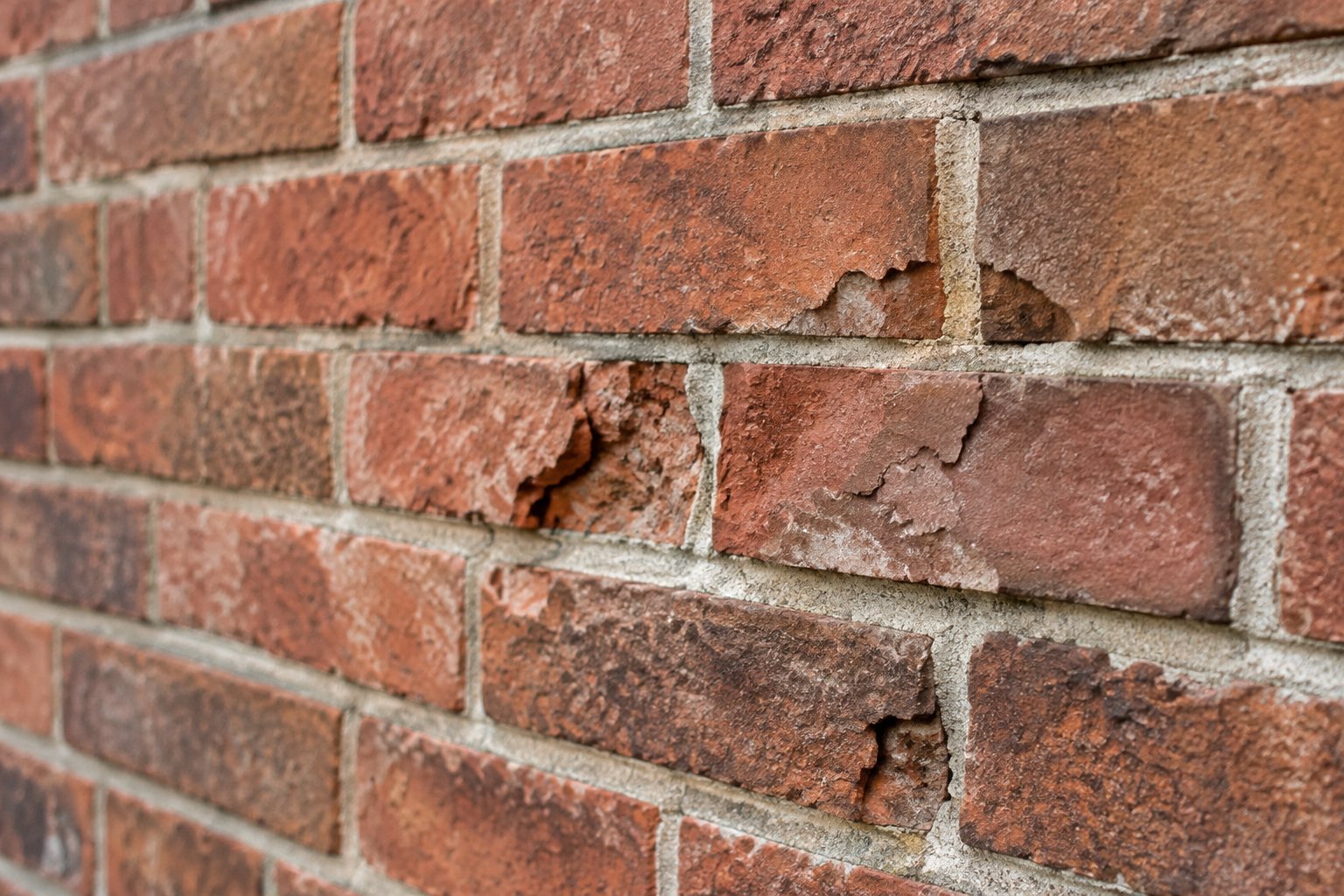
Spalling is a water problem wearing a masonry costume. Water gets into the brick, cannot dry out fast enough, then either freezes or leaves salt crystals behind, and the hard outer face gets pushed off from the inside.
The repair has two halves and people routinely do only the second. First you stop the water. Then you replace every failed unit with brick that matches the wall on size, hardness, color range and texture.
That second half is where most repairs go wrong, usually because somebody hopes there is a product that will fix it. There is not. A brick that has lost its face cannot grow a new one. The fired skin was the toughest and most weather-resistant part of the unit, and the soft core now exposed takes on water faster than the original surface ever did. Replacement is the only repair that returns the wall to how it should look and perform, and on an older house that means finding brick that belongs on that wall rather than brick that is merely the same color.
Telling spalling from everything else
Spalling usually starts in the middle of a brick face. The edges are held by the mortar, so the center lets go first and leaves a shallow bowl that spreads outward over time. Run a hand across it and the surface feels crumbly, with grit coming away on your fingers.
Look down as well as across. Failing bricks shed flakes onto sills, ledges and the soil at the foot of the wall. Sweep an area clean, come back in a few weeks, and if there are fresh chips the damage is still active rather than historic.
Tap a suspect brick with a screwdriver handle. A sound one gives a sharp note. A dull thud means the face has already separated from the body and is going to come off whether you touch it or not.
Then look at the mortar, because it often names the culprit. When the brick faces recede while hard joints stay exactly where they are, the joints end up standing proud like a grid around each sunken unit. That pattern is close to a confession: the mortar is harder than the brick.
What spalling is not
Patina is the soft wear and color shift a century of weather gives a brick, and it is a large part of why antique brick is worth seeking out at all. Patina leaves the surface rounded and smooth, and the brick still sits in line with its neighbors. Spalling leaves a raw, pitted surface, usually lighter in color than the weathered face around it, sitting behind the plane of the wall.
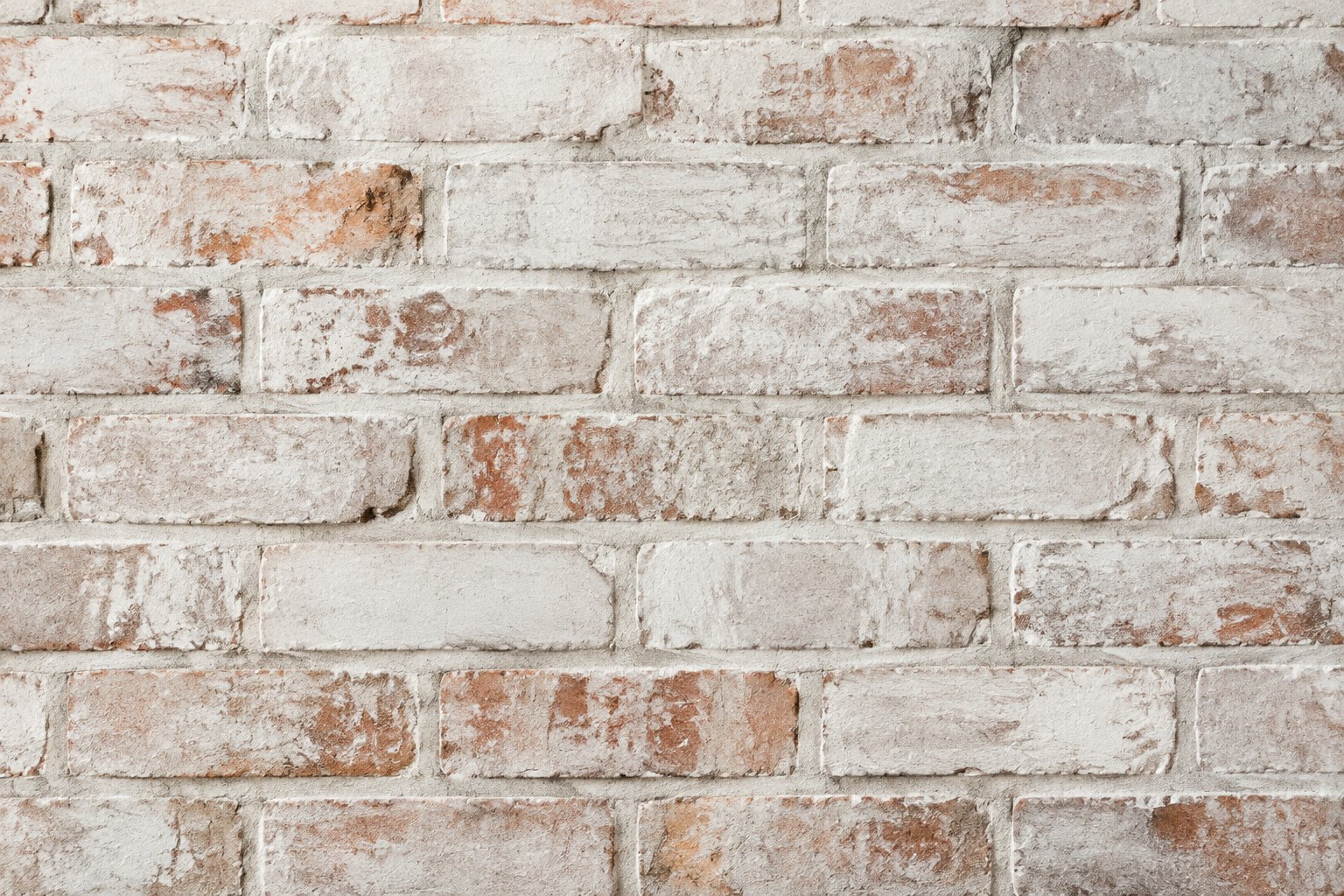
Efflorescence is the white chalky bloom that appears when water carries dissolved salts to the surface and evaporates. It brushes off and does no harm in itself, but it is worth reading as a map of where the wall is wettest, because the same salts do real damage when they crystallise just under the surface instead of on it. Where you see efflorescence and spalling together, they are two symptoms of one problem. Our old red brick restoration guide covers how to judge weathered brick that is still sound enough to keep.
Why faces break away
Clay brick is porous and it drinks: rain, splashback, ground moisture. When a saturated brick freezes, the water expands by roughly nine percent as it turns to ice, and if the pores are already full that expansion has nowhere to go except outward against the face. One cycle does nothing. Several hundred over a few decades pry the face loose a fraction at a time, which is why freeze-thaw damage appears first on chimneys, parapets, sills and the lowest courses, all the places a wall stays wet longest.
Salt crystallisation does the same work without needing cold weather at all. Water picks up salts from the soil, from de-icing products or from the masonry itself, and as the brick dries those salts form crystals in the pores near the surface. Each crystal grows and pushes. This is why Gulf Coast walls spall perfectly well without ever seeing a hard frost.
Hard mortar
Mortar is supposed to be the weak point. Softer and more breathable than the brick, so moisture leaves through the joints and movement is absorbed there. Joints get repointed; bricks are a great deal more trouble to replace.
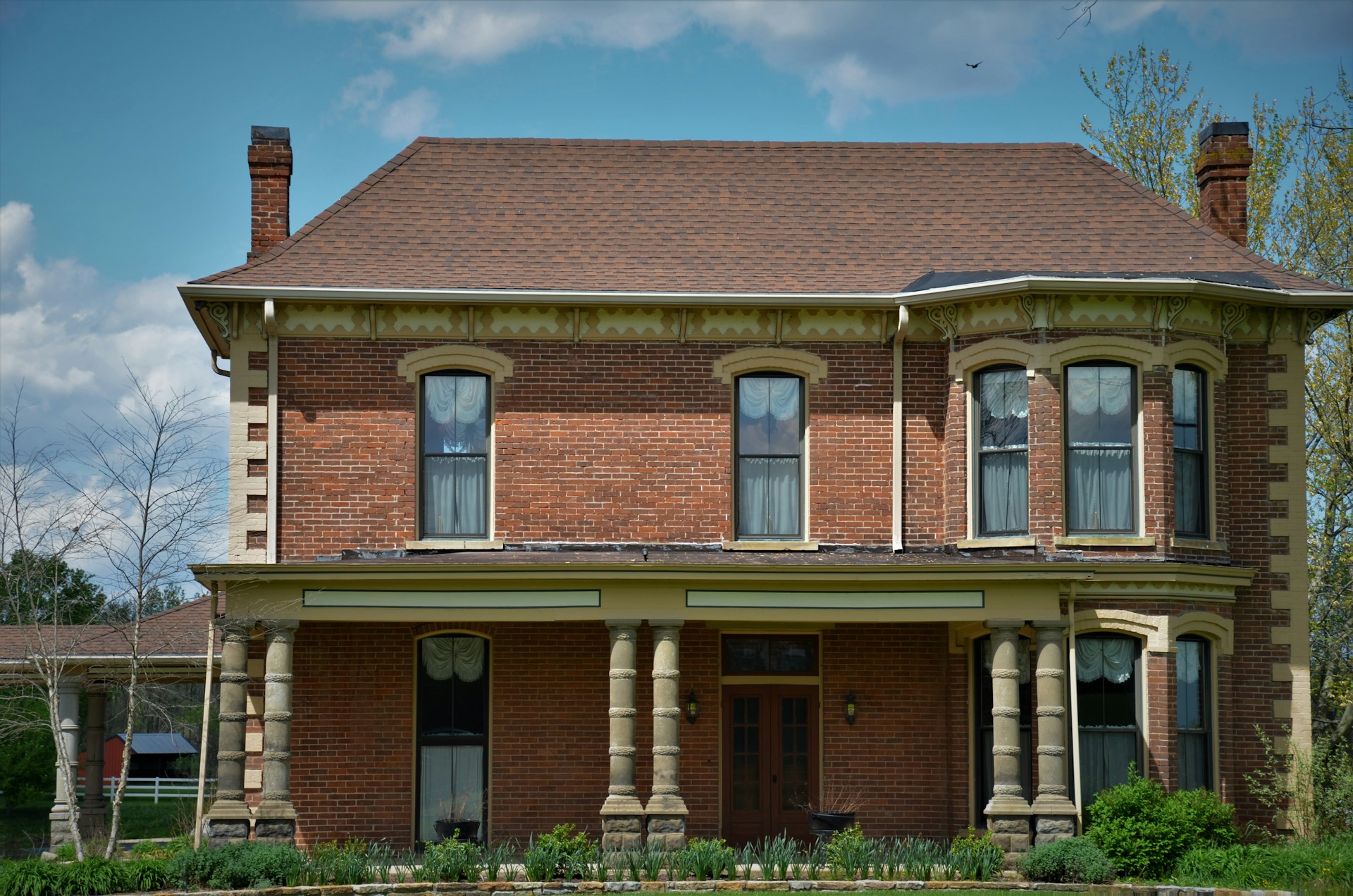
Repoint a pre-1900 wall with hard Portland-rich cement and the system runs backwards. The joints stop letting water out, so it leaves through the brick face instead, and the thermal movement the mortar used to absorb starts crushing brick edges. Spalling that appears along the edges of bricks a few winters after a repointing job is almost always this. The builders of the old brick buildings still standing understood the balance, and that is the only reason those walls made it a hundred years.
Paint and sealers
A coating on the face does not stop water reaching the wall. Water still arrives through joints, cracks, the top of the parapet and the ground. What the coating stops is that water drying back out through the face.
Film-forming paint and non-breathable sealers hold moisture just behind the surface, which is precisely where freezing and salt do the most harm. A painted wall peeling in patches, with chips of brick stuck to the back of the paint, is showing you the mechanism in cross-section. Clear products carry the same risk, which is why sealing reclaimed brick deserves thought before anything goes on the wall.
Water that should never have been there
Short downspouts, overflowing gutters and soil graded toward the house soak the base of a wall continuously. Rising damp wicks ground moisture up from below, which is common where there is no damp-proof course or where mulch and planting beds have crept up against the brick. Higher up, missing drip edges, failed flashing and cracked chimney crowns send water down the face or straight into the masonry.
The pattern of damage tells you where to look. A vertical stripe of spalling under a gutter corner, or a fan shape spreading out from a downspout, is not a mystery.
Local damage or a structural problem
Most spalling is surface damage you can plan calmly. One spalled brick in an otherwise sound wall is usually a soft or underfired unit that happened to land somewhere exposed. Replace it and carry on.
Clustered damage means something else. A band along the bottom of the wall points to rising damp, salts or splashback. Concentration at the top of a chimney or parapet points to a failed crown or flashing. Damage hugging the joints after a repointing job points at the mortar. In every one of those cases the brick is the symptom and the cause is still running.
Some conditions want prompt attention rather than planning. Bulging or leaning sections. Cracks running straight through bricks rather than around them. Step cracking zigzagging through the joints. Rusted, flaking steel lintels over openings, which expand as they corrode and lift the masonry above. Water reaching the inside of the house. Deep deterioration across three or more adjacent bricks also moves the job out of the simple category. If chips are falling over a pavement or entrance, close the area off until somebody has looked at it.
Call a mason when the spalling covers more than a few scattered units, when it keeps coming back after repairs, or when the wall is a visible historic facade where the repair will be judged from the street. Our exteriors and facades page covers what matching on a prominent elevation involves. Call a structural engineer instead when you see bulging, leaning, through-cracking or any sign of foundation movement, because somebody needs to decide whether the wall wants support before brick starts coming out of it.
What a lasting repair specifies
Four things, in this order, and skipping any one of them means doing the job twice.
Fix the water first. New brick set into a wall that is still soaking will spall on exactly the same schedule the old brick did. Gutters, downspouts, grading, flashing and chimney crown get checked and repaired before any masonry work. If hard cement joints are trapping water, they come out and get repointed in something compatible. If paint or a sealer is holding moisture in, test removal on a small hidden area first, because stripping can do its own damage.
Accept that the face is gone. No product restores it. Patching compounds can fill a shallow spall on the odd brick, but they sit on a weakened core and matching them is an art. On solid older walls a mason can occasionally pull a unit and turn it round so the sound back faces out, which works when the brick comes out whole and the back is presentable. For most walls the honest answer is replacement.
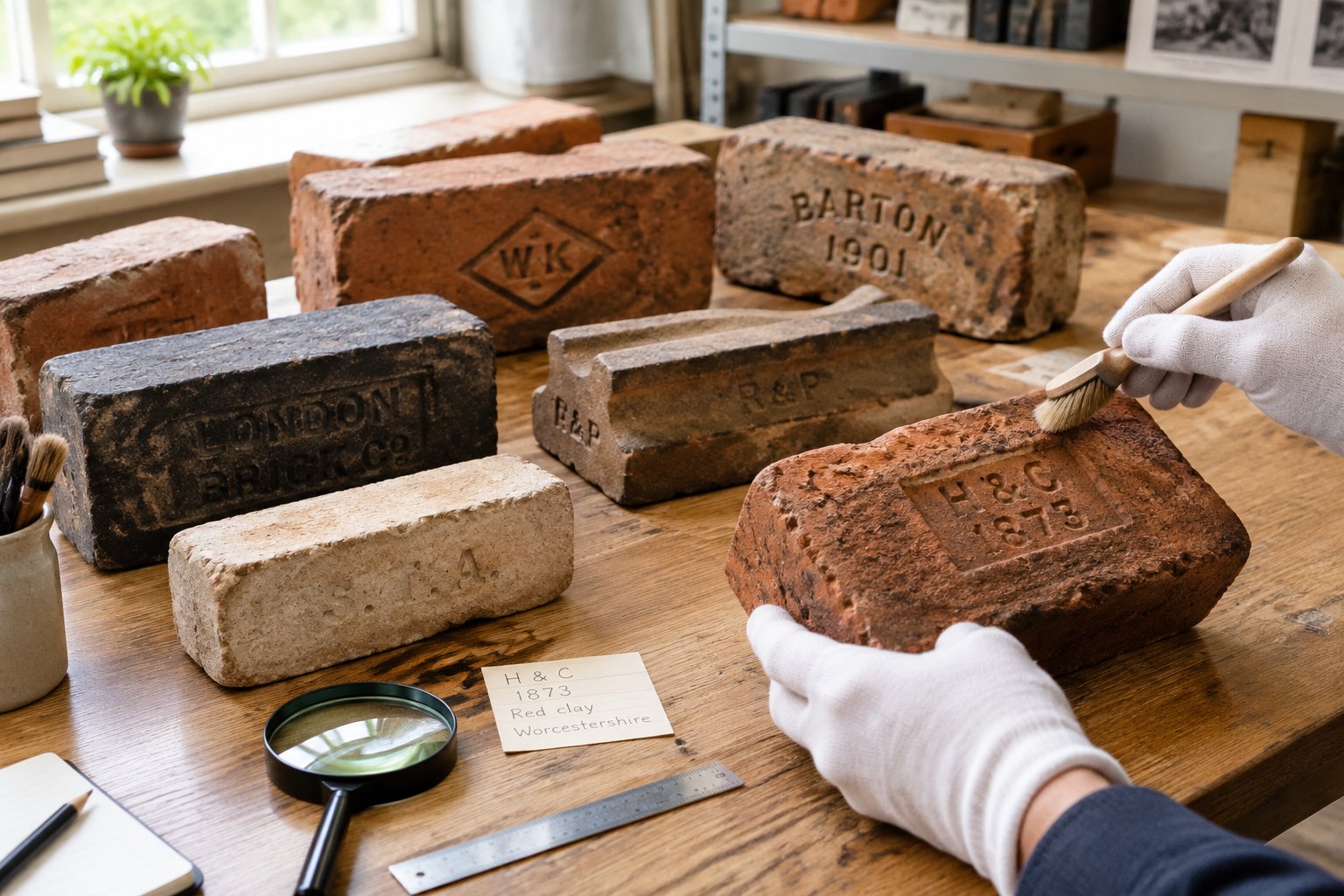
Match on four counts. Size first, because antique brick predates modular standards and varies even within a pallet, and the right color at the wrong size still reads wrong from the pavement. Then hardness, because a dense modern brick among soft old ones neither moves nor breathes like its neighbors and will push moisture into them. Then color range, meaning the spread of tones across the wall rather than one flat shade. Then texture: handmade, sand-struck, smooth or wire-cut. Brick reclaimed from structures built roughly 1870 to 1940 meets all four in a way new brick cannot, because its absorption and hardness came out of the same kind of kiln. Matching reclaimed brick for renovation covers how to read your wall before ordering.
Specify the mortar too. Weaker and more breathable than the replacement brick, which on soft historic work means lime or a lime-rich Type N, and never a high-Portland Type S or M. On a significant wall, have the existing mortar analyzed, then specify color, sand texture, joint width and tooling profile. A perfectly matched brick set in a bright gray flush joint will still announce itself.
For the match itself, send a photograph taken in daylight with a coin or a tape in the frame, or post us a loose brick, along with the count and a wider shot of the wall so we can see the color range. We will find the closest reclaimed match in stock, usually inside the week, and standard samples are free to the trade. Our specification support can help you write all of it into the scope. We supply the brick and the guidance; the cutting out and laying belong to your mason.
Four questions are worth asking that mason. What do they think is causing the spalling and how will they fix it. Which mortar, and why is it softer than the brick. How will they remove damaged units without grinding into sound neighbors. How will they match the existing joint profile. Vague answers to any of those are informative.
Keeping it from coming back
Almost all of this is ordinary maintenance done once a year. Clear gutters in autumn and spring and check the seams for drips. Extend downspouts so they discharge several feet clear of the wall. Grade soil away from the house and pull mulch and planting back off the bottom courses. Inspect flashing at roofs, chimneys and windows, and replace drip edges and sills that are sending water down the face. Keep ivy off, because it holds moisture against the wall and works into the joints. A walk round the house during heavy rain will show you more than an hour of inspection in the dry.
Two things to avoid. Sandblasting and high-pressure washing strip the fired skin off brick and the exposed core then decays considerably faster, with soft pre-1900 brick suffering worst. And do not seal a wall simply because it is old. Applying a coating to damp brick, or to a wall with an active leak, traps the exact moisture you were trying to get rid of.
There is a narrow case for a breathable penetrating water repellent, one that lets vapor pass: a badly exposed chimney, or an elevation taking driving rain, where the brick is dry, sound and free of salt problems. Even then it goes on only after every leak and drainage fault is fixed and the wall has fully dried. On a wall with rising damp or active efflorescence, skip it entirely and deal with the water.
Stop the water, then match the brick
Spalling ends when the water problem ends. Find the source, whether that is hard cement mortar, a coating, rising damp or a missing drip detail, and fix it before a single brick comes out. Then replace each failed unit with something that matches on size, hardness, color range and texture, bedded in a mortar softer than the brick itself.
Genuine reclaimed brick is the closest match available for an older wall, because it was made the same way as the brick already in it. Call the New Orleans office on 225-284-7529 or email hays@bourgeoismaterials.com and we will tell you straight what we can match and what we cannot.
Frequently asked questions
What does it cost to repair spalling brick?
Almost all of it is labor, access and the moisture work that has to come first. Cutting out and replacing individual units is slow, skilled work, and scaffolding adds significantly on anything above head height. The brick itself is a small fraction: reclaimed house brick runs from about $1.70 to $2.00 a unit. Get quotes that separate the moisture repair from the masonry, because the two are often priced together and hide each other.
Can repointing alone fix a spalled brick?
No. Repointing fixes joints, and a brick that has lost its face needs replacing. Repointing in the right soft mortar does remove the cause when hard cement joints are what trapped the water, so most lasting repairs involve both.
Will sealing stop it?
Usually it makes it worse, because it holds water and salts behind the face. A breathable repellent can help on dry, sound brick once every leak is fixed. Never seal over damp or actively spalling brick.
Can brick spall where it never freezes?
Yes. Salt crystallisation and long periods of saturation do it perfectly well without ice, which is why Gulf Coast walls with poor drainage or hard mortar show plenty of spalling. Freezing accelerates the damage rather than causing it.
What causes spalling inside a basement?
Almost always rising damp and ground salts. Water wicks in from the soil, evaporates on the inside face and leaves crystals that push the surface off. Fix the external grading and drainage, and avoid interior coatings, which trap the moisture in the wall.