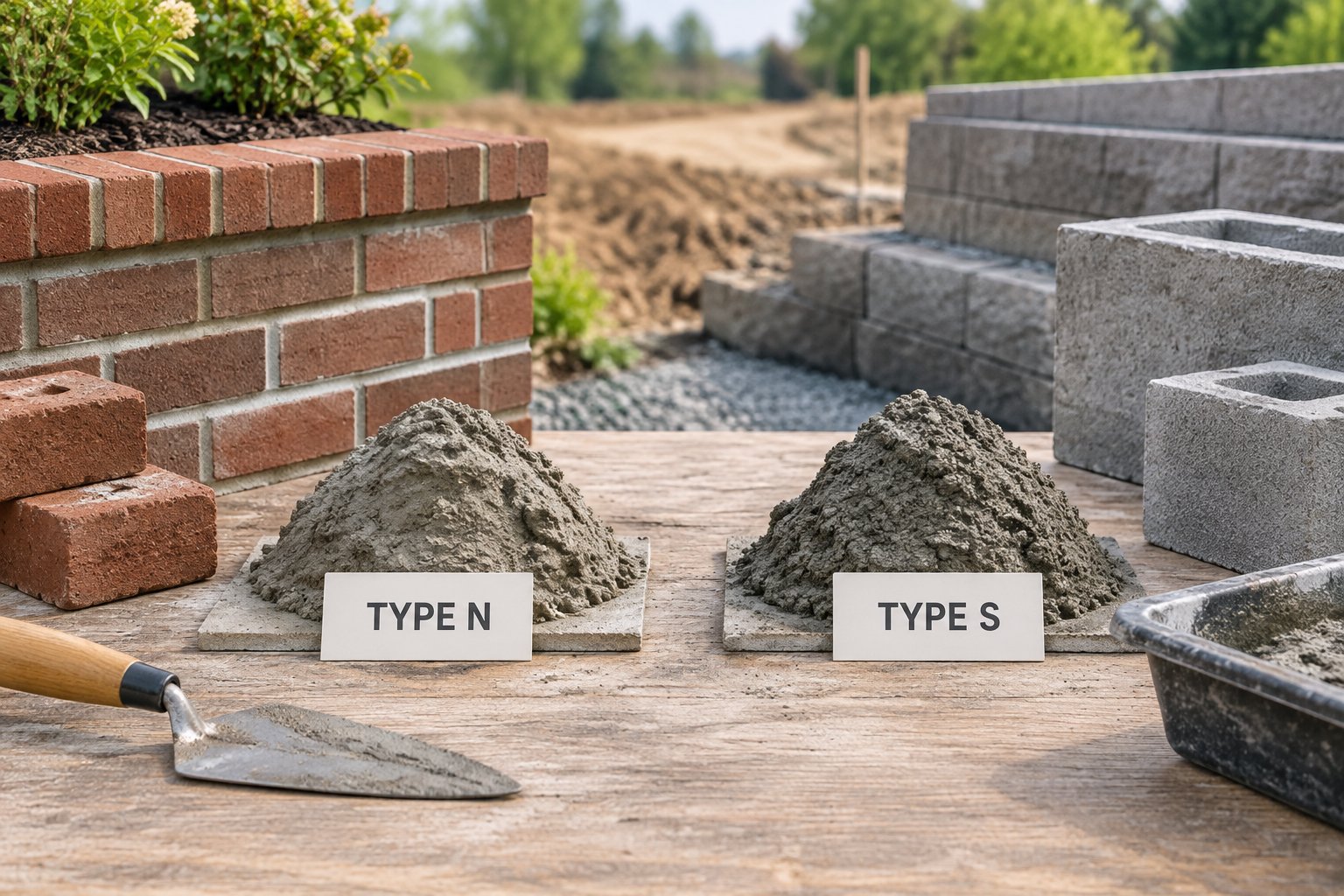
Type N for most above-grade brick, brick veneer and anything soft or reclaimed. Type S for foundations, retaining walls, and masonry an engineer has designed to take heavy lateral load. Type N tests at a minimum of 750 psi, Type S at 1,800.
Seeing those two numbers side by side makes the stronger one look like the safer bet, and that instinct has probably destroyed more old brick in this country than weather has. Mortar is meant to be the weak link. It is supposed to crack, wear and pass moisture before the brick does, because a joint can be raked out and replaced for a few dollars a foot and a brick that has lost its face cannot be repaired at all.
What the strength ratings actually tell you
The psi figure tells you how hard a cured cube of mortar is to crush in a laboratory. It tells you remarkably little about how your wall will behave in February. ASTM C270 sets the minimum compressive strength for each type, but bond, flexibility and breathability do at least as much work on a real elevation.
Under C270, Type N has to average 750 psi at 28 days and Type S 1,800. Type S gets there by carrying a higher proportion of Portland cement and less lime. Type N carries more lime, which makes it softer, more workable and more tolerant of the small seasonal movement every wall goes through. Both reach full strength at around 28 days regardless of how quickly the surface dries.
The four standard types run strongest to weakest in the order of the word MaSoNwOrk:
- Type M, 2,500 psi. Heavy load, below grade, severe ground contact.
- Type S, 1,800 psi. Foundations, retaining walls, structural walls under lateral load.
- Type N, 750 psi. General above-grade walls, veneer, chimneys, softer units.
- Type O, 350 psi. Interior non-load-bearing work and repointing of soft masonry.
Type K sits below all of them, a very weak lime-rich mix used almost exclusively in preservation work.
One thing worth understanding before you choose on psi alone: walls fail in bending and in bond far more often than they fail by crushing. Flexural bond strength, which measures how well the mortar grips the brick when wind or soil pushes sideways, is the reason Type S gets specified for lateral loads. The compressive number comes along for the ride. And a strong mortar laid against dusty or thirsty brick will still bond badly, because the assembly is only as good as the workmanship and the cure.
Matching the mortar to the job
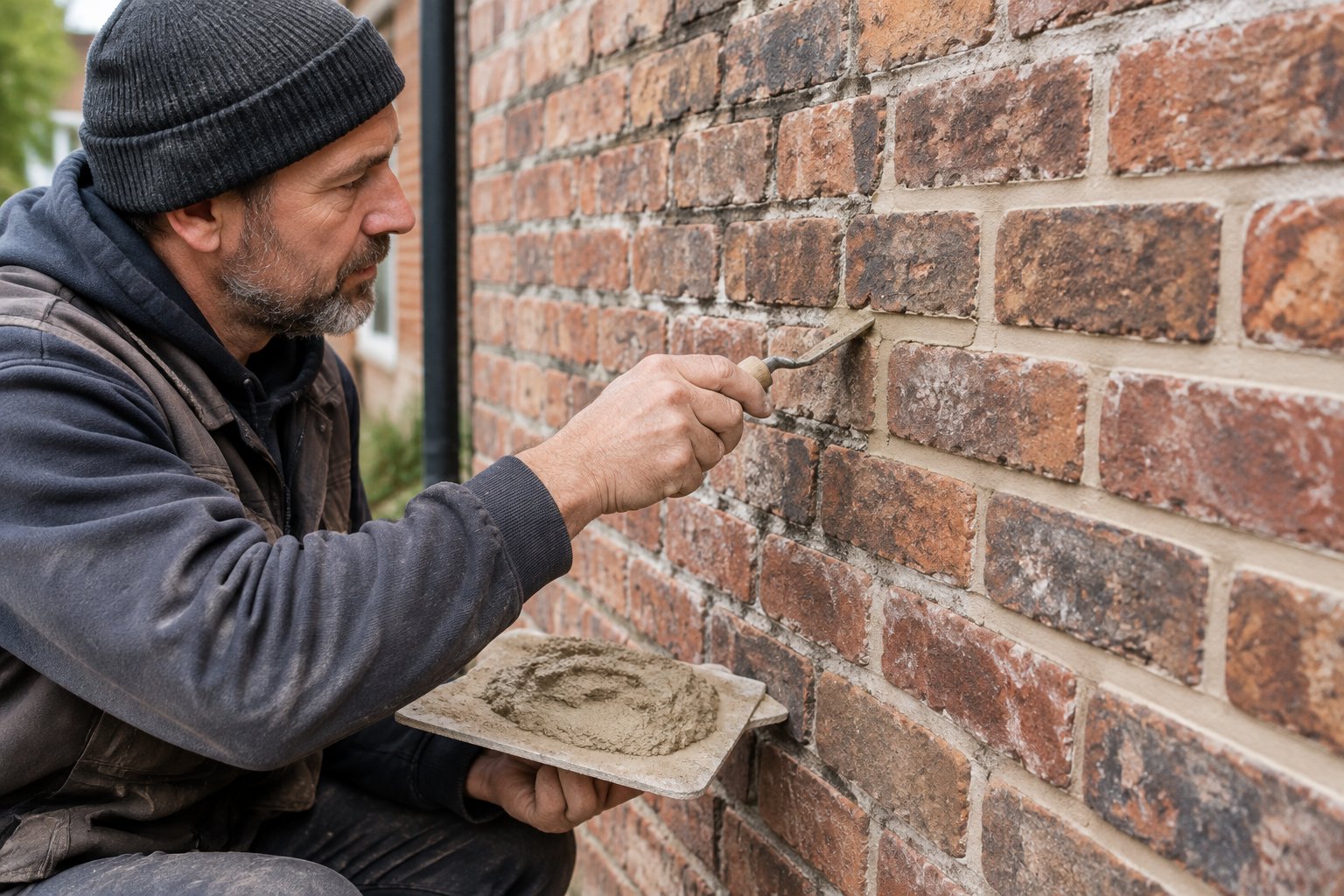
For above-grade walls, brick veneer, garden walls and chimneys above the roofline, Type N is the usual starting point. The lime content lets the joints move a little with heat and moisture, and it tools cleanly, which matters more than people expect when you are trying to match an existing joint profile. If you are using reclaimed brick in new construction as a veneer over a framed wall, Type N is the default unless your engineer or local code says otherwise.
Foundation walls, below-grade work and retaining walls are a different problem. They push back against lateral earth pressure and they stay damp, so Type S is the normal specification: it bonds better and it survives constant soil contact. Steps, walkways and at-grade masonry in wet ground usually get the same treatment. Do not put Type N below grade or behind a retaining wall.
Load-bearing work is not a default at all. Type N is permitted in plenty of load-bearing masonry above grade and Type S is common in structural block, but the answer comes out of the structural design, the unit strength, the reinforcement and the code. If a wall is carrying floors or a roof, take the mortar type off the engineer's drawings and hand them the brick details they need to make the call.
Stone has its own rules. Manufactured and natural stone veneer above grade is commonly set in Type N or Type S, with the veneer manufacturer's instructions governing. Soft stone such as limestone and sandstone wants a weaker mix, because a hard mortar will crack it or push it out of the wall. Mortared patios sit in standing water and frost on a rigid base, so Type S is the normal pick there.
Why soft historic brick changes the answer
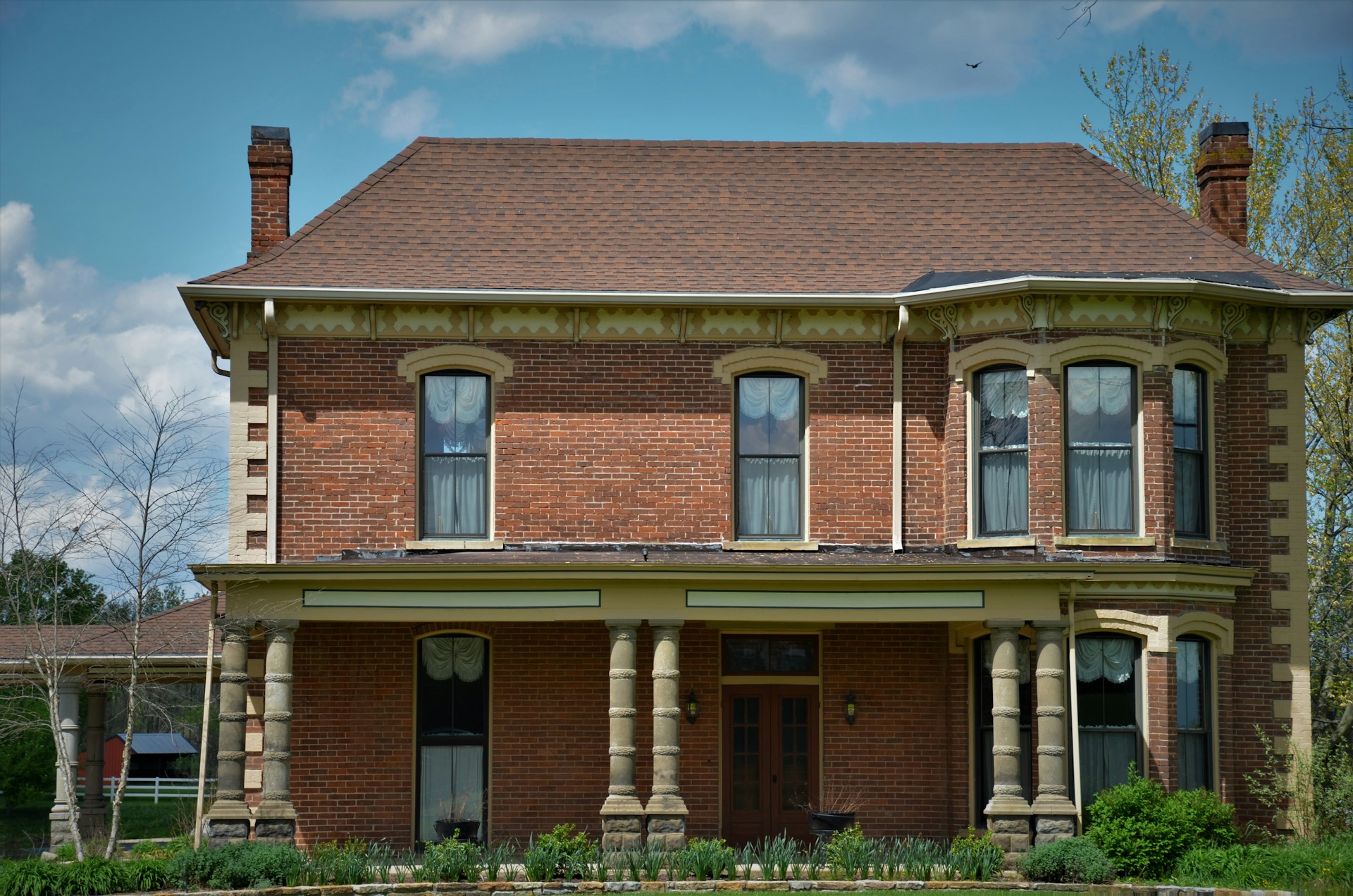
Brick fired before about 1940, and certainly anything pre-1900, came out of the kiln at lower temperatures than modern units and went up in lime mortar. It is softer, more porous and more irregular, and it needs a mortar that is weaker and more breathable than the brick itself. That rules out Type S almost every time.
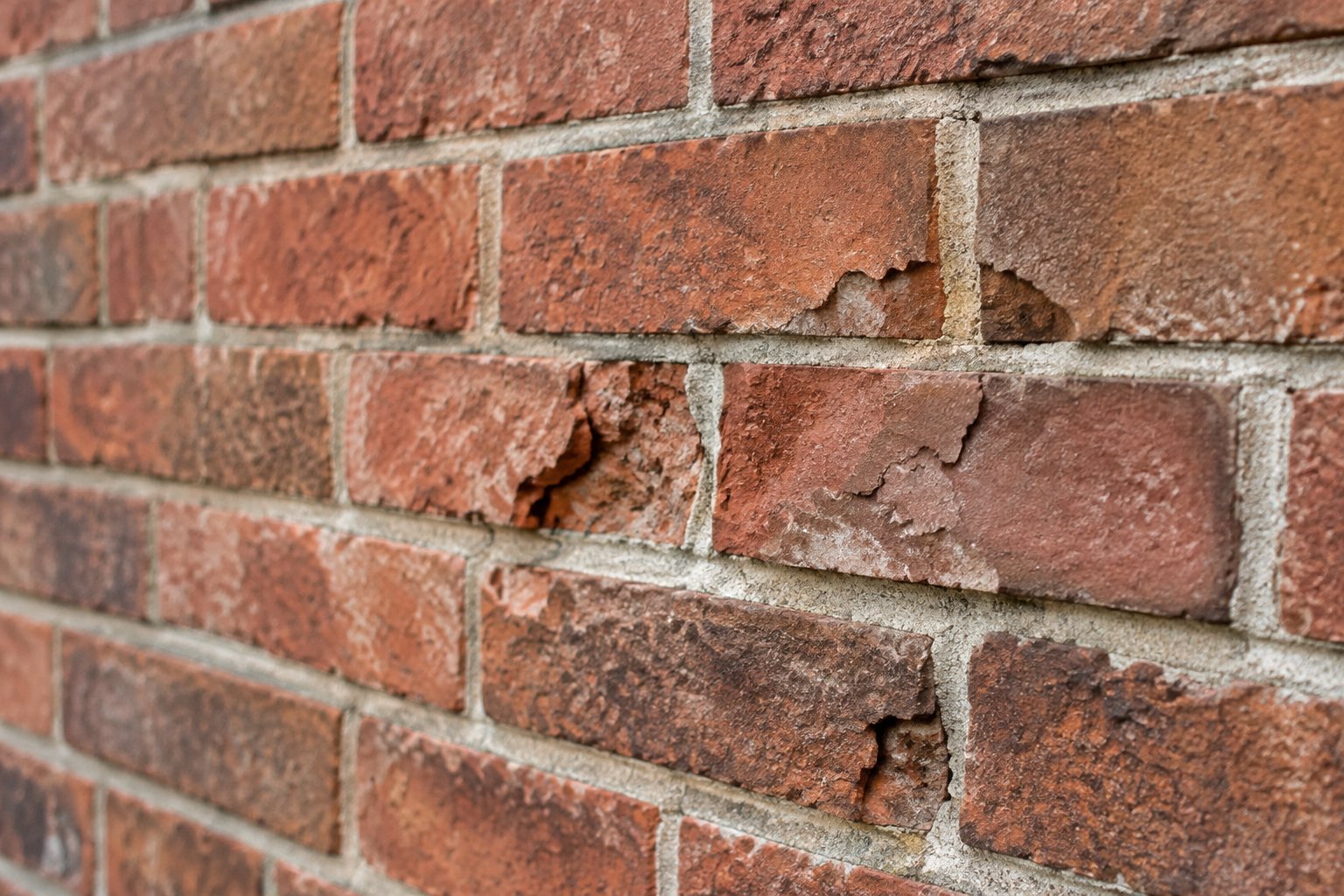
The logic is simple once you see it. Every wall moves and every wall gets wet. When the mortar is the softer material, the cracks run through the joints and the moisture leaves through the joints, and you repoint every few decades while the brick carries on. Reverse that relationship and the water starts leaving through the face of the brick instead, taking the fired skin with it when it freezes or carries salts. That is how soft red brick fails, and it can begin inside two or three winters on an exposed elevation.
The National Park Service sets the standard plainly in Preservation Brief 2: new mortar should be no stronger than the original and no stronger than the brick. Type S still gets specified on 1890s walls constantly, mostly because it is what the yard had in stock and stronger sounds safer.
For brick that is soft but sound, which covers a lot of early twentieth-century work, Type N is a reasonable place to start. For pre-1900 brick, very soft reds, and anything originally laid in pure lime, you want a lime mortar or Type O.
Watch the efflorescence too. White salt bloom on new work fades as the wall dries and means little. Bloom that keeps returning on the brick faces beside hard repointed joints is telling you water is being forced out through the brick, and a surface coating makes it worse rather than better, which is the same trap covered in our piece on whether sealing protects patina or traps moisture.
If the wrong mortar has already cost you brick, send a photograph taken in daylight with a coin or a tape in the frame, or post us a loose brick, and we will find the closest reclaimed match in stock, usually inside the week.
What is actually in the bag
Type N and Type S describe a performance level, not a recipe, and you can hit either one two different ways.
Cement-lime mortar is Portland cement, hydrated lime and sand. The cement gives strength and early set. The lime gives workability, water retention and a bit of flex, which helps the mortar seal tight against the brick. More lime moves you toward Type N, more cement toward Type S.
Masonry cement is a factory blend of Portland with plasticisers or ground limestone standing in for the hydrated lime, and you add your own sand. It comes in N, S and M grades, so Type S masonry cement plus sand gives you Type S mortar. The two systems do not perform identically, which is why specifications for historic or high-bond work usually call for cement-lime rather than masonry cement.
Whichever you buy, follow the bag rather than a ratio you found online. Generic ratios assume dry sand, and damp sand bulks up, so a shovel of wet sand carries considerably less sand than a shovel of dry sand and the mix drifts off its type without anyone noticing.
Working out what is already in your wall
You cannot tell by looking. gray mortar might be cement or a tinted lime. White might be lime or white Portland. A joint that crumbles under a key might be weak lime, or it might be cement that has decayed. A scratch test will tell you whether the joint is harder or softer than the brick beside it, which is genuinely useful, but it will not distinguish Type N from Type S or lime from cement-lime.
Start with the paperwork. Original drawings, specifications, permit files or an old invoice may name the mortar outright. Failing that, the build date narrows it considerably: pre-1900 is almost always lime, and Portland cement mortars became standard through the early twentieth century.
On a historic building, on anything in a historic district, and on any job where you are repointing a large area, pay for a lab analysis. The report gives you binder type, sand size and sand color, which is what a mason needs to mix something that will still match in twenty years. Take samples from sheltered joints in several places, because repairs from three different decades often sit side by side on the same elevation.
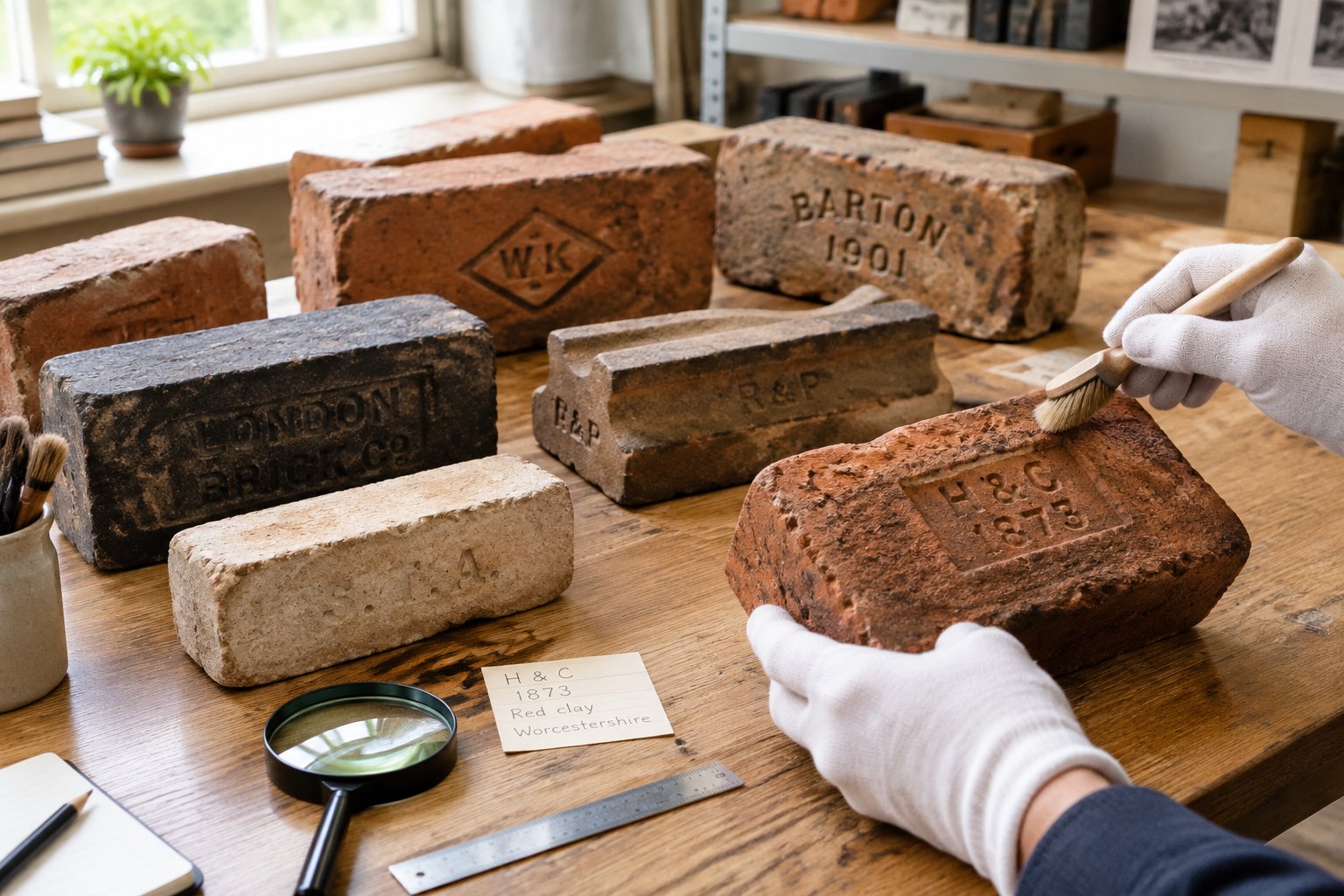
Then hand your mason the report, the age and hardness of the brick, and the joint profile you want kept. If the job needs replacement units as well, brick matching works on size, color range, texture and mortar together rather than color alone. Our historic restoration page sets out what we hold and how it gets documented if a review board is involved. We supply the material and the written guidance; the repointing goes to a qualified mason.
Pick the mortar that protects the brick
Type N for most above-grade walls and softer units. Type S below grade, behind retaining walls, and in structural work designed for lateral load. On anything historic, start at Type N or lime, keep the mortar weaker than the brick, and find out what the original mix was before anyone opens a joint.
If you need reclaimed brick to go in alongside the right mortar, we hold four blends on pallets rather than on a six to twelve month lead time. Call the New Orleans office on 225-284-7529 or email hays@bourgeoismaterials.com, and we will tell you honestly what we can match.
Frequently asked questions
Can Type N mortar be used for load-bearing walls?
Yes, in plenty of above-grade load-bearing masonry. The final call comes from the structural design, the unit strength and local code, so take it from the engineer's drawings whenever a wall carries floor or roof load.
Can I use Type S to repoint old brick?
In most cases no. It is harder and less breathable than soft historic brick, which pushes moisture out through the face and causes spalling. Use lime, Type O, or a Type N matched to a mortar analysis.
Is Type N the same as lime mortar?
No. Type N is Portland cement plus hydrated lime. Traditional lime mortar uses lime as the only binder, which makes it softer, more breathable and much slower to cure, and that is what pre-1900 brick wants.
What are the usual mix ratios?
A common cement-lime Type N is 1 part Portland, 1 part hydrated lime, 6 parts sand by volume. Type S is commonly 1 part Portland, half a part lime, 4.5 parts sand. Bagged products follow their own formulas, so the bag wins.
How long before mortar reaches full strength?
About 28 days for both types, whatever the surface looks like after a few days. Lime mortars want longer protection from sun, wind and frost while they get there.