Planning a cobblestone patio means making choices about how people will sit, walk, and shed water, often before the stone is even picked out. Maybe a client wants a courtyard finished by spring. Maybe you have a garden corner that floods after every storm. The best cobblestone patio ideas start with how the space gets used. A compact courtyard, a garden-edge seating nook, and a larger dining terrace each call for different stone, joints, and base work.
Builders and architects in that spot need a supplier who can say what is in the yard today. A family operation that hand-selects reclaimed brick and stone from century-old structures, and keeps real inventory on hand, removes a lot of guesswork from the schedule. Stone you can see and count beats a promise of what might arrive in six months.
Keep reading to learn which patio layouts suit small courtyards, dining areas, and garden paths. You will also learn how to choose between reclaimed and new stone, and how to plan the base, joints, and slope so the surface stays level. Old stone has already survived a century of weather, but how it performs in your yard still comes down to the base under it.
Courtyards and Compact Seating Areas
Small courtyards work best with smaller units, tight joints, and one clear seating zone. In a tight space, every uneven stone shows up under a chair leg, so the surface has to stay flatter than it would on a path.
Which Cobblestone Patio Ideas Suit a Small Courtyard?
In a small cobblestone courtyard, scale is everything. Big, rough cobbles can make a 10-by-12-foot space feel busy and hard to cross. Smaller units, such as antique granite setts in the 4- to 6-inch range, keep the pattern calm, and their flat, worn tops walk more evenly than domed cobbles.
Many designers mix materials. A field of setts handles foot traffic, while a band of reclaimed brick pavers adds warm color at the edge. That gives you old-world texture without making guests step over humps.
Brick works best here as the accent. Brick from pre-industrial buildings brings irregular shapes and soft color shifts that sit well beside gray granite in a cobblestone courtyard patio. If you want that contrast, read about reclaimed clay bricks and how their firing affects color. If chairs and tables need a flatter floor than stone allows, machine-made reclaimed brick gives tighter sizing.
Create a Garden-Edge Seating Area with Room for Chairs
A garden-edge seat needs more room than most people expect. Landscape architect Paul Maue suggests you allow 25 square feet per person for a seat and room to move. Four chairs means about 100 square feet of flat surface, not counting the planting bed.
Keep the seating pad in flat-topped setts or broad stone flags and push rougher stone to the border. These are good edge choices:
- Rounded cobbles set on end along the bed line
- A soldier course of reclaimed brick to hold mulch back
- Raised cobblestone planters, one or two courses high, to separate seats from plants
If brick is part of the border, sort out which grades suit paving before you order. This guide on how to choose reclaimed bricks covers hardness and condition.
Use a Raised Platform Only Where Steps Make Sense
A raised cobblestone platform looks great in photos, but each step adds a trip hazard and a drainage edge. Use one only when the ground already falls away. A sloped yard is a good example, since the platform levels a seating area that would otherwise tilt.
Keep risers even, often 6 to 7 inches, and use a smooth cap stone on the tread edge. Water must also leave the platform. Build in a slope and give it weep gaps or a gravel strip at the base. For more layouts that pair steps with paths, see these reclaimed brick patios and walkways.
Once a small seating zone works, the next test is a space that has to hold a full table and a crowd.
Dining and Gathering Spaces
Dining areas need the flattest stone on the whole patio, with textured stone kept to the edges and walkways. A table rocking on a high cobble ruins a meal fast.
Set a Level Dining Area Within a Textured Stone Patio
Treat the dining zone as a smooth "rug" inside a rougher stone patio. Lay broad antique stone flags or sawn stone under the table. Then use cobbles in the surrounding field. If you prefer brick for the rug, a herringbone field works well, and this herringbone reclaimed brick patio guide shows how the interlock resists shifting.
Size the rug at least 3 feet past the table on every side, so chairs can slide back. A 6-foot table then needs about a 12-by-10-foot flat zone. Keep joints tight in the rug; with brick, 1/8 to 1/4 inch keeps chair legs from catching.
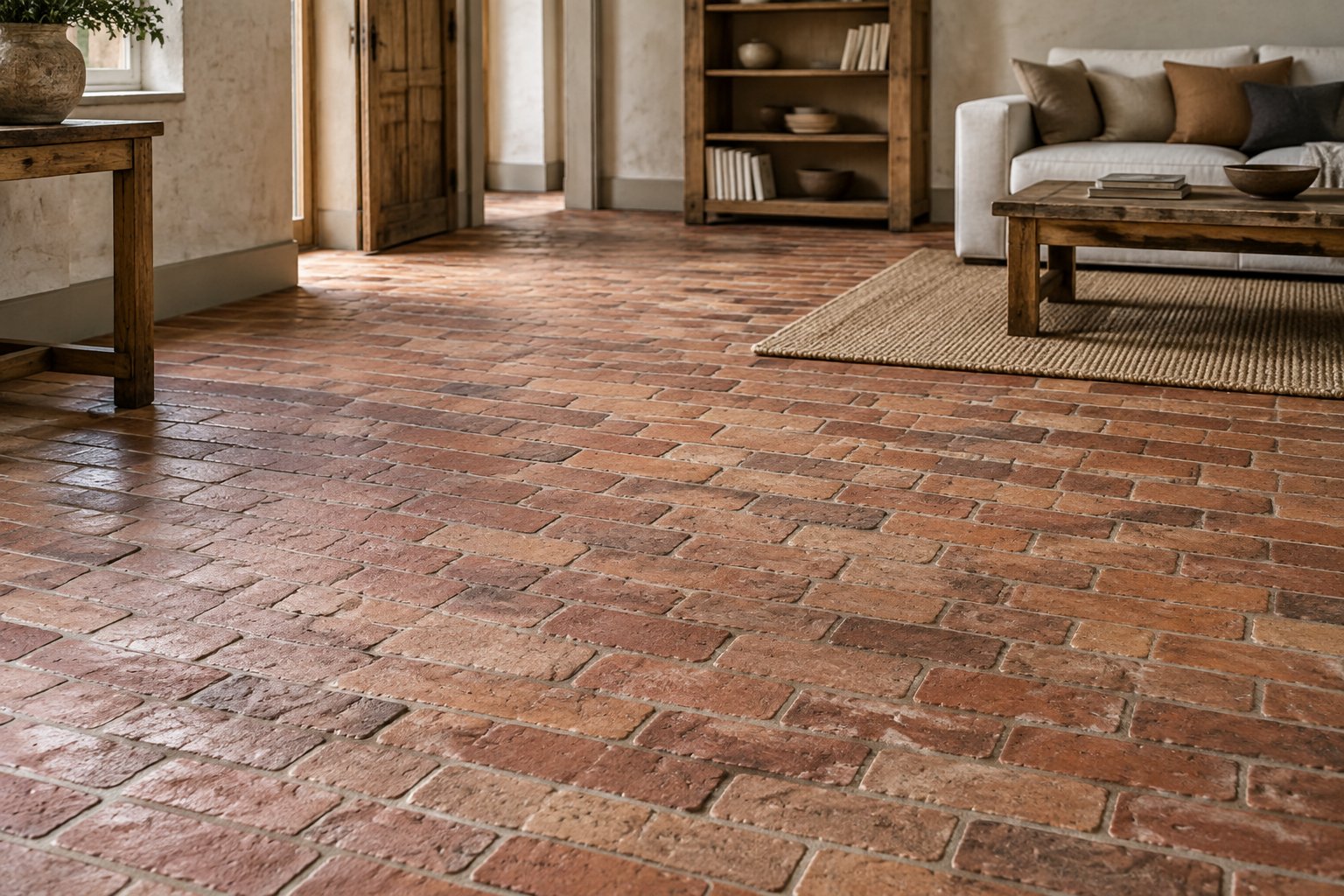
If the patio opens off a kitchen or sunroom, carry the palette inside. Reclaimed brick flooring in tones that pick up the stone makes the door feel like a threshold between two rooms. This piece on brick flooring indoors explains sealing and thickness for interior use.
Arrange a Fire Pit Gathering Area Around Clear Walking Routes
A fire pit gathering area fails when people must cut between chairs to reach the house. Plan a clear route of at least 36 inches around the seating ring. Keep that route in your smoothest stone.
Set the pit itself on a solid base with a noncombustible border. Many builders pair the pit with a fireplace or chimney built from the same old brick. You can see ideas for fireplaces and feature walls and for reclaimed stone fireplaces. Keep in mind that a firebox lining needs rated firebrick. Common face brick is not made for that heat.
Define a Larger Patio with Borders and Changes in Pattern
Large cobblestone patios can feel like parking lots without visual breaks. Change the pattern to mark zones. Try straight courses of setts near the house, fans or arcs across the open field, and a circle of cobbles around the fire pit. A herringbone brick rug under dining can mark that room too.
Cobblestone edging does double duty. It holds the field in place and frames each room. One method uses a trench deep enough for a 4-inch concrete bed, setting each cobble 3-1/2 inches below finished grade, though depths vary with soil, load, and the stone you use. If brick joins the mix, these red brick paving tips help with mixing shades.
A well-zoned patio still needs a way out to the garden, and that path has its own rules.
Garden Connections and Focal Points
Paths, fountains, and driveways should all feel like one stone family. Each one also carries different loads and water.
Connect Seating to the Garden with a Comfortable Path
A cobblestone pathway should be at least 36 inches wide for one person and 48 to 60 inches for two walking side by side. Rough, domed cobbles look charming but are tiring underfoot. Use flatter-faced pieces down the center and rounder ones along the edges.
Garden pathways also collect runoff. Crown the path slightly or slope it to one side so water drains into planting beds. For more ideas, see these reclaimed pavers for outdoor spaces. You can also read about durable reclaimed landscaping stone.
Stepping-stone paths blend well with cobble borders too. Reclaimed flagstone gives broad, flat landings, and this guide to natural stone flags covers thickness and bedding.
Place a Fountain Where Splash and Drainage Can Be Managed
A cobblestone patio with a water feature needs a splash zone that drains fast. Set the fountain at least 2 to 3 feet from seating. Surround it with open-jointed cobbles over gravel so overspray soaks away and never pools.
Keep soft limestone out of constant splash in freezing climates. Denser stone holds up better there. Some designers use salvaged slate as a fountain rim or a small shelter roof nearby. Reclaimed slate roofing suits a garden pavilion, and these reclaimed roofing tips explain how to plan it.
Carry Stone Details from the Patio to the Driveway
Tying a stone driveway to the patio makes the whole property read as one design. A cobblestone driveway carries car weight, so it needs a deeper base than a patio. Use thicker units, too.
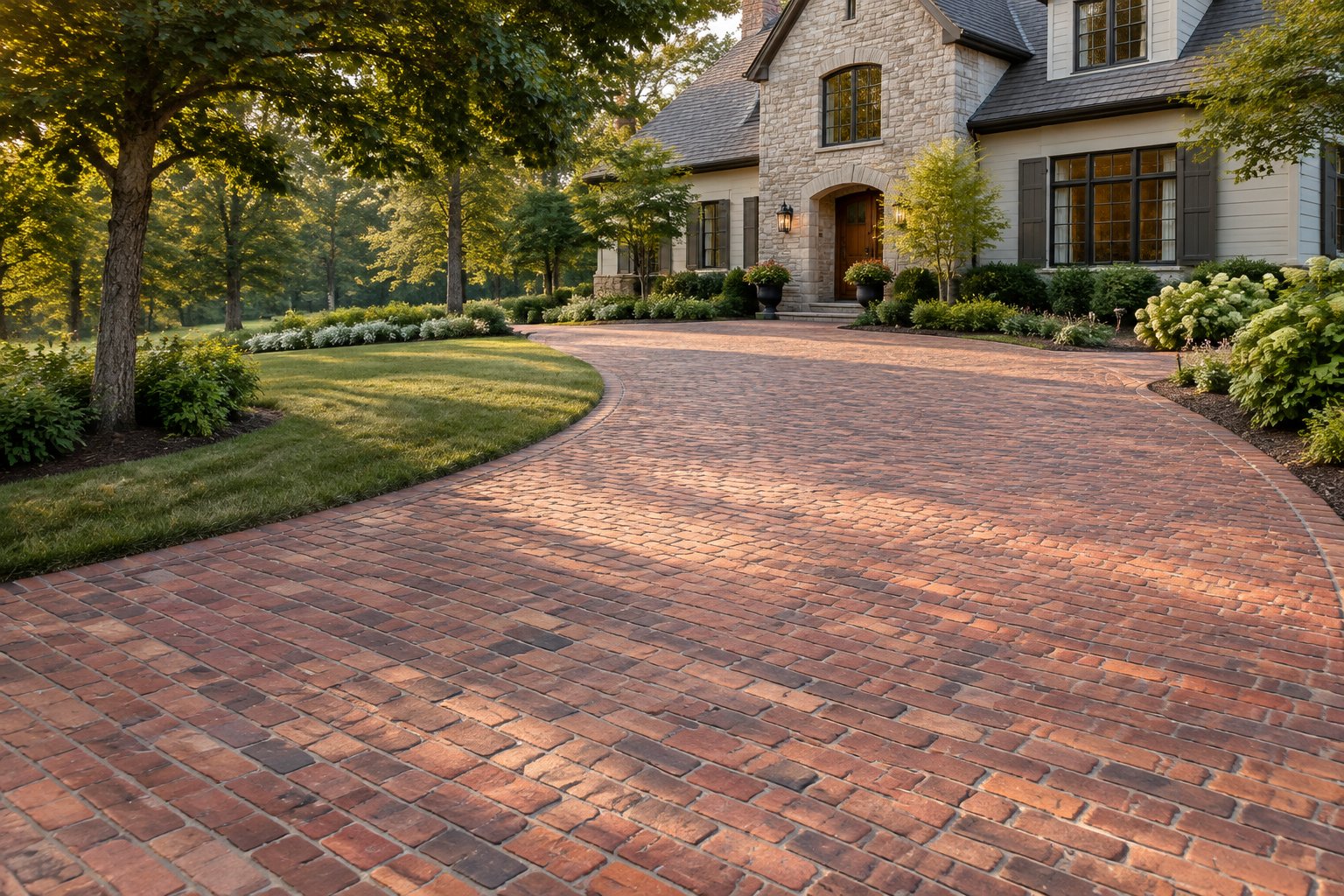
Granite setts and Belgian block have carried street traffic for generations, so the same stone can run from the patio edge into a driveway apron or border. If you use brick in the driveway field instead, these notes on reclaimed brick pavers cover which grades suit vehicle traffic.
With the layout set, the next choice is the stone itself and how it goes down.
Choose Stone and Detail the Surface
Pick your stone by climate, traffic, and budget, then let its shape guide the pattern. Style comes after those three.
Compare Reclaimed Setts, European Stone Paving, Limestone Cobbles, and New Pavers
These are your main paths:
- Reclaimed granite setts and Belgian block: Antique cobblestone salvaged from old streets, with setts around 4 to 6 inches and Belgian block near 9 by 5 by 5 inches. The Stone Pavers & Cobbles line currently starts at $12 per square foot.
- Reclaimed European stone paving: Bath stone and French limestone salvaged from old buildings, with a patina new stone takes decades to form. Paving from this reclaimed European stone line starts at $42 per square foot. For in-stock material, a truck can be on the road within 48 hours of a paid invoice, and container sourcing runs 8 to 14 weeks.
- Limestone cobbles: Beautiful, but more porous. They suit warm, dry climates better than freeze-thaw zones.
- New pavers: Uniform and easier to install. Brick patios run about $4 to $8 per square foot as a material benchmark.
Reclaimed brick is the alternative, or the accent. One homeowner paid $0.45 to $0.50 per recycled brick, about $0.80 for new, but spent days grinding off old mortar. Brick sold cleaned and sorted saves that labor. See reclaimed brick vs. new brick and reclaimed brick cost for the full math. Reuse also keeps material out of landfills, as covered in eco-friendly reclaimed materials.
Select a Pattern That Suits the Stone's Shape and the Patio's Use
Round cobbles look best in fans, arcs, and random layouts. Square setts suit straight courses, fans, and arcs, and Belgian block runs well in courses and borders. Where you use rectangular brick, it suits herringbone, basketweave, and running bond. Herringbone locks best under heavy traffic.
Mixed-size antique stone works in a random layout, where size differences read as intent. For a weather-resistant patio, keep the busiest routes in the tightest pattern.
Plan the Base, Joints, and Slope Before Settling on a Look
The base does most of the work, and its depth depends on the project: soil, climate, drainage, and the loads the patio will carry. A common starting point is about 12 inches of excavation where the ground freezes and about 6 inches in mild climates with good drainage. Compacted gravel goes in 3-inch lifts under a 1-inch sand or stone dust bed. Confirm the numbers for your site with your installer.
Slope the patio 1/8 to 1/4 inch per foot away from the house. Joints of 3/8 to 1/2 inch suit irregular cobbles, filled with stone dust or polymeric sand. Tight brick joints drain slower, so the slope has to be spot on.
Once you know what the surface needs, you can lock the layout before any stone gets ordered.
Choose a Layout Before Sourcing Stone
Draw the full patio plan before you request a quote, because layout sets the quantity, the cuts, and which stones will work. A supplier can only give firm numbers once they know square footage, pattern, and edge length.
Sketch the space on graph paper with seating zones, paths, and drains marked. Then add 5 to 10 percent for cuts and waste, or more for herringbone and curved borders. Reclaimed lots vary in size and color, so ordering all at once keeps the whole patio from one batch.
Architects can find project help on the architects page and through specification support. If a restoration calls for a period-correct match, custom sourcing and historic restoration services can track down specific pieces. Browse all reclaimed materials or check what used brick for sale looks like before you commit.
With the plan in hand, the last step is making sure the stone is there when your crew is.
Build a Patio That Sits Right and Drains Right
The best patios match stone to use: smooth stone flags under tables, textured cobbles at the edges, and a solid base under everything. Get the slope, joints, and layout right first, and the old stone will look like it has always been there. Here is more on the benefits of reclaimed brick if you are still weighing options.
When your plan is ready, call New Orleans Brick & Stone at 225-284-7529 or 817-909-4104. You will reach someone who knows these materials and can tell you what is in the yard. Once your invoice is paid, we can have a truck on the road within 48 hours. If your project has a deadline, we can get materials moving before the end of the week.
Frequently Asked Questions
How Much Does a Cobblestone Patio Cost?
Cost depends on stone and labor. Granite setts and Belgian block from the Stone Pavers & Cobbles line currently start at $12 per square foot, and reclaimed European stone paving starts at $42. Brick patios often run $4 to $8 per square foot for material. Base work, edging, and freight add to the total.
Is Reclaimed Cobblestone More Expensive Than New Pavers?
Reclaimed cobblestone usually costs more than new concrete pavers, since every piece is salvaged, sorted, and limited in supply. The patina and history are part of what you pay for. If budget is tight, reclaimed brick can cost less than new brick, and cleaned, sorted brick saves hours of grinding compared with raw salvage.
What Goes Under Cobblestones on a Patio?
Compacted gravel goes under cobblestones, topped with a bed of sand or stone dust. A common starting point is 3-inch gravel layers under a 1-inch bed, dug about 12 inches deep in freeze zones and about 6 inches in mild climates. The right depth depends on soil, climate, drainage, and load. Slope the base 1/8 to 1/4 inch per foot.
Can I Build a Cobblestone Patio Myself?
Yes, a skilled DIYer can build one, but it is hard, heavy work. A 12-by-16-foot stone patio takes 3 to 4 days for experienced hands. Renting a plate compactor is a must.
How Do I Keep Patio Furniture Steady on Cobblestones?
Put flat stone flags, sawn stone, or brick under tables and chairs, and use rough cobbles only in borders and paths. Keep joints tight in seating zones. Furniture with wide feet or glides also helps on uneven stone.
What Maintenance Does a Cobblestone Patio Need?
Sweep often, rinse with a garden hose, and pull weeds from joints before they spread. Top up joint sand or stone dust every year or two. Reset any stone that settles before water collects around it.