Maybe you're finishing a landscape plan, or a client wants a driveway that looks like it has been there a hundred years. Before you order anything, you need to know what are cobblestones and which kind will hold up. In geology, a cobble is a naturally rounded stone roughly 2.5 to 10 inches across, and the earliest cobblestone paving set those rounded stones in sand or mortar. The flat-topped granite blocks most people call cobblestones today are cut stone setts, also known as Belgian blocks.
That difference affects cost, comfort, and how a driveway performs under a car. Reclaimed stone pulled from old streets carries wear that took decades to form. A supplier with hand-selected reclaimed building materials on the yard can show you real pieces, which beats guessing from a catalog photo. The case for sourcing reclaimed brick and stone rests on that same idea: genuine material you can see and handle.
Keep reading to learn how natural cobbles differ from setts and lookalike pavers, why old streets used stone, and where cobblestone works best in a modern landscape. You'll also find what to check before buying and how to choose stone for your project. Handle a few hundred of these stones by hand and you learn fast that the shape of the top face decides almost everything.
Natural Cobbles, Belgian Blocks, and Paver Lookalikes
There are three products sold under the cobblestone name: natural rounded cobbles, quarried setts, and manufactured pavers made to resemble them. Each one looks, walks, and installs differently.
Knowing which one you are pricing keeps you from comparing the wrong things. A rounded river stone and a squared granite sett can share a name on an invoice and still behave nothing alike in the ground.
What Are Cobblestones Made Of?
Cobblestones are natural stone, most often granite or basalt, with colors running from gray to black to purple depending on where the rock formed. Geologists define a cobble by size. The National Park Service describes a cobble as 64 to 256 mm, about 2.5 to 10 inches, rounded by abrasion during transport.
That rounding comes from water. River stones and beach cobbles tumble against each other until sharp edges wear away. Early builders gathered these stones from riverbeds and fields because they were free and close at hand.
Belgian blocks from Europe are often porphyry or hard sandstone. Porphyry blocks come in greens, blues, and rusty earth tones. Belgian sandstone runs from beige to plum. For cobblestone products, antique granite setts and Belgian block are sold in our Stone Pavers & Cobbles line. Salvaged Bath stone and French limestone fall under reclaimed European stone paving, a separate product.
How Do Rounded Stones Differ from Shaped Setts?
A natural cobble is rounded and uneven. A sett is quarried and cut into a regular block. Wikipedia notes that setts, also called Belgian blocks, are often called cobbles even though they are shaped stone.
The difference shows up in use. Rounded stones make a bumpy, textured surface that suits a garden path or a drainage swale. Setts give you a flatter top that handles foot traffic and cars far better.
Common sett formats include:
- Regulation granite cobbles: about 8" L x 4.5" W x 5" T, near 18 lbs each
- Jumbo cobbles: about 10 to 14" long and 8" thick, useful for driveway aprons and tall edging
- European squares and rectangles: often 6" x 6" or 5.25" x 7.5"
- Thickness options: full bed around 5 to 8", half bed around 2.5 to 3.5", and sliced pieces near 1.25 to 2.25"
How Can You Tell Reclaimed Stone from Manufactured Lookalikes?
Look at the wear. Reclaimed setts have a top face smoothed by decades of wheels and feet, while the sides and bottom stay rougher. Manufactured cobblestone pavers made from concrete show repeating shapes and uniform color, with the same texture on every face.
Weight is another tell. Genuine granite cobbles run close to 58 lbs per square foot at full bed, heavier than most concrete paver systems. The same logic applies to reclaimed brick vs new brick: age leaves marks a mold cannot copy.
Ask how a supplier sorts and inspects stock. Our notes on how to choose reclaimed bricks cover the same checks, and they apply to anyone shopping for used brick for sale or stone. To judge that wear, it helps to know how these stones earned it on real streets.
Why Were Historic Streets Paved with Stone?
Cities paved streets with stone because it stopped mud, ruts, and dust while standing up to constant traffic from carts and horses. How well a stone street drained depended on its joints, base, and grading, and the stone gave shod horses better grip than later asphalt.
From Locally Gathered Stone to Paved Streets
Medieval European towns used whatever stones they could gather nearby, then set them in sand or mortar. Sand bedding let the road flex with ground movement instead of cracking. It also made the surface permeable, so rain soaked through the joints.
By the 1800s, most cities switched to quarried granite setts for a flatter, tighter surface. Philadelphia, Boston, Charleston, and New Orleans all laid stone streets, mostly setts. The same era produced the brick buildings behind our historic restoration work.
Streets and buildings shared a material logic. Durable, local, fired or quarried by hand. That is why reclaimed clay bricks and old setts sit so naturally together in a modern courtyard.
Why Did Asphalt Replace Many Stone Streets?
Asphalt and concrete won on cost and speed. They were cheaper to lay and gave a smoother ride for cars and bikes. Many cobblestone roads were paved over in the early 20th century, and some still peek through where asphalt wears thin.
When cities repave or dig up old streets, the stone gets salvaged. That salvage keeps usable material out of landfills, one reason these count among the most eco-friendly building materials you can buy.
The street history also explains the wear pattern. Those smooth tops came from a century of wheels, which is useful to know when you pair stone with red brick paving. Once you know where the stone came from, the next step is deciding where it belongs on your property.
Where Does Cobblestone Work in a Modern Landscape?
Cobblestone paving works best where its texture is an asset: paths, courtyards, driveway aprons, and edging. Match the stone format to the traffic it will carry.
Paths and Courtyards
For walkways, set flatter setts or sliced cobbles over a compacted base. A single-person path should run 30 to 36 inches wide, and two people side by side need about 48 inches. Sliced cobbles set in mortar give a smoother walk than rounded stones.
Courtyards benefit from mixing stone with brick. A field of brick patios and walkways framed by a cobble border feels settled and old. Our ideas on reclaimed pavers for outdoor spaces and a herringbone brick patio show how the two combine.
For larger seating areas, reclaimed flagstone offers broad, flat surfaces, with cobbles as the accent. Our look at natural stone flags covers how those pieces lay out.
Driveways, Borders, and Garden Edging
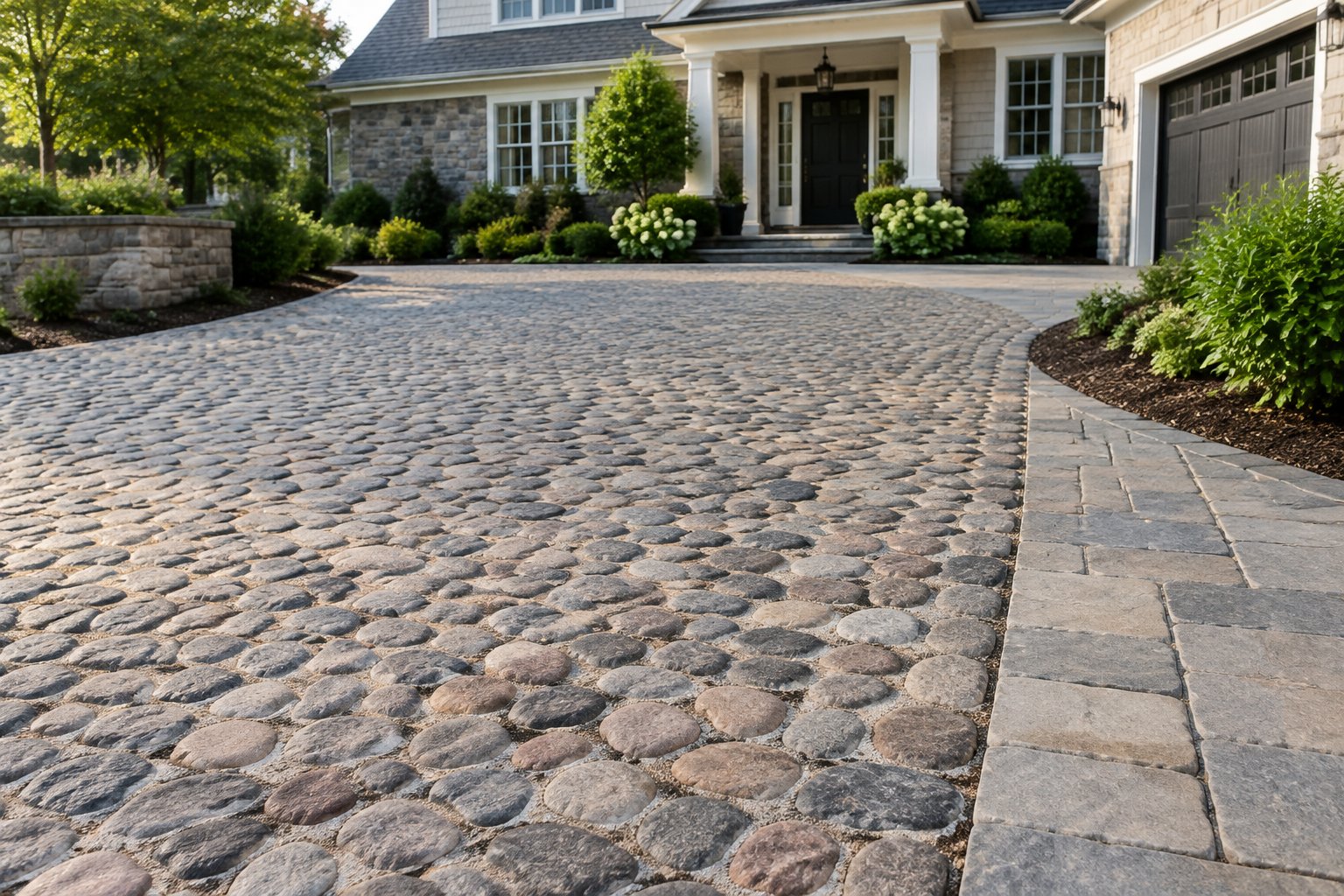
A cobblestone driveway needs full-bed setts, 5 to 8 inches thick, dry-laid over a deep compacted base. Jumbo cobbles at 8 inches thick make strong driveway aprons where tires turn and brake.
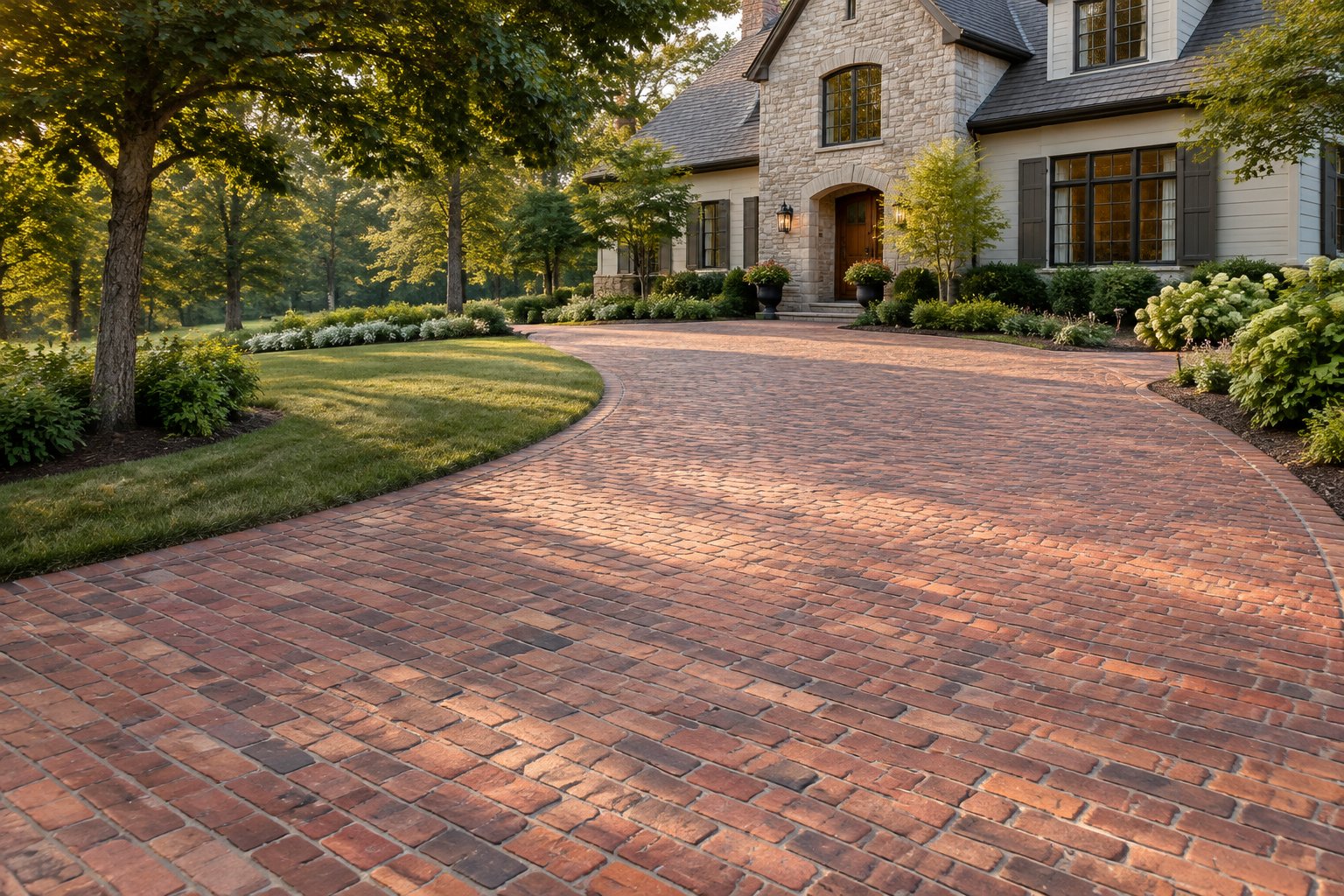
Many owners run cobbles only at the apron or as a border, with brick for the main field. That keeps cost down and puts the heaviest stone where the load is greatest. Our reclaimed brick pavers page lists paving brick options that pair well.
For garden edging, set taller cobbles upright so they hold beds and gravel in place. Rounded river stones work in dry creek beds and swales. See our notes on brick paver projects and durable landscaping stone for more pairings. Wherever the stone goes, a few checks before purchase will save trouble later.
What Should You Check Before Choosing Stone?
Check surface evenness, base and drainage plans, and the size and condition of the stone before you commit. These three points decide whether a project feels right for decades.
Surface Evenness, Walking Comfort, and Accessibility
Rounded cobbles are hard on heels, strollers, and wheelchairs. The U.S. Access Board says rough surfaces like cobblestones and Belgian blocks cause vibration that makes wheelchair travel painful. It recommends avoiding them on required accessible routes.
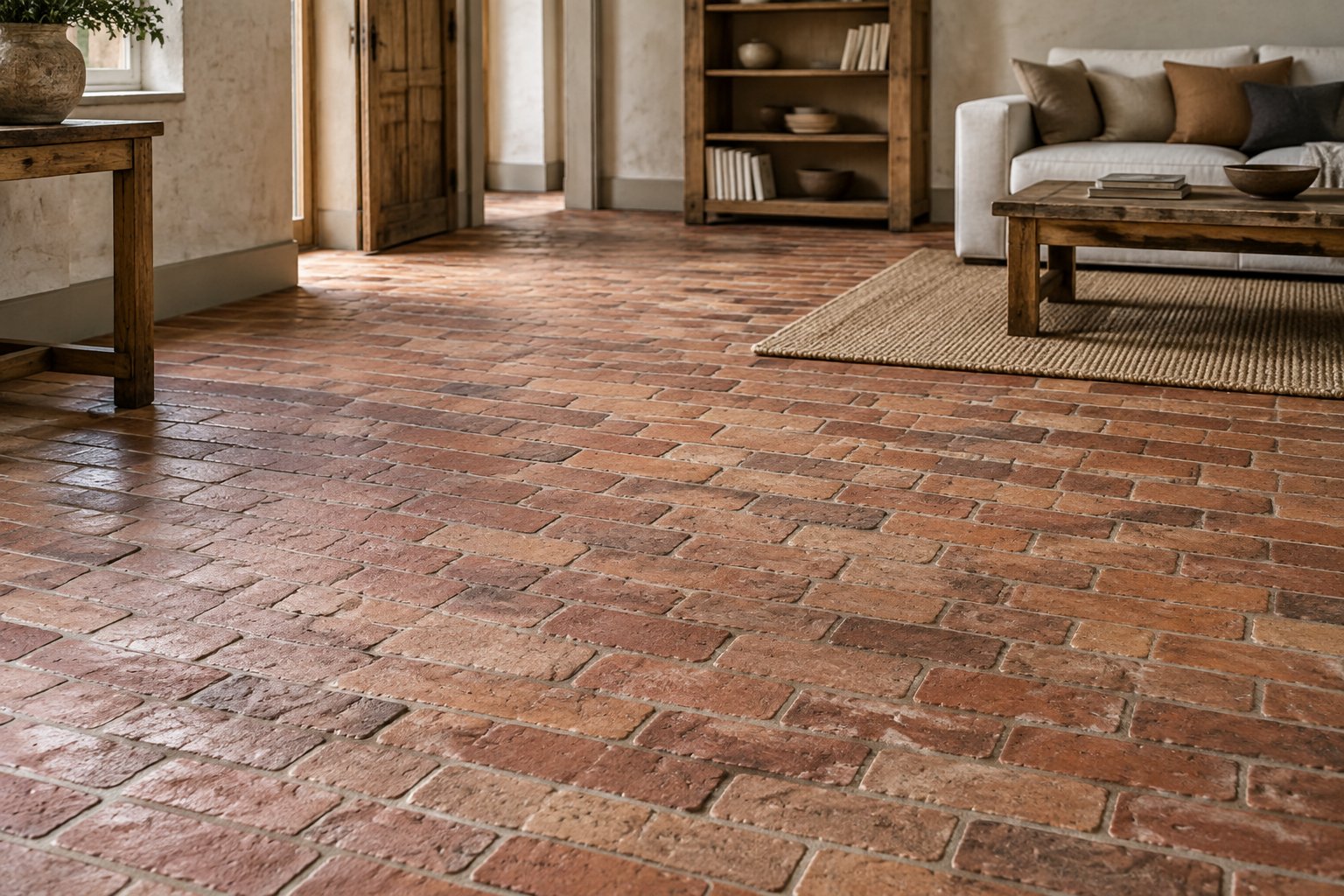
If a path must serve everyone, use sawn-top setts or brick with tight joints. Keep rougher stone for borders and accents. The same care applies indoors with reclaimed brick flooring, where our guide to brick floors covers evenness.
Base, Joints, Drainage, and Maintenance
A stone path needs about 9 to 10 inches of excavation, a 4 to 6 inch gravel base, and 1 to 2 inches of sand. Driveways need a deeper base than walkways. Skipping base depth is the most common cause of sinking stones.
Sand joints make permeable paving, since rain drains between stones. Mortar joints lock stones tight but shed water, so the base needs a planned slope. Keep up with these tasks:
- Sweep and top up joint sand each season
- Reset any stone that sinks by adding sand underneath
- Rinse with a hose and use mild soap for stains
- Avoid harsh chemicals near stone and plants
Size, Condition, and Documented Origin of Reclaimed Stone
Ask for dimensions, thickness, and pieces per square foot. Regulation cobbles run about 3.2 pieces per square foot, and jumbos about 2.5. Those numbers drive freight weight and your total cost, which our reclaimed brick cost guide breaks down.
For antique cobblestones, ask where a batch came from and how it was sorted. Colors within one batch tend to match, so order enough to finish the job. Professionals can lean on our specification support and resources for architects. With those checks done, you can match stone to the project in front of you.
Choosing Stone That Fits Your Project
Pick the stone by its job. Use full-bed setts for driveways, sliced or sawn-top pieces for walks, and rounded cobbles for edging and drainage.
Tie the stone to the rest of the house. Old stone reads best next to other aged materials, such as fireplaces and feature walls in brick or reclaimed slate roofing overhead. Our pieces on stone fireplaces and features and sustainable roofing tips show how those choices connect.
If you need a specific size or European blend, New Orleans Brick & Stone offers custom sourcing for hard-to-find stone. Call New Orleans Brick & Stone and find out what is in stock and ready to ship. Once your invoice is paid, a truck can be on the road within 48 hours, with nationwide freight delivery.
Frequently Asked Questions
Are Belgian Blocks the Same as Cobblestones?
Not strictly. Belgian blocks are cut stone setts shaped into regular blocks, while geological cobbles are naturally rounded by water. In paving, though, many people call both cobblestones, so ask a supplier which one they mean.
Can Reclaimed Cobblestones Be Used for a Driveway?
Yes, if you use full-bed setts about 5 to 8 inches thick over a deep compacted base. Jumbo cobbles work well at the apron, where tires turn.
Are Cobblestone Paths Difficult to Walk On?
Rounded cobbles are uneven and hard on heels, strollers, and wheelchairs. Sawn-top setts or sliced cobbles set tight give a much smoother walk.
Do Cobblestone Joints Let Rainwater Drain Through?
Sand-set joints let water soak through, making the surface permeable. Mortar joints shed water, so the base needs a planned slope and drainage.
How Can I Verify the Origin of Reclaimed European Stone?
Ask your supplier for the stone type, region, and the batch it came from. Look for foot-worn tops and rough undersides, and request photos of the actual pallet before it ships.